
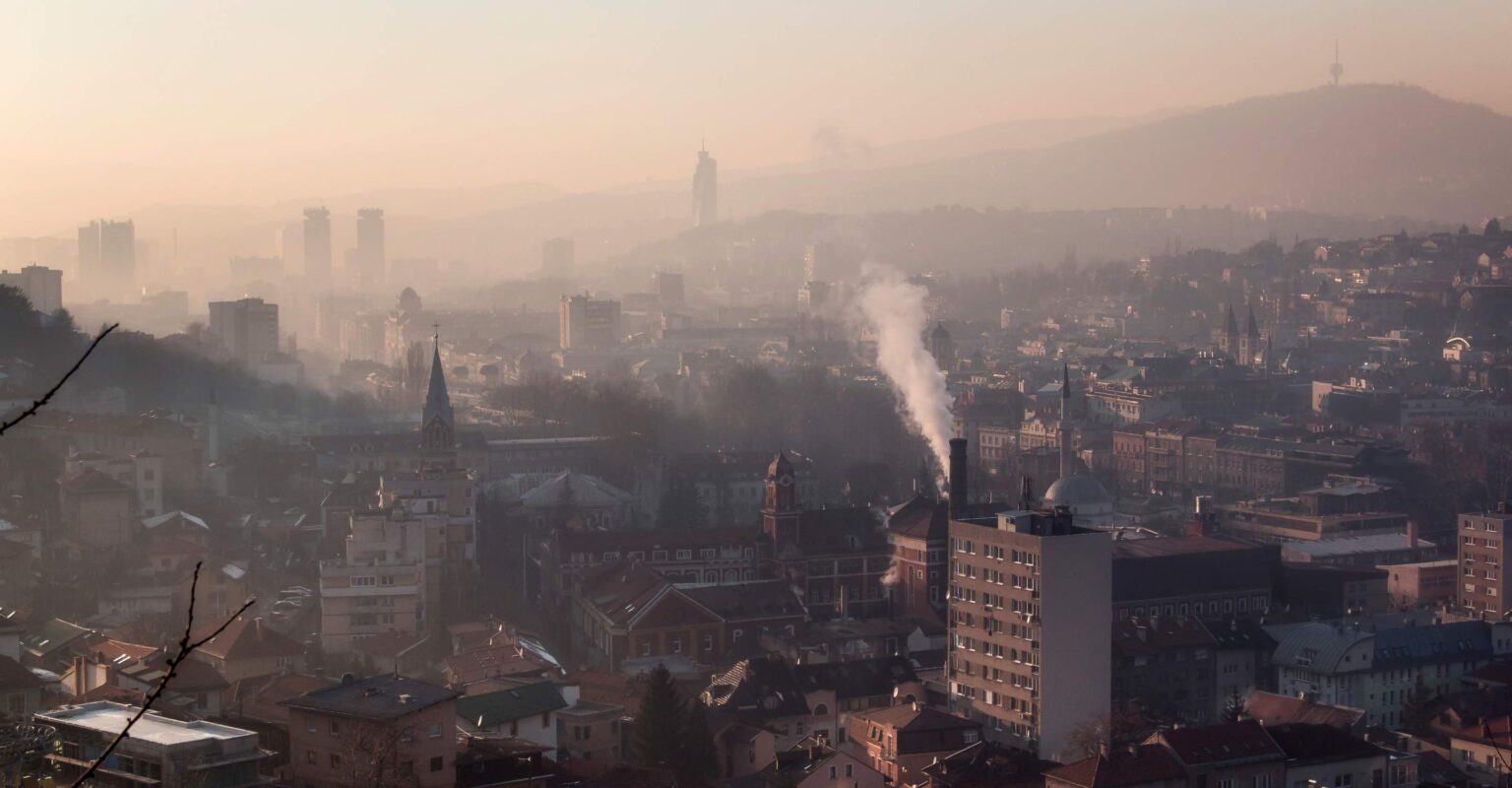
December 16, 2025: Sarajevo among top 10 most polluted cities in the world
IQAir Global EUR
https://www.iqair.com/newsroom
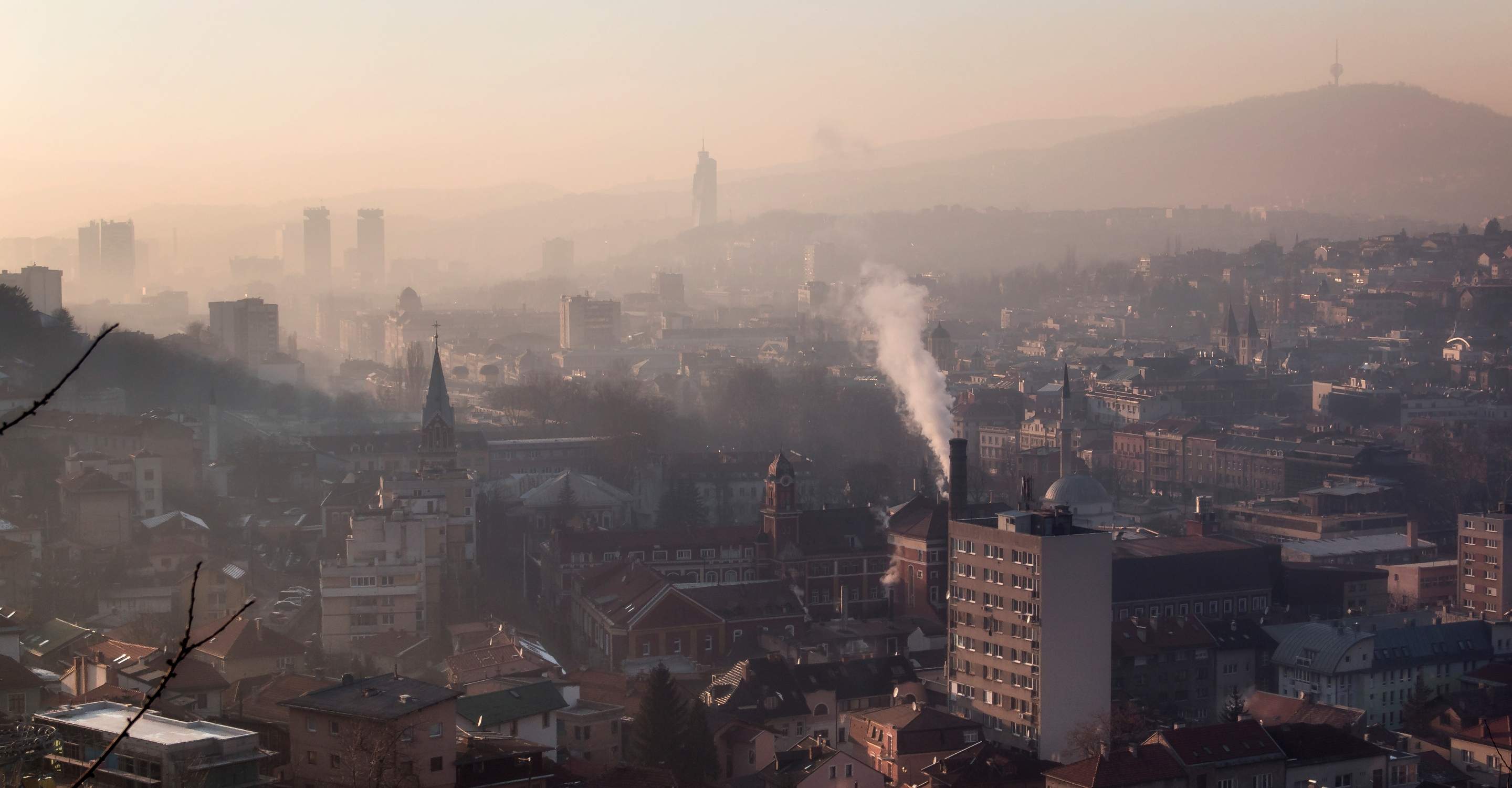
On December 16, 2025, at 9:24 AM PT, air quality in Sarajevo, Bosnia Herzegovina was in the “hazardous” range with an Air Quality Index (AQI) of 302.
Air quality is dynamic. Like the weather, air quality can change often. Sarajevo ranked as the most polluted major city in the world today.
Click here for a real-time air quality map of Sarajevo.
Although air quality is poor today, it is vital to remember that the average PM2.5 concentration in 2024 for Sarajevo was 30.8 µg/m³. This corresponds to an AQI of 90, which falls into the moderate category and was 6.1 times the WHO annual guideline of 5 µg/m³.
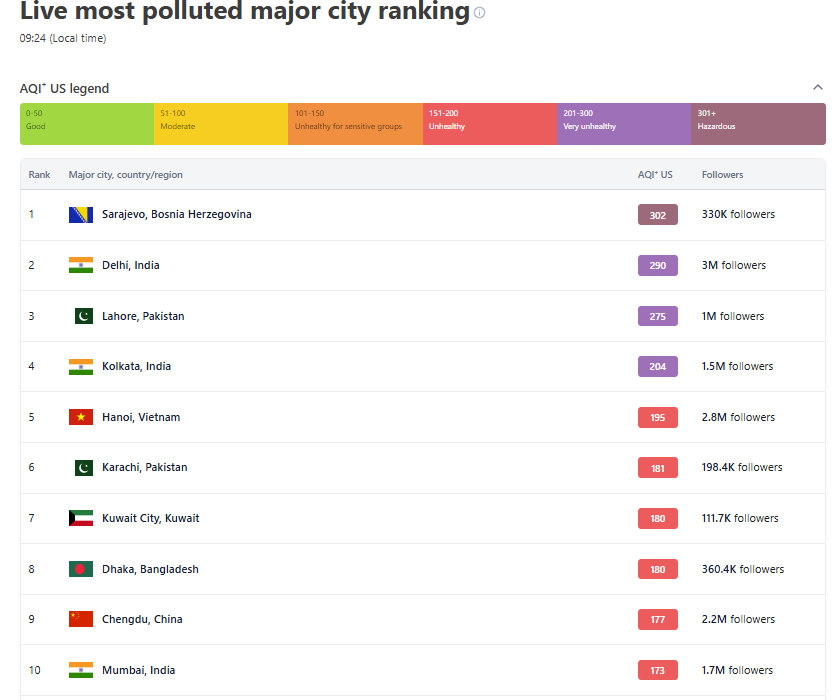
Sarajevo, Bosnia Herzegovina ranked as the most polluted major city on December 16, 2025 at 9:25 AM PT. Source: IQAir.
When will air quality improve in Sarajevo?
Sarajevo’s air quality may improve on Wednesday and into Thursday, as shifts in wind direction and warmer temperatures help disperse pollutants and end the temperature inversion.
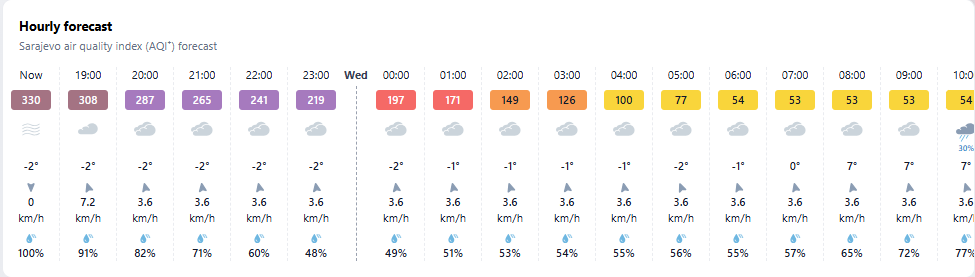
Hourly air quality forecast for Sarajevo, Bosnia and Herzegovina on December 16, 2025. Source: IQAir.
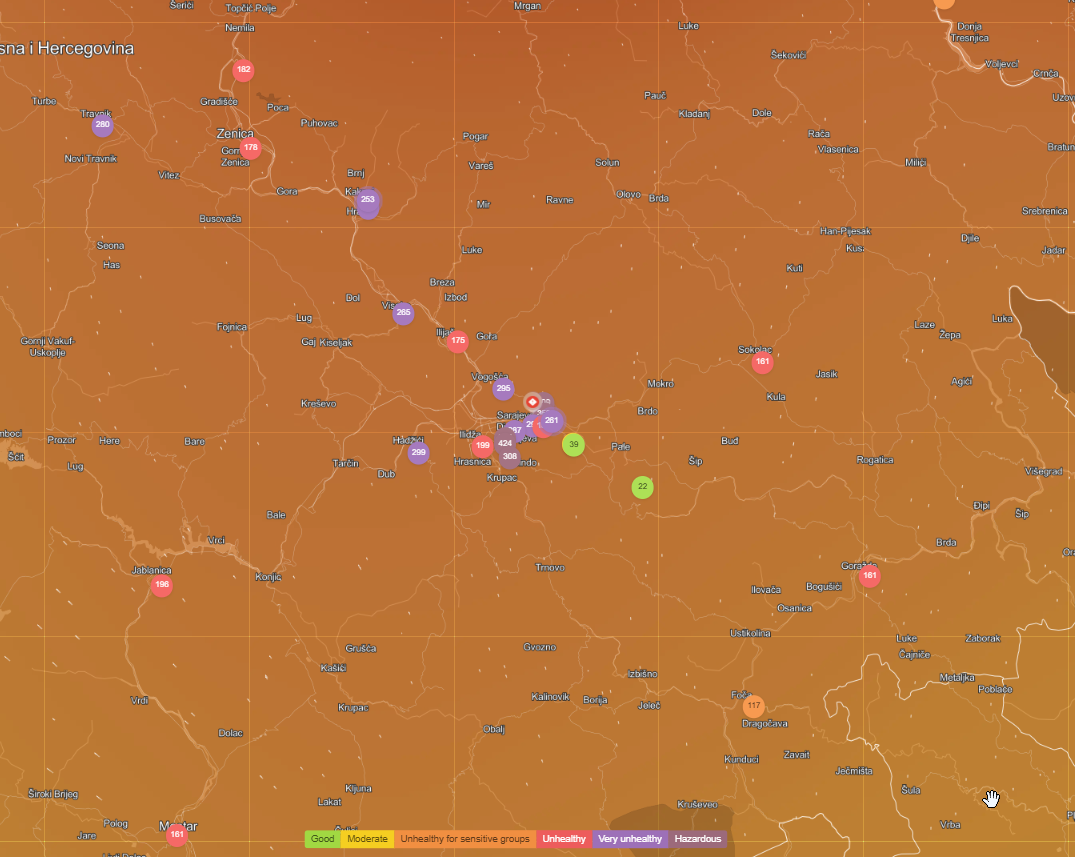
Air quality map of Sarajevo, Bosnia Herzegovina on December 16, 2025. Source: IQAir.
Air quality in the Western Balkans and in Southeast Europe often ranges from “unhealthy for sensitive groups” to “very unhealthy,” a recurring winter season problem for the region.
What is causing poor air quality in Sarajevo?
The primary causes of poor air quality in Sarajevo include:
- Home heating: An estimated 30,000 and 40,000 households rely on damp wood, biomass, and inefficiently-burning stoves. Home heating sources emit excessive amounts of PM2.5 (1).
- Geography: Sarajevo lies in a valley surrounded by mountains. This helps traps pollutants and reduce airflow in the winter and fall months.
- Industry and vehicle emissions: Outdated vehicles, factories, and coal-burning power plants are the primary sources of regional nitrogen oxides (NOx) and sulfur dioxide (SO₂) emissions (2).
- Weather: Temperature inversions and cold temperatures in autumn and winter worsen pollutant accumulation.
How can I protect myself from poor air quality?