
24.12.2025. 09:01h
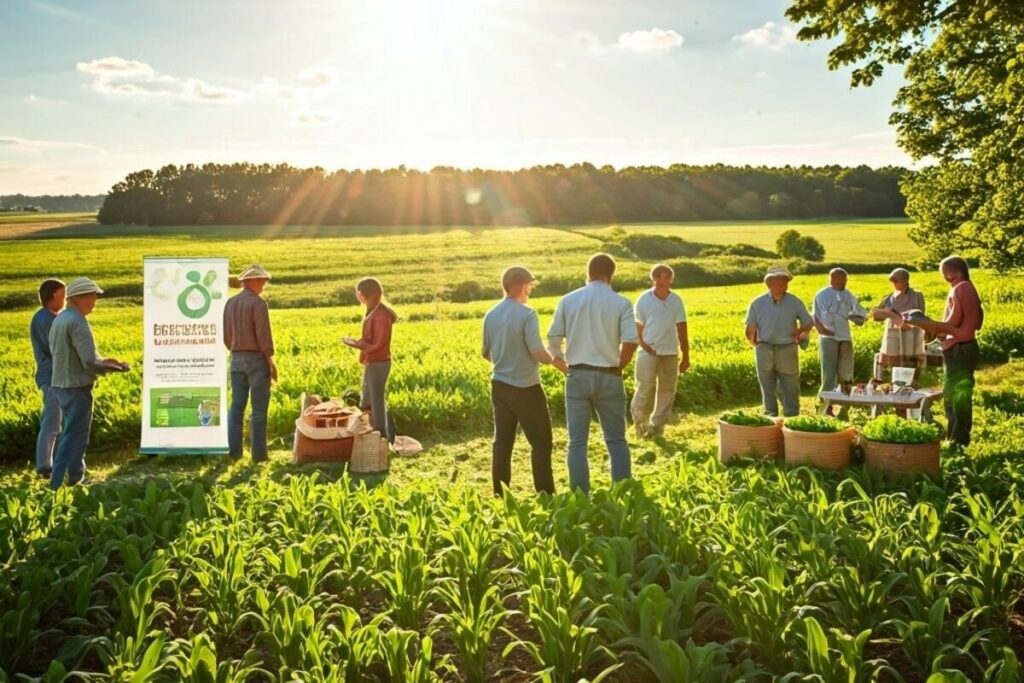
The year 2025 has been declared the International Year of Cooperatives. There are around 250.000 cooperatives in the European Union, involving more than 5,4 million food producers. One in five citizens in the EU is a member of a cooperative organization – a total of around 140 million people. Cooperatives employ 2,4 million workers and provide services to more than 200 million customers.
Agricultural and consumer cooperatives in the EU play a key role in providing healthy food and protecting consumers. In practice, it has been shown that a producer, organized through a cooperative, protects consumers more effectively than the state or the non-governmental sector. In recent years, cooperatives have also been the carriers of the development of renewable energy sources and the circular economy.
On the occasion of the International Year of Cooperatives, the European Union – under the auspices of the United Nations – organized a major conference “Cooperatives as a driver of change”, with a clear message: preparation for profound changes and the gradual disappearance of industrial agriculture. For justified reasons, there were no representatives of Montenegro at that conference – because Montenegro today does not have cooperatives, and it goes without saying that there are no cooperative associations either. The farmer is left to the arbitrariness of decision-makers, which has yielded the disastrous results we have.
Ironically, in an attempt to be “original”, we may have made a civilizational leap in the opposite direction. Instead of developing cooperatives, we promoted the abstract concept of “rural development”. In Brussels, we were warned that the term “rural” simply means – rural. That is, the development of villages. Our representatives, however, explained that these issues are dealt with by the state, not cooperatives, and that instead of cooperative organization, we have formed various associations – modeled after political parties.
This approach is fundamentally contrary to EU legislation and practice, where cooperatives operate on the principles of participation, community and collective responsibility. This is precisely why they are more resilient to economic crises, administrative abuses and corruption than classic corporations.
Cooperatives in Montenegro – from foundation to disappearance
Cooperatives in Montenegro have deep roots. The first cooperative was founded in 1902 in Đenovići, which was then under the Austro-Hungarian Empire, and the first one registered in the then state of Montenegro in 1905 – the Winegrowing Cooperative in Godinje.
The establishment of the Peasant Self-Help Cooperative, formed by young communists, is impressive. In a very short time, this cooperative had 40.000 members with great influence among the people. The members of this cooperative were the most important actors in the July 13th Uprising. After World War II, the Stalinist model of collectivization was introduced (1945-1960), which failed. Then an authentic model based on tradition, community and collective ownership was developed, from which agro-industrial complexes and agro-combinats emerged – all formed by the association of cooperatives.
The period from 1965 to 1990 was extremely successful. After 1990, a systematic collapse occurred: cooperatives were administratively closed down, their assets were sold without the decisions of the cooperative members, often in favor of oligarchs. Today, cooperatives in Montenegro are treated as an irretrievable past. There are no official data, nor are cooperatives mentioned in the strategies of ministries, municipalities, or public databases.
Chapter 11 – Opportunity or Trap?
The documents for accession negotiations under Chapter 11 (Agriculture) often use terms and solutions taken from other systems, sometimes linguistically and essentially unadapted to our context. Due to numerous ambiguities, the European Commission leaves the possibility of a transitional period of up to ten years – which is a precedent in previous negotiations.
However, the EU offers a huge development opportunity. The need to protect authentic products through geographical indications of origin and authenticity (ZOI, ZOZP) is particularly emphasized: Kolašin cheese, Crmnica onions, vines and Teklin brandy, and many other products. The question arises – can products with imported raw materials carry these labels?
An additional problem is the cadastre and land ownership. The European Union recognizes only clearly recorded parcels with known title holders. In Montenegro, the owner of a large part of the land is unknown, nor is there a demarcation between private, collective and cooperative ownership – which is not recognized at all in domestic documents.
Closing message
Montenegro has the largest amount of agricultural land per capita in Europe, but also the largest food import. At the same time, it is the only European country without a functioning cooperative system. Perhaps the solution lies precisely in this contradiction.
Life does not begin with us. We have our own experience, knowledge and tradition of togetherness that can be a valuable example for Europe. That is why we call on decision-makers to turn to the countryside, agriculture and cooperatives – because the ideal of Montenegro has always been harmony, togetherness and freedom.
We send a message to decision-makers that we are ready to extend a fraternal peasant hand, to forgive everything that has been done to us.
The author is a graduate agronomist, a specialist in farmers’ associations and cooperatives; he was the director of cooperative production at Agrokombinat 13. jul; he is the founder of several cooperatives in Montenegro and the recipient of the highest awards in the field of cooperative development in Yugoslavia

News
(Opinions and views published in the “Columns” section are not necessarily the views of the “Vijesti” editorial office.)