
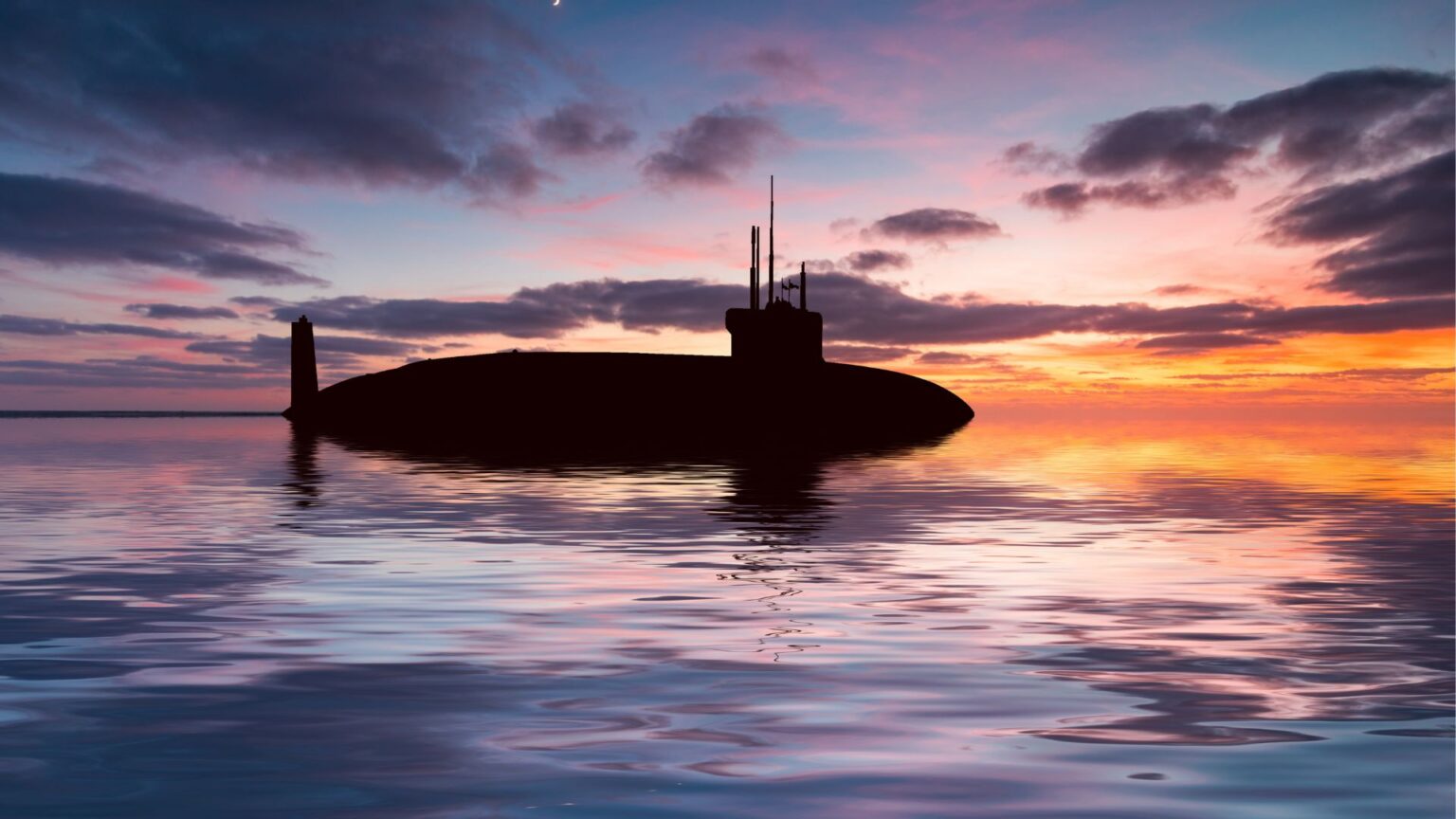
Russia is developing a new type of nuclear submarine to boost its defenses as it faces sanctions, industrial challenges, and the fast upgrades of NATO naval forces.
The announcement was made by Nikolai Patrushev, an aide to the president and head of Russia’s Naval Board, during a speech for the 125th anniversary of the Rubin Central Design Bureau for Marine Engineering.
Russian news agency Interfax reported that Patrushev said Rubin is actively working on a next-generation nuclear-powered ballistic missile submarine (SSBN) and advanced underwater systems.
New fifth-generation nuclear submarine
While specific details remain secret, Patrushev has clearly stated that Moscow is openly acknowledging a new program for fifth-generation strategic submarines.
The work focuses on creating autonomous underwater vehicles and advanced underwater weapons. These weapons are described as unique, with no similar options available anywhere. Russian officials often use this phrase to highlight advanced or unusual technology.
The announcement shows the Kremlin’s efforts to keep its sea-based nuclear weapons. This part of their military power is considered the most reliable means of deterring attacks.
Russia’s current SSBN force relies on the Project 955 Borei and improved Borei-A submarines, which are considered fourth-generation platforms armed with Bulava submarine-launched ballistic missiles.
Military experts believe that a fifth-generation design should focus on reducing noise, increasing automation, extending underwater endurance, and improving integration with future command-and-control networks.
Such features would be aimed at improving survivability against increasingly capable Western anti-submarine warfare systems.
Western defense officials see the Russian program as a counterpart to the US Navy’s Columbia-class ballistic missile submarine, which is slated to replace the aging Ohio-class fleet and has already entered early production stages.
Patrushev framed the new Russian effort as part of a drive for “technological sovereignty,” a recurring theme since Western sanctions restricted access to foreign components and manufacturing technologies.
To counter NATO at sea
Russian defense experts have suggested that a future submarine could be built to launch various types of payloads. These may include non-nuclear drones for gathering intelligence, conducting electronic warfare, or carrying out anti-submarine operations.
President Vladimir Putin has announced that tests of advanced underwater weapons have been successful. This has led to speculation that the submarine may be linked to systems like the nuclear-powered Poseidon underwater drone. However, officials have not confirmed this relationship.
The program’s timeline is unclear. Russian media report that the project is part of a secret development plan involving the Defense Ministry, the United Shipbuilding Corporation, and research institutions in St. Petersburg and Severodvinsk.
If construction gets approved, it will probably take several years. This is because building SSBNs is complex, and Russia’s shipbuilding industry faces current challenges.
The Rubin Design Bureau, founded in 1900, has been important in Russia’s submarine history. It has designed everything from the large Typhoon-class submarines of the Soviet era to today’s Borei submarines.
Its work supports Russia’s strategic undersea fleet, which is one of three key parts of the country’s defense, along with land-based intercontinental missiles and long-range bombers.
At the anniversary ceremony, attended by senior military and regional officials, Rubin was awarded the Order of Alexander Nevsky for service to the state.
Engineers involved in recent submarine projects also received state honors, highlighting the political importance Moscow places on naval nuclear programs.
NATO planners will pay more attention to undersea surveillance and anti-submarine capabilities now that a fifth-generation Russian ballistic missile submarine (SSBN) has been confirmed. This focus will be especially important in sensitive areas such as the Arctic, the North Atlantic, and the Pacific approaches.
Major powers are investing heavily in quieter, more survivable submarines. This focus on underwater competition is becoming a key part of future strategic deterrence.