
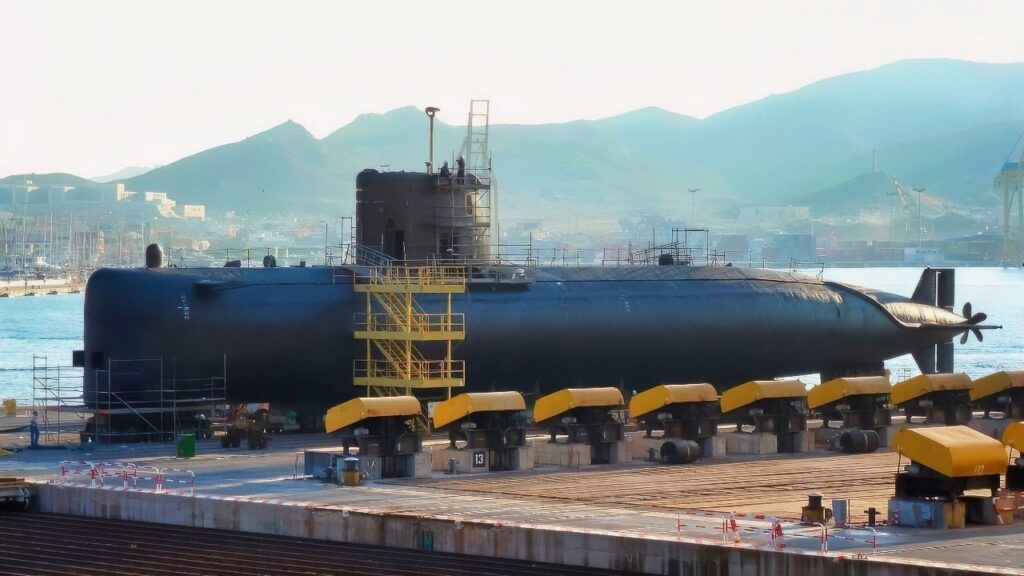
Key Points and Summary – Spain’s S-80 submarine program almost sank under its own weight—literally.
-A major design miscalculation left the first boat about 70 tons overweight, forcing an expensive redesign and years of delay.
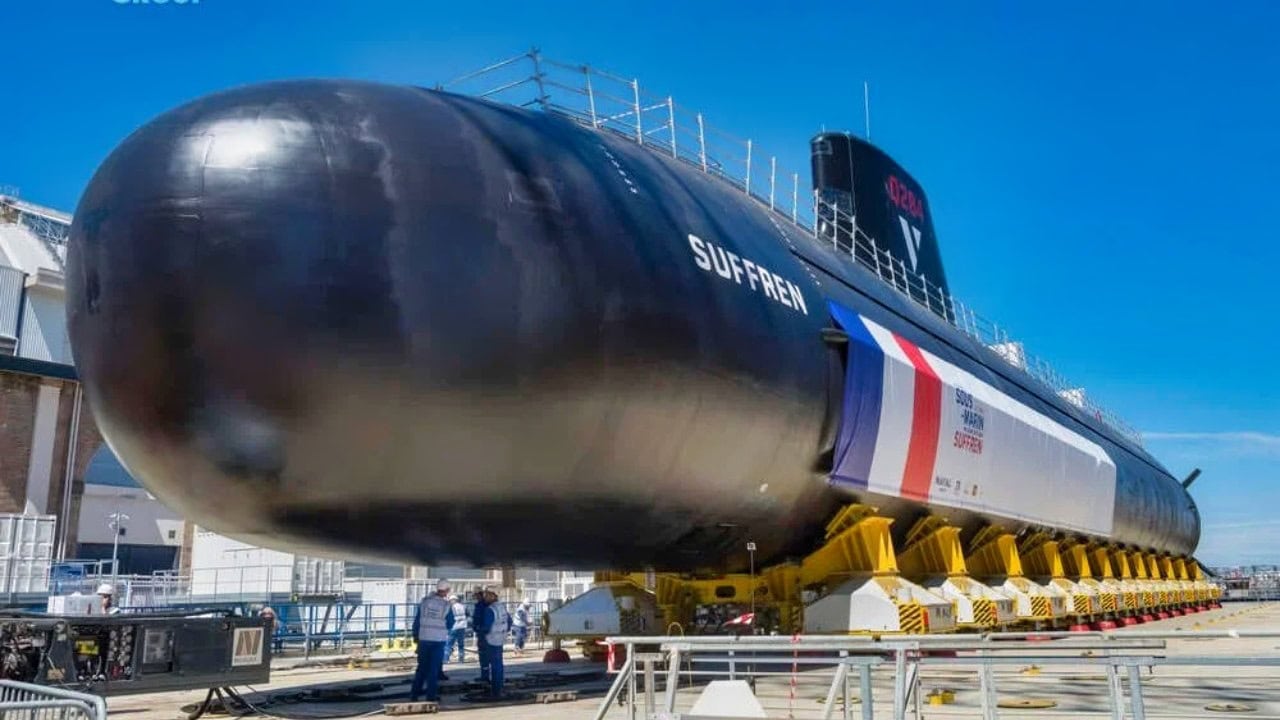
Suffren-Class Submarine SSN France
-Yet the class is now quietly maturing into a potent, modern conventional submarine.
-Built by Navantia, the S-80 features the BEST air-independent propulsion system, using bio-ethanol to generate hydrogen and stay submerged for up to three weeks.
-After early boats entered service without AIP, retrofits are underway, and the lead sub, Isaac Peral, has already completed a major NATO deployment.
-Spain’s once-embarrassing project is finally earning serious attention.
Spain’s S-80 Submarines: From Embarrassing Design Flaw to NATO Workhorse
Spain’s upcoming S-80 class of submarines is a four-hull class, with three vessels in various stages of building, and the lead sub of the class recently completed its first deployment in tandem with other NATO forces.
Though relatively small compared to other larger submarine programs, like those in the United States Navy or the People’s Liberation Army Navy, the Spanish submarine does bring some unique capabilities to the table, namely its advanced air-independent propulsion system, which its builder calls Bio-Ethanol Stealth Technology, or BEST. But despite the class’s promise, it had a rocky beginning—one that nearly torpedoed the submarine design.
The naval expert HI Sutton outlined the contours of the first-of-class’s unique name. “The lead boat’s name harkens back to a time when Spanish engineers were among the first pioneers of submarine warfare,” Sutton writes. “Isaac Peral (1851-1895) was a naval officer and engineer who designed the first all-electric submarine. His craft was with the Spanish Navy in 1889, more than 10 years before the US Navy and Royal Navy commissioned their first Holland Class submarines.”
“In his honor, the name Isaac Peral has been given to three more previous submarines of the Spanish Navy. Despite Peral’s pioneering work the Spanish postwar submarine fleet has partly been built from acquired types. Local production of French designs started at Cartagena in the late 1960s with the Daphné-class. Four of these were build, followed by four Agosta Class boats in the 1980s.”
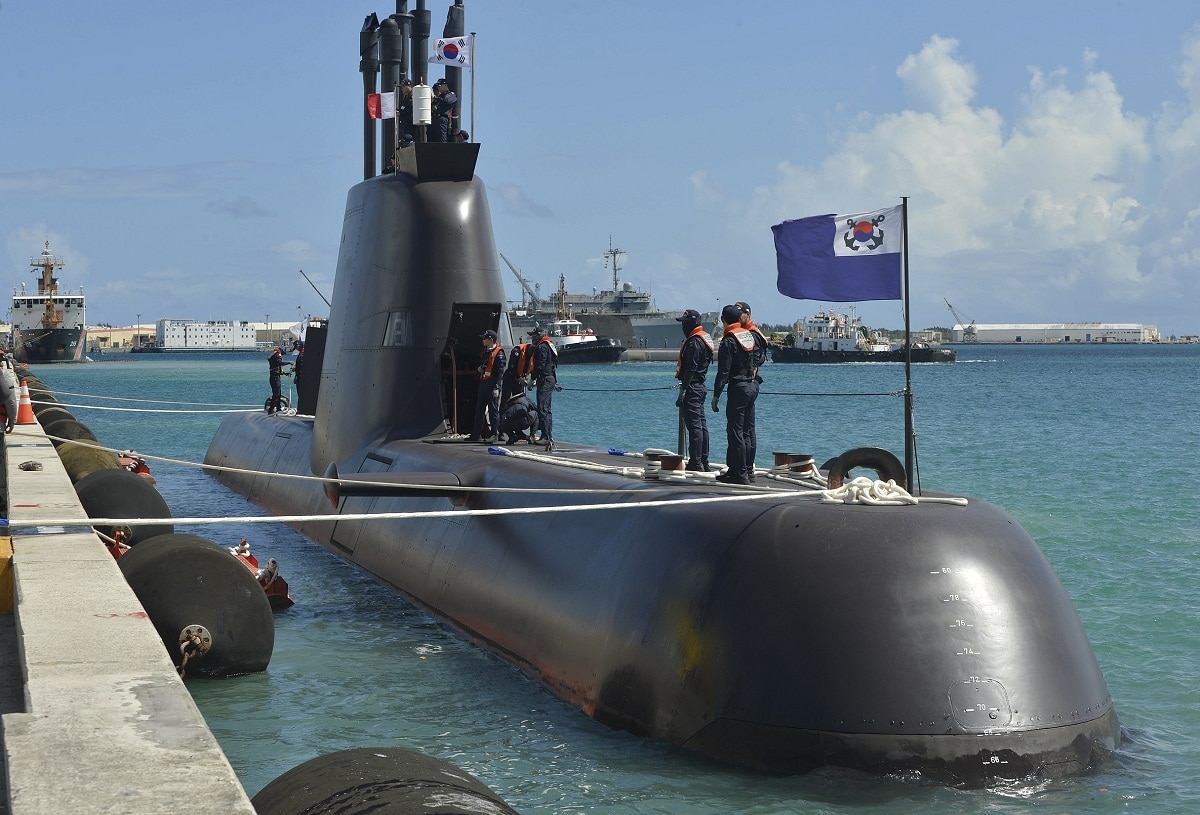
SANTA RITA, Guam (June 5, 2019) – Republic of Korea Navy sailors aboard the Sohn Wonyil class diesel-electric submarine ROKS Yun Bonggil (SS 077), prepare to conduct line handling duties as the submarine arrives at Naval Base Guam, June 5. Naval Base Guam is strategically located to support all submarines deployed to 7th Fleet and is home port to four Los Angeles-class attack submarines. (U.S. Navy photo by Mass Communication Specialist Seaman Chase Stephens /Released)
Navantia, a Spanish firm, and DCNS, which Sutton explains is now known as Naval Group, a French firm, began to develop the French Scorpène-class submarines, a submarine that was primarily aimed at the export market, and found some success in Asia and Latin America, with Malaysia, India, Chile, and Brazil purchasing the subs.
But that submarine was considered too small to meet the Spanish Navy’s requirements, leading to the S-80 submarine program.
And while the S-80 and the French Scorpène submarines share some characteristics, they are fundamentally distinct platforms. But it has not been smooth sailing for the Spanish S-80—an early, vital engineering mistake proved to be what Sutton calls “an embarrassing problem.”
“The S-80 design had a troubled gestation,” Sutton explained. “Originally it was to be somewhat smaller than it is today. However, errors in calculations during design resulted in it being about 70 tons overweight. This was a serious issue and the redesign resulted in a substantially larger, but safer, design.
“The popular telling of the tale is that the error resulted from a mix up between engineers “putting a decimal point in the wrong place”. This is probably not true (I have been assured that it isn’t!) but it makes for a good story.”
Fast forward to today, and though most of the S-80’s teething problems have been rectified, the class has required some retrofitting after entering service—retrofits that left the submarines severely constrained before their Spanish shipbuilder implemented the fix.
“The development of the S-80 has not been without complications and delays,” HI Sutton says, outlining the contours of the S-80’s current, post-build difficulties. “The first two boats, Issac Peral (S-81) and Narciso Monturiol (S-82) will enter service without the AI [air-independent propulsion]. Instead it will be added during a later overhaul. The third hull, Cosme García (S-83), should have the AIP installed this year. The last boat, Mateo García de los Reyes (S-84) will also receive it during construction.”
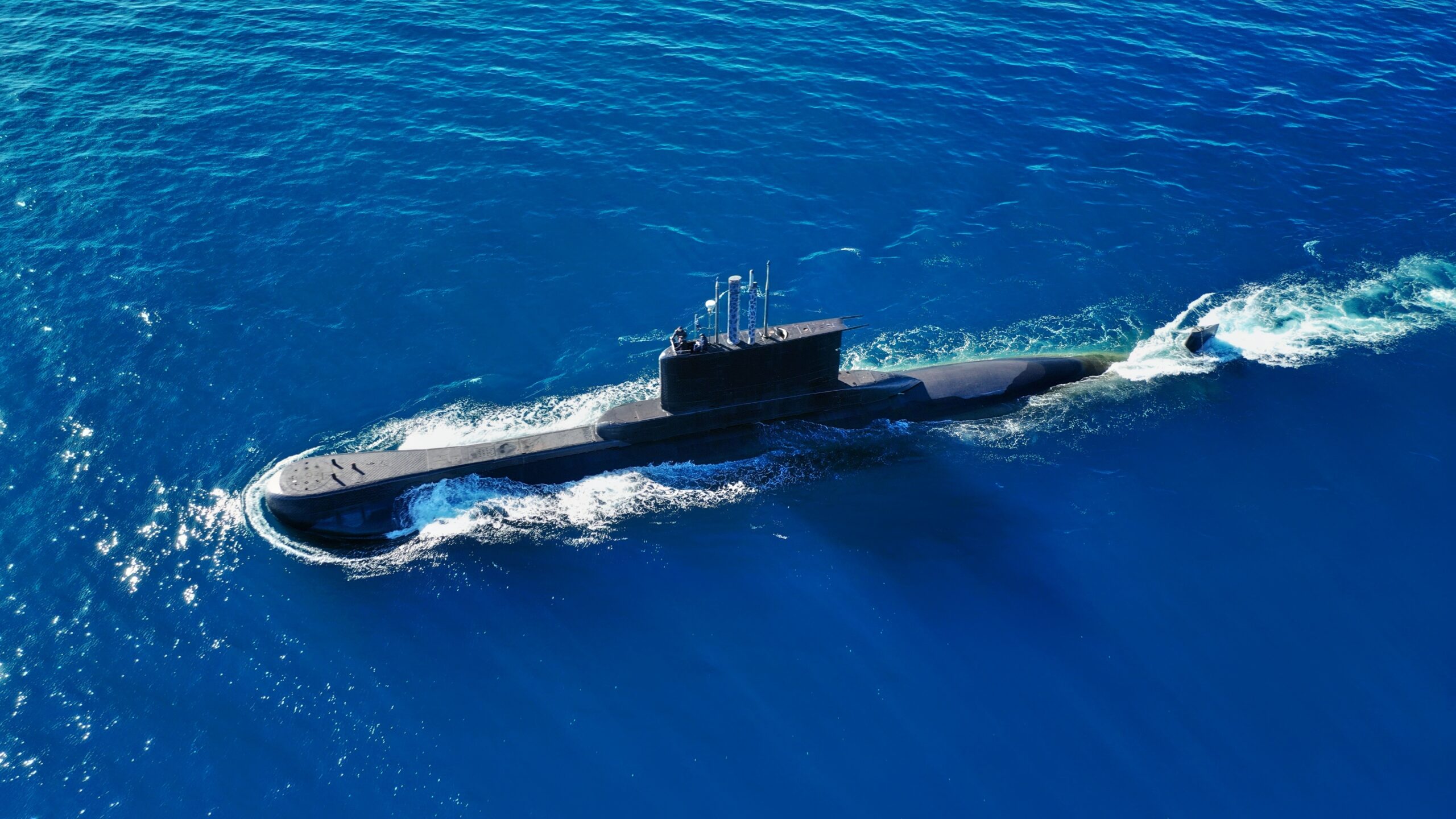
AIP Submarine from Germany. Image Credit: Creative Commons.
“The new class promises to bring the Spanish Navy’s submarine fleet thoroughly up to date. The AIP has endurance of about 3 weeks and can be operated throughout the entire depth-range of the submarine. Combined with the low crewing requirements, just 32 people, this may make it attractive on the international market.”
Navantia touts the class’s air-independent propulsion system, which it calls a third-generation system, though details from the Spanish firm are scarce. Called BEST, an acronym for Bio-Ethanol Stealth Technology, it includes “a bioethanol reformer that produces hydrogen, which then reacts with oxygen in a fuel cell to generate electricity,” a feature the firm confirms allows submarines equipped with BEST to remain submerged for “up to three weeks.”
The S-80’s troubles have seemingly been rectified. In November, the Spanish Navy announced that the first of the class, the Isaac Peral, completed 840 hours of underwater sailing over a course totaling more than 5,000 nautical miles, as part of Operation Sea Guardian, a NATO exercise.
Despite the troubled start, Spain’s S-80 submarines seem to have found their sea legs in service with the Armada Española.
Time will tell whether the class can make a wider splash in the export market, too.
About the Author: Caleb Larson
Caleb Larson is an American multiformat journalist based in Berlin, Germany. His work covers the intersection of conflict and society, focusing on American foreign policy and European security. He has reported from Germany, Russia, and the United States. Most recently, he covered the war in Ukraine, reporting extensively on the war’s shifting battle lines from Donbas and writing on the war’s civilian and humanitarian toll. Previously, he worked as a Defense Reporter for POLITICO Europe. You can follow his latest work on X.