
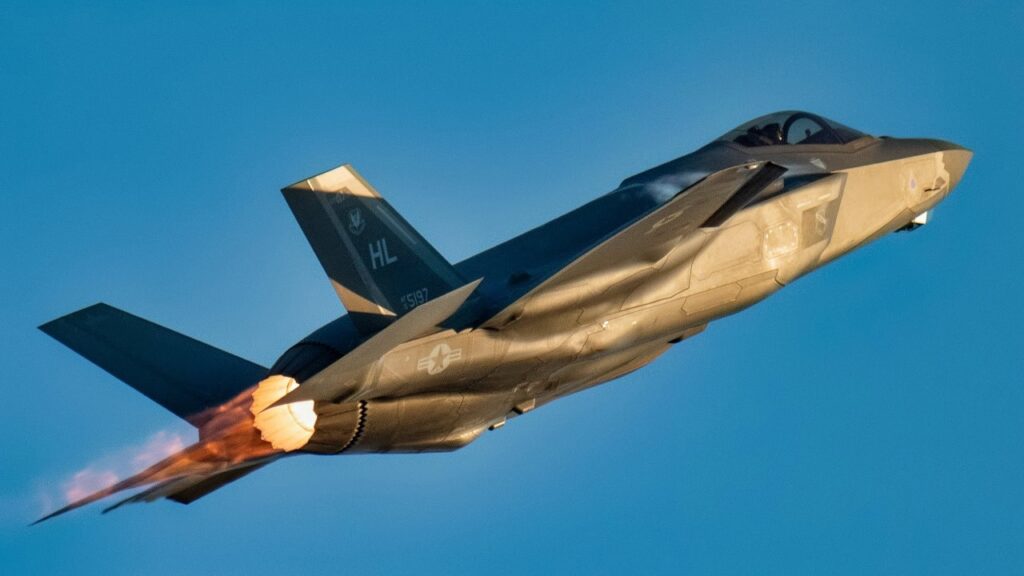
Key Points and Summary – Finland’s purchase of 66 F-35As helps build a truly continental F-35 wall across Europe, with NATO partners on track to field as many as 600 Lightning IIs by 2030.
-That massed fleet would utterly outnumber Russia’s tiny Su-57 force and make any major land thrust in Eastern Europe almost impossible to support from the air.
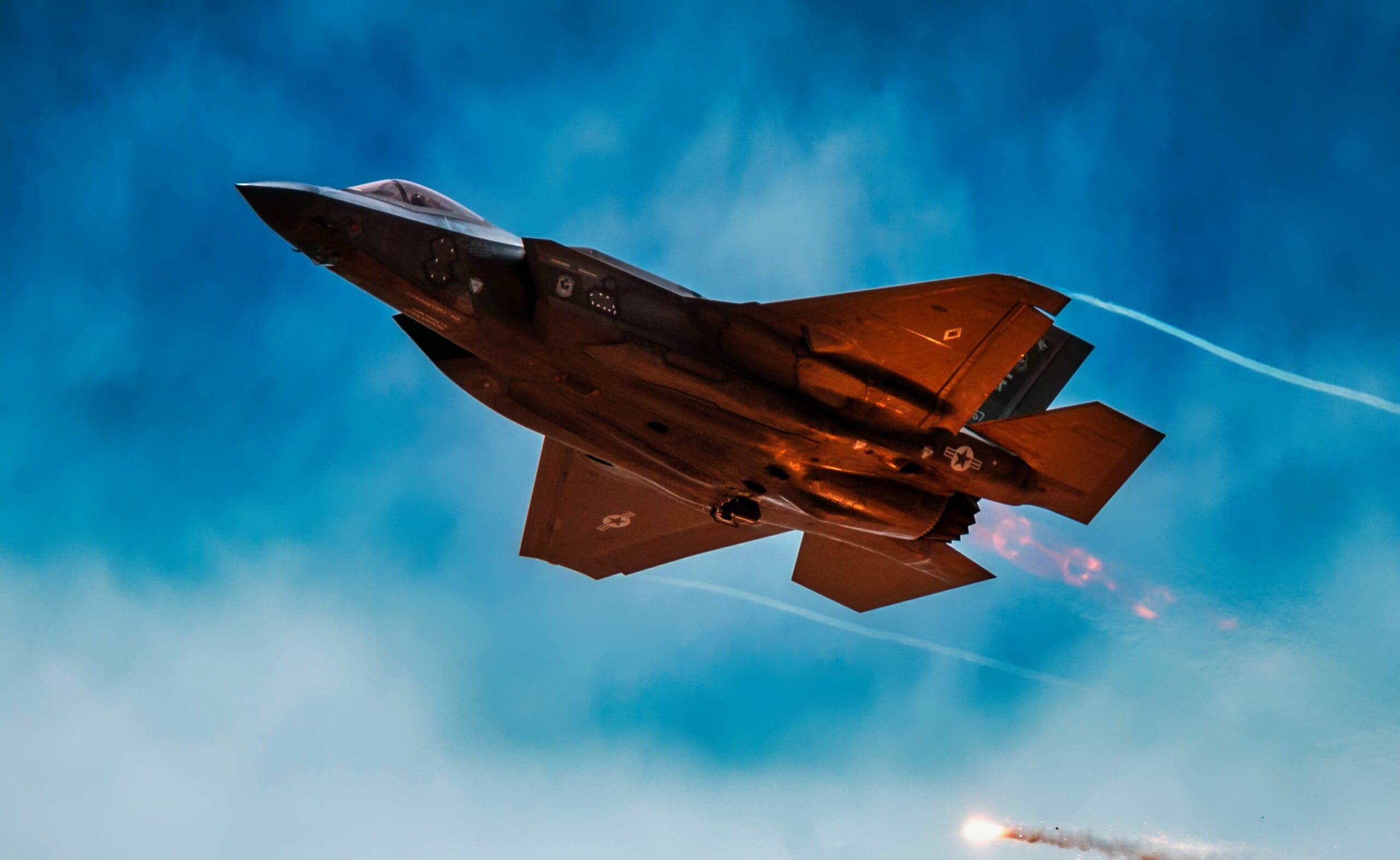
A U.S. Air Force F-35A Lightning II assigned to the 56th Fighter Wing, Luke Air Force Base, Arizona, performs a strafing run during Haboob Havoc, April 24, 2024, over Barry M. Goldwater Range, Arizona. Haboob Havoc is a total force exercise that provides a way for pilots from various bases to demonstrate their skills across a diverse range of aircraft, including F-35 Lightning IIs, F-16 Fighting Falcons, and A-10 Thunderbolt IIs, while also testing their abilities in different mission sets such as dogfighting and gun runs. (U.S. Air Force photo by Airman 1st Class Mason Hargrove)
-The real game-changer, however, is software. A unified “Common Data File” for all F-35 Mission Data Files would let every NATO jet share the same threat library in real time, turning national fleets into a single, integrated kill web—if politics can catch up with the technology.
Finland’s F-35A Deal Could Change Russia’s Air Force Strategy
Finland’s decision to acquire 66 new F-35A fighter jets further expands Europe’s ability to “blanket” or overwhelm any Russian air threat with a massive, multi-national fleet of F-35s in the event of a large-scale confrontation.
Many Eastern European nations, such as Poland, the Czech Republic, Switzerland, Greece, Norway, Germany, and Denmark, could collectively field a 200-or-more-aircraft-strong multinational force of networked F-35s.
Lockheed’s vice president for F-35 international sales, JR McDonald, has said that by 2030, there could be as many as 600 F-35s flying for European countries.
NATO advantage
This reality gives NATO an unparalleled or massive advantage over Russia in any potential great power conflict, as the alliance would be positioned to operate hundreds more 5th-generation aircraft than Russia.
Russia is known to only operate a small number of its 5th-generation stealth Su-57s. Russia’s Su-57 production has also been plagued with budget difficulties and manufacturing complications, so it is not at all clear that Russia will field a credible force of 5th-generation stealth aircraft in the near future.
In the event of any potential Russian land incursion in the Baltics or Eastern Europe, Russia would be extremely challenged to establish any kind of air superiority.
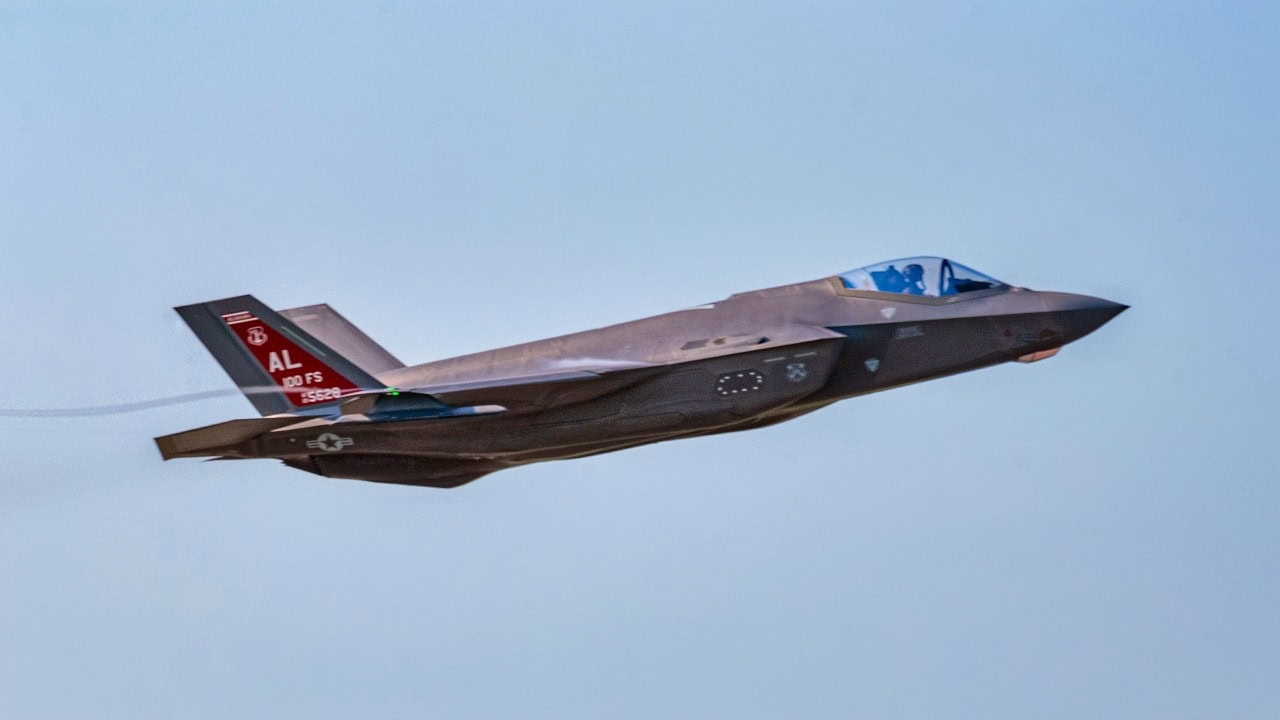
A U.S. Air Force F-35A Lightning II, assigned to the 187th Fighter Wing takes off at Dannelly Field, Ala., Aug. 6, 2024. The 187th Fighter Wing participated in Northern Lightning, a joint training exercise, emphasizing user-defined objectives resulting in tailored, scenario-based, full spectrum, high-end training.
This would leave its ground forces extremely vulnerable to being destroyed from the air by allied F-35s; a Russian ground invasion would arguably have little to no chance in any attack on the European continent, given its massive 5th-generation air deficit.
F-35 Threat Library
A larger multi-national force of F-35s will increasingly be able to share information and operate from a standard “threat library.”
The F-35 is famous for its often-discussed Mission Data Files, an advanced computer threat library that bounces new incoming sensor data off of an extensive, specific threat database.
Should a sensor encounter a Chinese J-20, for example, or a Russian Su-57, the aircraft’s onboard computer will instantly be able to identify and “verify” the target for pilots in need of launching a rapid attack.
The US Air Force consistently updates and upgrades the threat library, much of which is specific to geographical threat areas around different theaters of operation.
Now, while each F-35 has its own threat library or Mission Data Files, each F-35 member country operates with a specific version of its own “national” threat library compilation.
With databases from F-35 libraries slightly different, pilots from different member-countries could struggle to verify targets and pass precise threat information in some cases, as they may not operate from the same database.
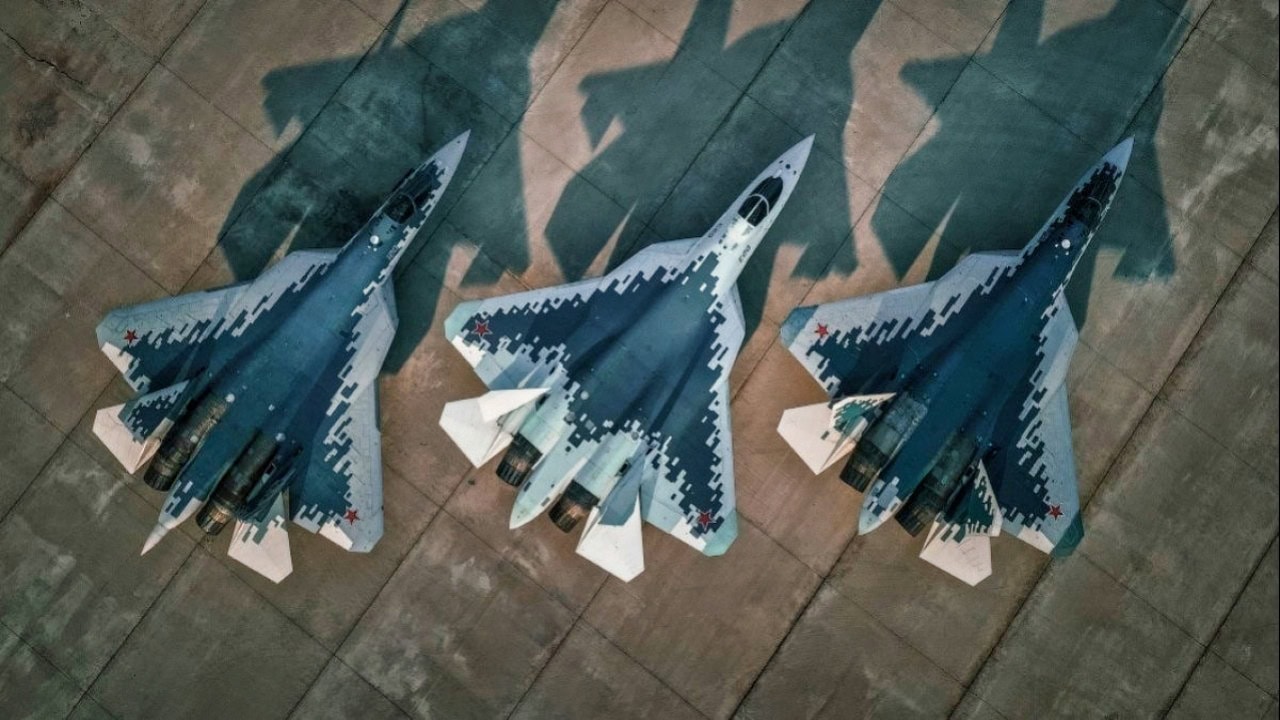
Su-57 Felon. Image Credit: Russian Government.
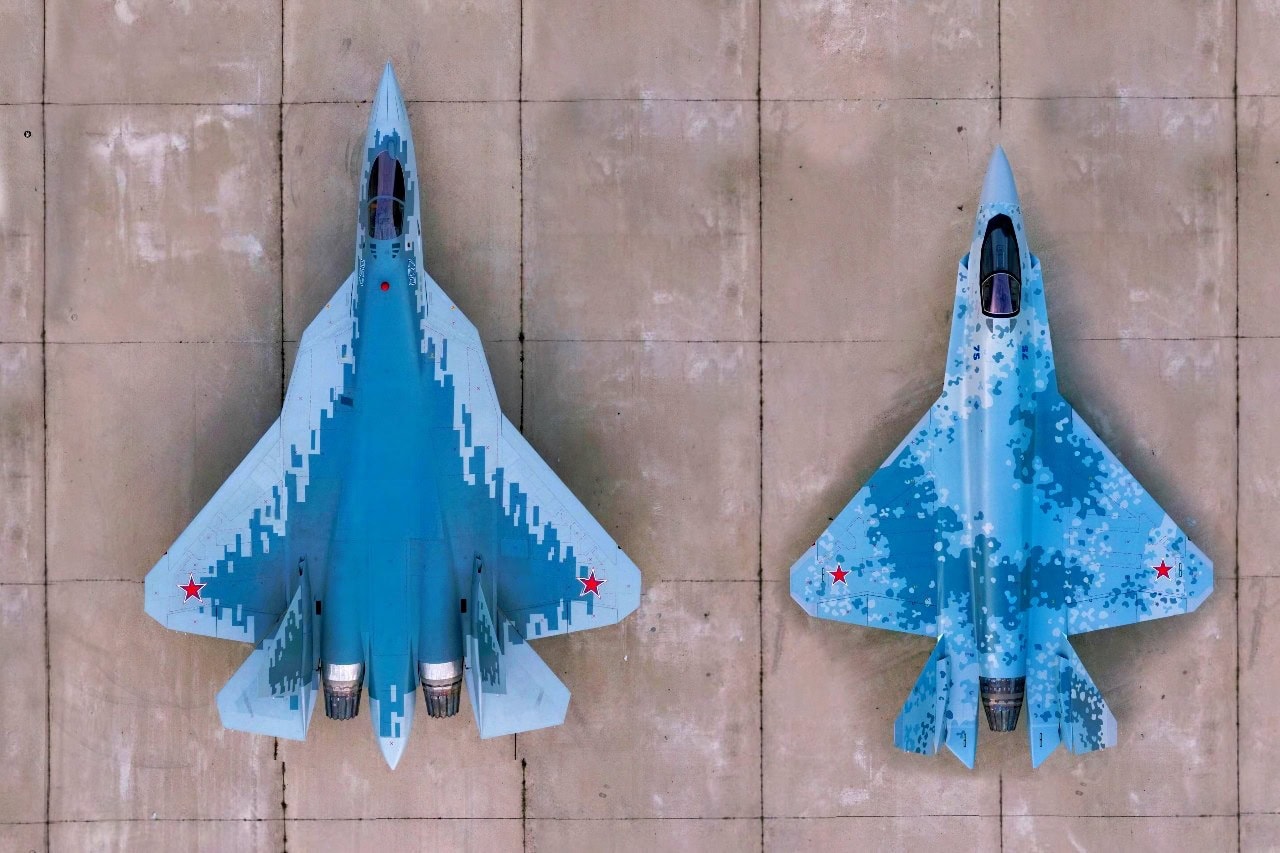
Su-57 Felon and Su-75 Fighters From Russia. Image Credit: Creative Commons.
For this reason, weapons developers, political leaders, and military leaders are working diligently to craft a single “common database” for all F-35 member nations to use, according to Pentagon and industry weapons developers.
Common Data Files
This new common database will incorporate precise, accurate, and common information for all F-35 fighters, thereby better enabling target sharing, collaborative attack, and in-flight intelligence gathering.
Each country’s Mission Data Files are slightly different and tailored to its individual “threat-determined” needs.
While much of the information is, of course, common, a single collective, unified “common data file” is necessary for all F-35 member nations to operate with.
These efforts are underway, and weapons developers explain that the technology has matured to the point where a single, shared threat library for all F-35s can be created and integrated into member-country aircraft.
However, despite the technological possibilities, existing policy determinations among F-35 member nations need to keep pace with technological progress to enable the rapid implementation of a standard system.
The standard system will, of course, incorporate elements from all countries, as it will not be identical to any individual country’s library. One single Common Data File will be engineered with advanced computing and distributed across the multinational F-35 force.
As is the case with most Mission Data Files updates and upgrades, the Common Data Files will likely require software upgrades and adjustments to computer systems. With the large number of countries now joining the F-35 family in recent years, there would appear to be a significant tactical advantage associated with having a NATO-wide Common Data Files.
About the Author: Kris Osborn
Kris Osborn is the President of Warrior Maven – Center for Military Modernization. Osborn previously served at the Pentagon as a highly qualified expert in the Office of the Assistant Secretary of the Army—Acquisition, Logistics & Technology. Osborn has also worked as an anchor and on-air military specialist at national TV networks. He has appeared as a guest military expert on Fox News, MSNBC, The Military Channel, and The History Channel. He also has a Masters Degree in Comparative Literature from Columbia University