
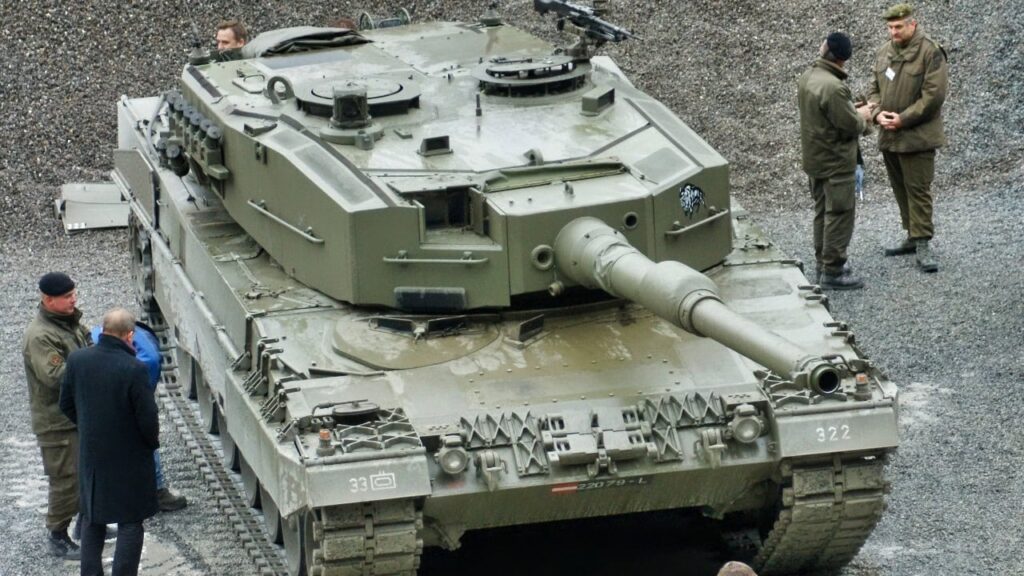
Key Points and Summary – Germany’s 2022 Zeitenwende speech has turned into a concrete military reboot: 100 billion euros for rearmament, a lasting pledge to spend over 2 percent of GDP, and the first permanent Bundeswehr deployment abroad since World War II with a 4,800-strong brigade in Lithuania.
-Berlin is rebuilding armor, artillery, and manpower while Defense Minister Boris Pistorius pushes a “war-capable” force and Chancellor Friedrich Merz vows to make Germany Europe’s strongest conventional power.
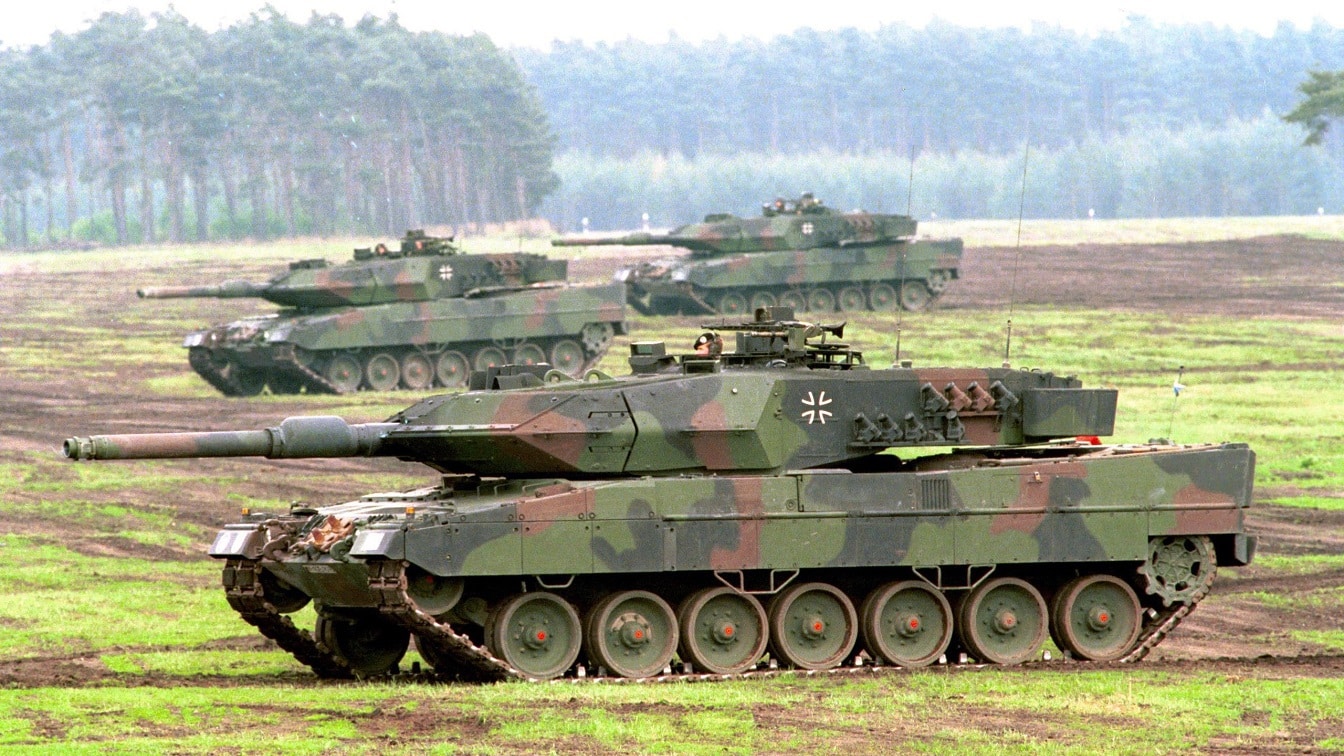
German Leopard 2 Tank. Image Credit: Creative Commons.
-Economic headwinds and recruiting targets remain real constraints, but the political taboo on German hard power is gone—and Berlin’s neighbors now want German troops on their soil.
Germany’s Military Is Getting Ready for a Russia War
February 27, 2022, was a turning point for Germany. The day marked a once-in-a-generation shift in policy rarely seen in a country where progress is based on consensus-building and deeply constrained by bureaucracy. In a speech delivered to the Bundestag, the German parliament, then-Chancellor Olaf Scholz said that Germany and Europe had reached a Zeitenwende, or turning point—the beginning of a new era. Chancellor Scholz catalyzed an incredible shift in Germany’s military posture and the beginning of a new course for the country.
Though Germany had not spent more than 1.5 percent of GDP on defense since 1996, the chancellor explained that the Bundeswehr would receive a massive spending boost of 100 billion euros to revamp and rearm. Additionally, Germany would commit to “invest more than 2 percent” toward defense spending “year after year.”
One of the most startling aspects of Germany’s rearmament is the Bundeswehr’s Lithuania Brigade, a deployment of 4,800 German troops to Lithuania accompanied by 200 civilian personnel. The deployment includes three Bundeswehr combat units, namely the 122nd Mechanized Infantry Battalion, the 203rd Tank Battalion, and the Enhanced Forward Presence Battlegroup Lithuania. It marked the first time the Bundeswehr has been permanently deployed abroad since World War II.
“The permanent basing of the brigade comes against the backdrop of a fundamentally altered European security environment, shaped by the Russian Federation’s aggression against Ukraine and persistent tensions across NATO’s eastern borders,” NATO explains. “Lithuania’s proximity to both Kaliningrad and Belarus renders it a vital component in securing the Suwałki Corridor—a narrow but critical land corridor linking the Baltic States to the rest of NATO.”
The nature of the threat Europe faces explains the willingness of countries in Germany’s near-abroad to host German troops. As recently as just a few years ago, such arrangements would have been virtually unimaginable, both for Germany and its neighbors.
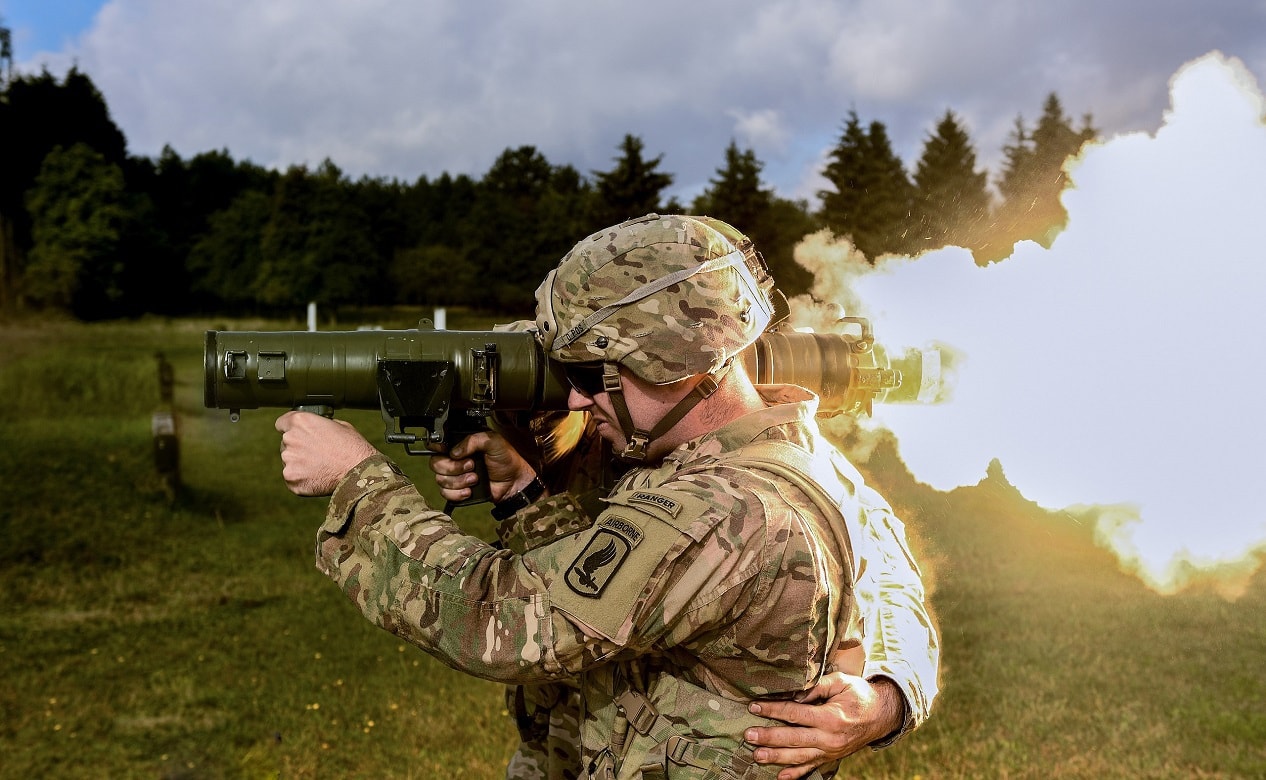
Carl Gustaf Firing: Sky Soldiers from 1st Battalion, 503rd Infantry Regiment engaged targets with the Carl Gustaf 84mm weapon system in Grafenwoehr, Germany September 8, 2018 during Saber Junction 18. Exercise Saber Junction 18 is a U.S. Army Europe-directed exercise designed to assess the readiness of the U.S. Army’s 173rd Airborne Brigade to execute unified land operations in a joint, combined environment and to promote interoperability with participating allies and partner nations.
The nearly overnight evaporation of the Soviet Union led to decades of reduced investment in German defense. In what was dubbed the peace dividend, Germany used the opportunity to draw down military spending and redirect funds for social projects, pensions, and other civilian applications.
In the immediate aftermath of the Cold War, Europe did not face a credible geopolitical threat. And while threats began to mount as the 21st century moved forward, Russia’s full-scale invasion of Ukraine in 2022 finally galvanized Berlin.
More recently, Rheinmetall and KNDS, two of Germany’s heavyweight defense firms, are benefitting hugely from the new defense spending. The Bundeswehr is filling out its depleted warehouses in part by ordering hundreds of Leopard 2 tanks and Puma infantry fighting vehicles.
Berlin absorbed widespread condemnation internationally when it merely pledged to donate 5,000 helmets to Ukraine after Russia invaded.
The country gradually upped its military aid to Ukraine to eventually become the leading supporter in Europe, and number two globally behind the United States. Critics found fresh fodder for critique, however, when Germany tabulated its aid by weight, rather than more relevant metrics such as rounds of artillery or vehicles delivered.
But current German Defense Minister Boris Pistorius has taken a different tack. In a speech, Pistorius demanded that Germany prepare to be kriegstüchtig, or war-capable, and to do so quickly. As part of that effort, German lawmakers voted earlier this month to reintroduce voluntary military service, which ended in 2011 under former Chancellor Angela Merkel.
The Bundeswehr currently has about 182,000 men and women in uniform, but seeks to boost its ranks to 202,000 by next year. Germany would have to recruit many thousands more to match its Cold War number of about 500,000.
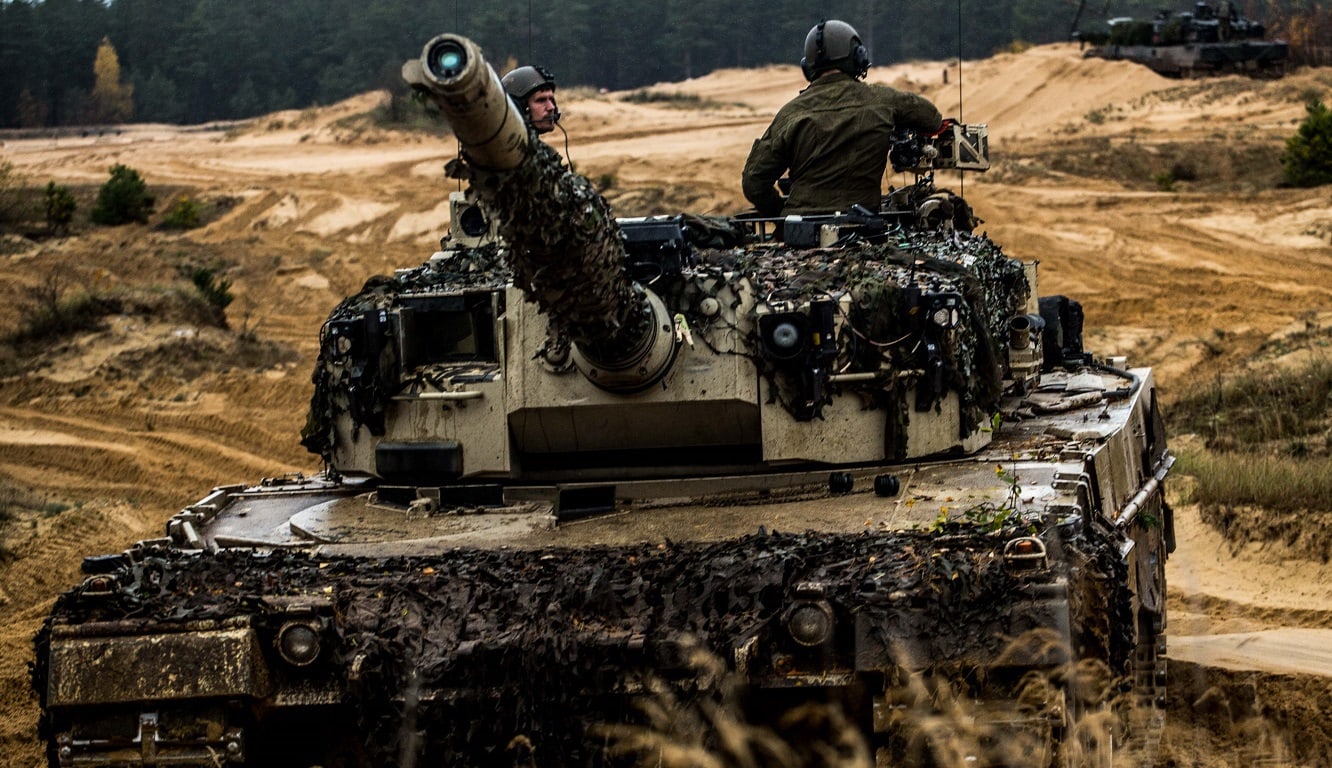
A Norwegian Leopard 2A4 main battle tank during Iron Wolf II in Lithuania. It involves 2,300 troops from 12 NATO Allies. The Lithuanian-led exercise is helping to train the NATO Battlegroup which consists of soldiers from Germany, Belgium, Luxembourg, the Netherlands and Norway. Shot in Rukla, Lithuania.
German Chancellor Friedrich Merz has pledged to make Germany the strongest conventional force in Europe, in part by building on Chancellor Scholz’s Zeitenwende plan. A key component of Merz’s strategy is building up the Bundeswehr with modernized main battle tanks and a new service rifle, Heckler & Koch’s G95A1, a rifle broadly similar to the M27 IAR in service with the U.S. Marine Corps.
What Happens Next?
Germany has managed to institute real and sustained change to Berlin’s military posture and force structure, overcoming the previously insurmountable hurdle of widespread public opposition to increased military spending.
Now, however, the biggest challenge to fully realizing this vision is economic. Inflation is projected to cut into economic growth. But where there is a will, there is a way, and Germany’s commitment to retool and rearm is here to stay.
For a country that has eschewed unilateral military decisions in the decades since the Cold War, that is indeed an enormous leap.
About the Author: Caleb Larson
Caleb Larson is an American multiformat journalist based in Berlin, Germany. His work covers the intersection of conflict and society, focusing on American foreign policy and European security. He has reported from Germany, Russia, and the United States. Most recently, he covered the war in Ukraine, reporting extensively on the war’s shifting battle lines from Donbas and writing on the war’s civilian and humanitarian toll. Previously, he worked as a Defense Reporter for POLITICO Europe. You can follow his latest work on X.