
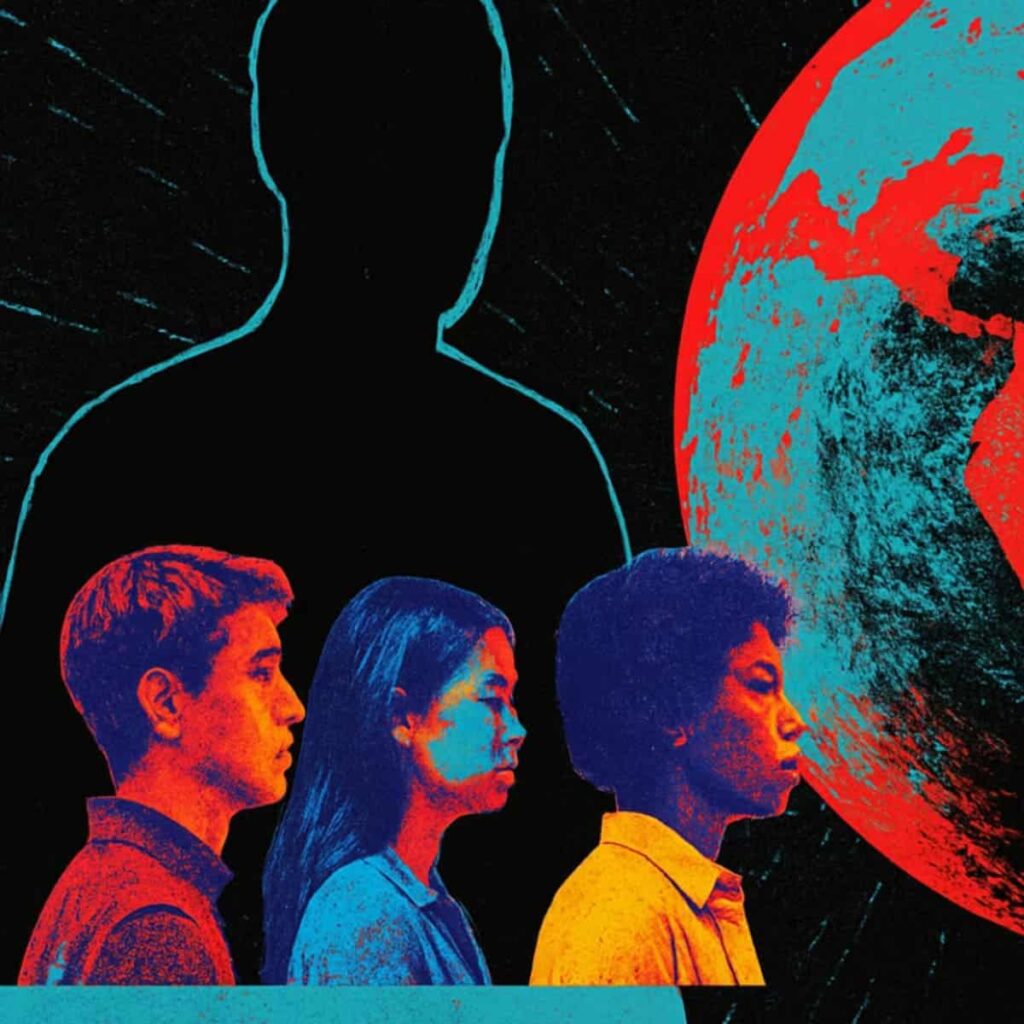
A sweeping new international report has delivered an urgent wake-up call. Beneath the well-known warnings about global warming and biodiversity loss lies something even more alarming — a chain reaction of ecological crises, each intensifying the other, and together pushing the planet toward a potential point of no return. Scientists call this a pivotal moment — perhaps one of the last before a full-scale global shift.
Released by the United Nations Environment Assembly, the assessment brings together nearly 300 scientists from 83 countries in what is now the most extensive environmental evaluation ever produced. Their message is clear: climate change, biodiversity loss, pollution, and land degradation are deeply interconnected — and must be tackled together. Today, one million species face extinction, and addressing one crisis without the others will no longer be enough.
“We can’t talk about climate change without addressing biodiversity, soil degradation, and pollution,” said Bob Watson, former climatologist for NASA and the U.K. “These disruptions weaken the global economy, worsen poverty, and increase food and water insecurity. They also threaten the stability of nations.”
Despite the Paris Agreement signed a decade ago, global emissions hit record highs in 2024. Current projections point toward a temperature rise of 2.4°C (4.3°F) by 2100 — well beyond the 1.5°C goal. Climate change, scientists warn, has become a “threat multiplier,” amplifying deforestation, drought, deadly heatwaves, and megafires worldwide.
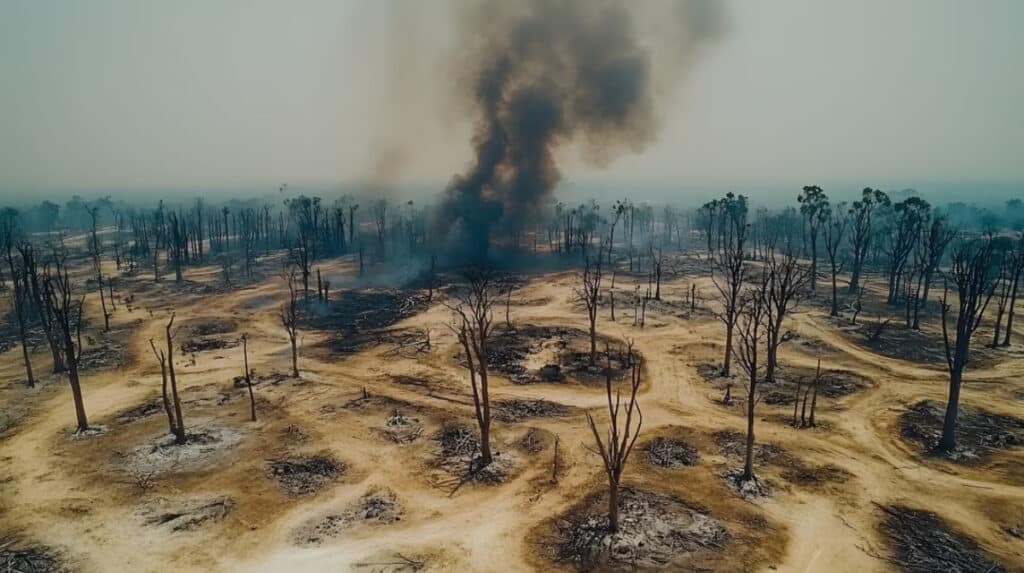
Deforestation, fires, degraded soils: an overview of the interconnected crises that the UN wants to address together. © Supot, Adobe Stock.
A costly but essential transformation
The report calls for massive mobilization — from governments, industries, the financial sector, and citizens alike — to redesign the global economy around the reality of limited resources. Already, 40% of the planet’s land is degraded, and pollution kills roughly 9 million people every year.
The scale of change required is staggering. Reaching carbon neutrality by 2050 and restoring biodiversity would require around $8 trillion in yearly investment. Yet by mid-century, the payoff could surpass those costs, generating more than $20 trillion in benefits annually by 2070. For Watson, it’s also time to look beyond GDP as the primary measure of success — a metric that says nothing about true sustainability or long-term well-being.
When global cooperation breaks down
There’s one critical challenge: global unity. The United States skipped the intergovernmental discussions in Nairobi and distanced itself from the report’s conclusions. Its past withdrawal from the Paris Agreement, pro-fossil fuel policies under Donald Trump, and the recent collapse of talks on a global plastics treaty have all weakened the international push for coordinated action.
“If the U.S. isn’t willing to act, why should others?” Watson asked pointedly — though he remains hopeful that some nations will forge ahead regardless.
For Katharine Hayhoe, climatologist at Texas Tech University, the worsening crisis will eventually leave humanity no choice but to respond. “This isn’t about saving the planet,” she said. “It’s about whether a healthy human society can continue to thrive here. And that answer is still terrifyingly uncertain.”

Cécile Breton
Journalist
Since childhood, books, photography, and travel have been part of my world. Fascinated by life, by the stars, by landscapes that tell stories without a single word, I quickly realized that I needed to express what I saw and felt.
Passionate about the world around me, I first pursued a degree in History at university, driven by my fascination with the stories of the past and the great civilizations that shaped our world. But over the years, another truth became clear: I didn’t want to spend my life in archives or research. I wanted to be out in the field, behind a camera or in front of a microphone, sharing what I learned.
So, I took a new path. I chose journalism, to learn how to tell stories differently—with rigor and clarity. I learned how to write, to interview, to edit, to capture both attention and emotion.
Giving meaning and sharing what matters
Since then, I’ve worked across different media: print, web, radio, television, and video. All of this has allowed me to bring to life topics that matter deeply to me: nature, animals, space, and the major environmental and human issues of our time.
Today, I continue my journey as a journalist at Futura. As part of the editorial team, I strive to share knowledge with curiosity, clarity, and passion. My guiding thread? To make visible what deserves to be seen, understood, and shared—and to keep my sense of wonder alive.