
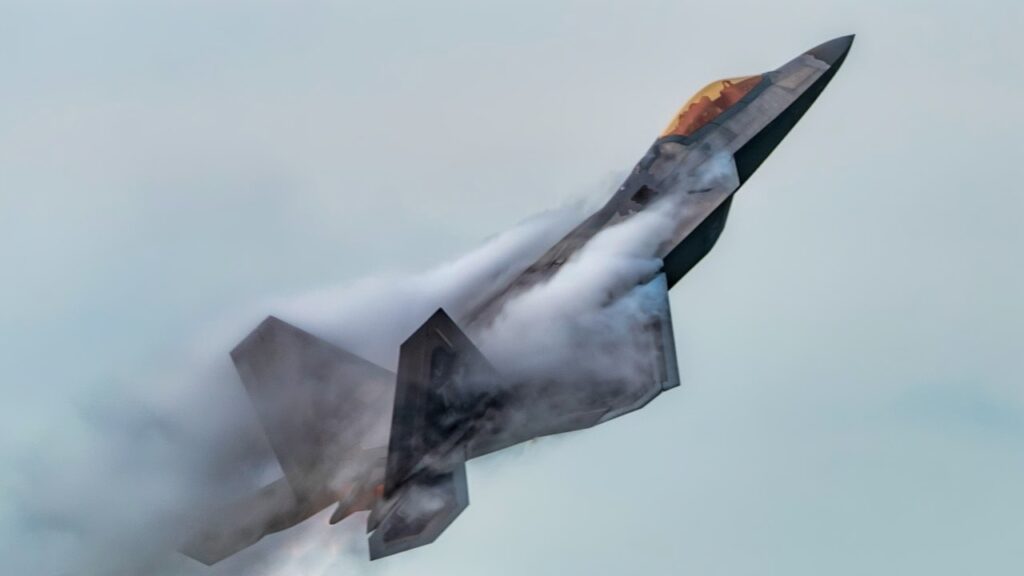
Key Points and Summary – Russia claims its long-delayed S-500 Prometheus air defense system is now operational and ready to hunt the toughest targets in the sky, from ballistic missiles to U.S. F-35s and F-22s.
-On paper, Moscow’s “F-35 killer” promises extreme range, fast reaction times and multi-band radars designed to spot stealth aircraft and even low-orbit satellites.
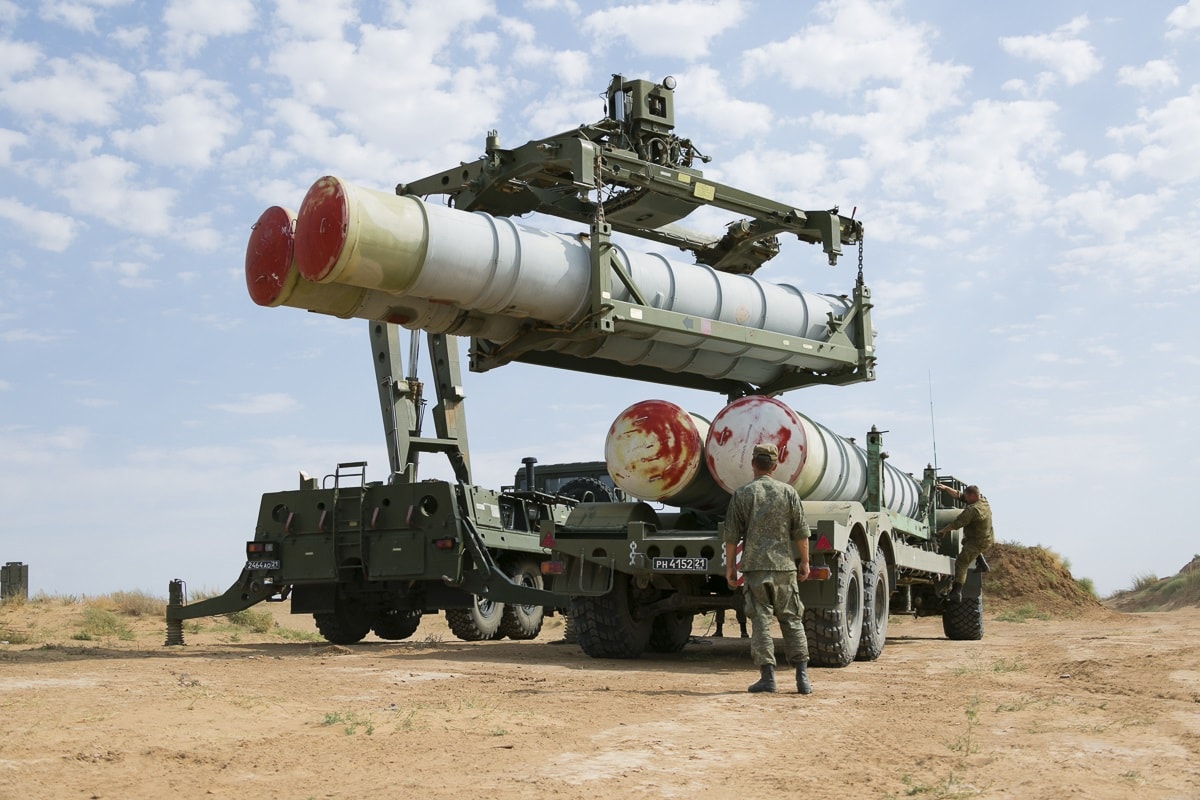
Russia’s S-400 Air Defense System. Image: Russian Military.
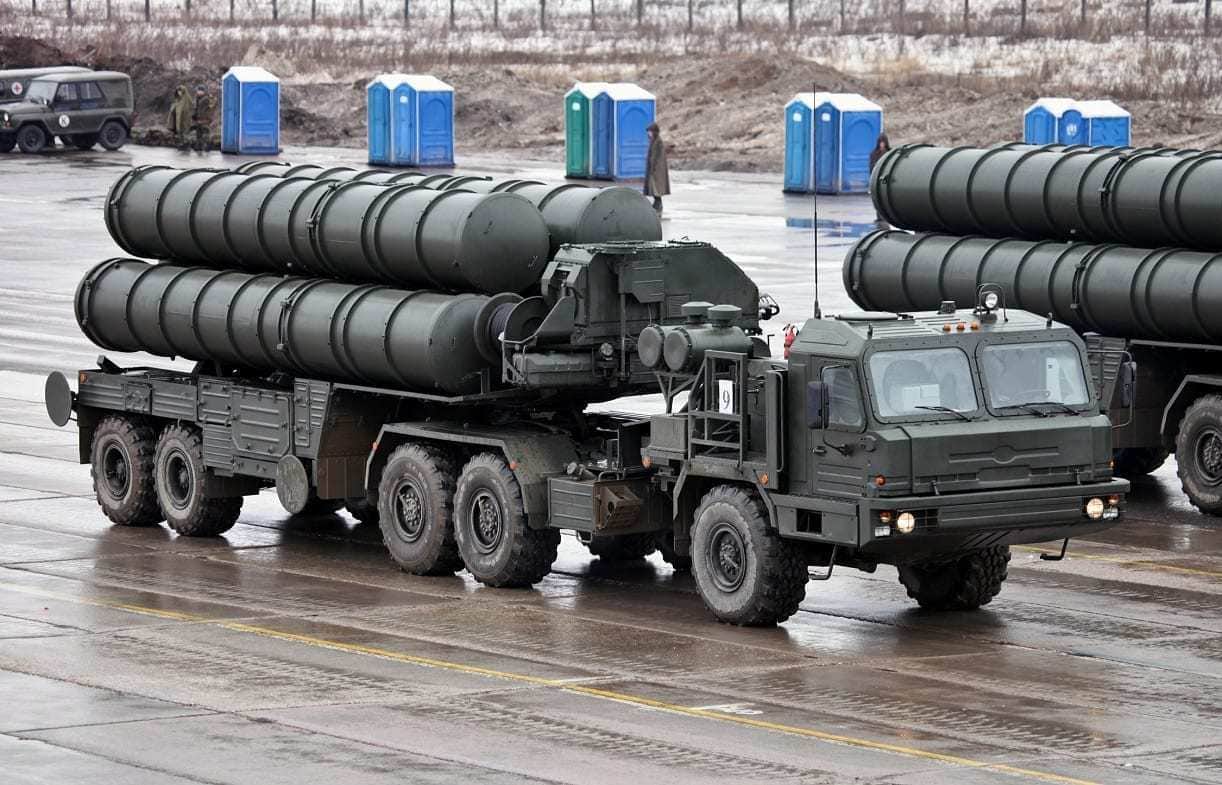
S-400. Image Credit: Creative Commons.
-But Western officials are skeptical. Production appears limited, timelines have slipped for years, and Russia’s poor air-defense record in Ukraine has punctured the myth of invincibility around the S-300/400 family.
-The S-500 may be dangerous—but it’s a long way from rewriting the stealth equation at scale.
S-500: Russia’s Best Defense Against the U.S. Air Force’s F-22 or F-35?
Russia’s announcement that its long-delayed S-500 Prometheus air defense system has entered operational service has reignited a familiar debate: whether advanced surface-to-air missiles are finally catching up to fifth-generation stealth aircraft like the F-35 and F-22.
According to sources who spoke to The Jerusalem Post in recent days, Russia’s claims may not be entirely accurate.
Moscow describes the S-500, which it now says is in operational service, as a system designed to defeat the most demanding threats in the air and even near space – but Western and regional defense sources remain skeptical that the system is as mature as Russia claims, or even available in sufficient numbers to shift the balance with the West fundamentally.
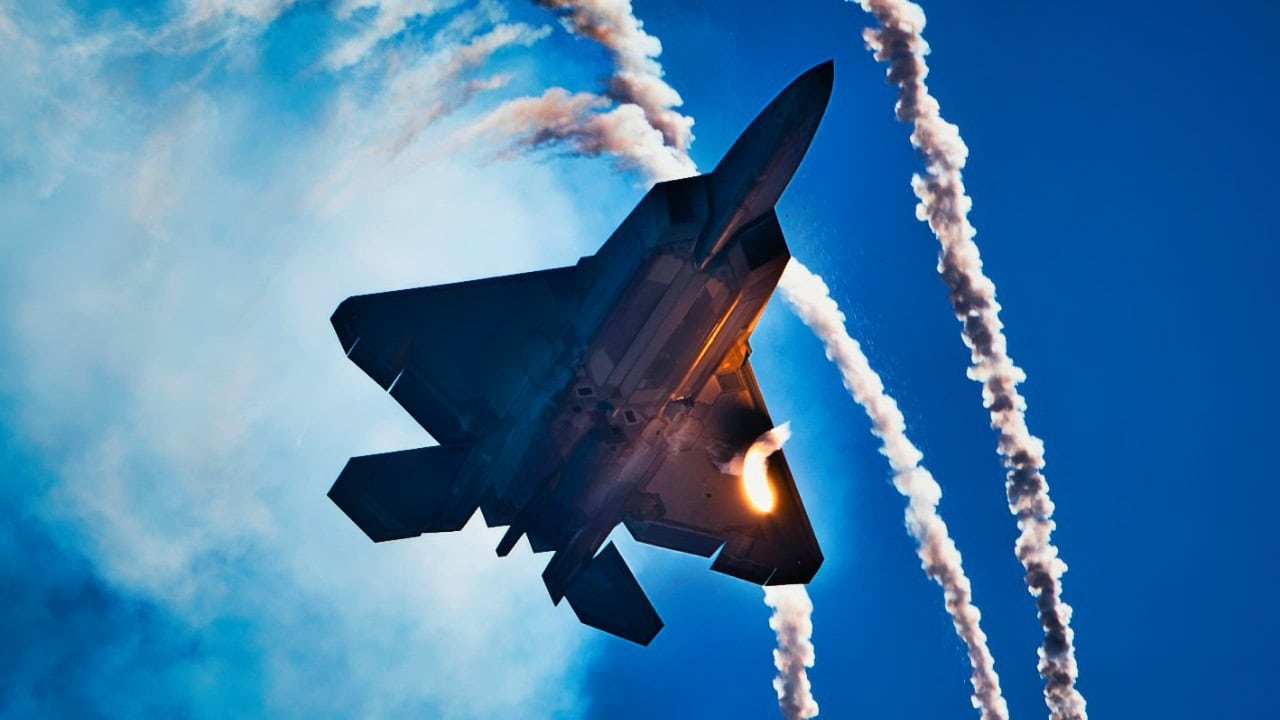
A U.S. Air Force F-22 Raptor, flown by Capt. Samuel “Razz” Larson, F-22 Raptor Demonstration Team pilot, deploys flares over the Gulf of Mexico during the 2024 Gulf Coast Salute Air Show at Panama City Beach, Florida, May 4. The F-22’s unique combination of stealth, speed, agility and situational awareness, combined with lethal long-range air-to-air and air-to-ground weaponry, makes it one of the most advanced fighters in the world. (U.S. Air Force photo by Staff Sgt. Stefan Alvarez)
The claims come as Russia’s military credibility comes under sustained pressure. The war in Ukraine has exposed gaps between Russia’s advertised capabilities and its real-world battlefield performance.
At the same time, Russia has continued its campaign on the ground, it remains under intense pressure and faces continued industrial base, logistics chain, and sanctions-related issues.
What Russia Says the S-500 Can Do: F-22 and F-35 Killer?
Russian officials and state-linked media have repeatedly described the S-500 as an entirely new tier of air and missile defense rather than a simple evolution of the S-400 missile. Designed to sit above existing S-300 and S-400 networks, the S-500 has been presented as an “upper layer” shield intended to counter ballistic missiles, hypersonics weapons, high-value support aircraft, and even low-Earth-orbit satellites.
According to Moscow, the system can detect targets at distances of almost 600 kilometers and engage them at ranges of roughly 400-500 kilometers, with claimed intercept altitudes reaching as high as 200 kilometers.
Those capabilities would place satellites, hypersonic glide vehicles, and high-flying reconnaissance platforms within reach.
The S-500 also reportedly relies on hit-to-kill interceptors rather than traditional explosive warheads, enabling precise strikes at extreme speeds and altitudes.
The S-500 is also allegedly equipped with a vastly improved reaction time.
Russian sources claim the S-500’s engagement cycle is significantly faster than that of the S-400 – critical when dealing with ballistic or hypersonic targets.
The system is also said to integrate multiple radars across different bands, designed to function under heavy electronic warfare conditions and to detect low-observable aircraft.
In December 2024, Russian leadership announced the formation of the first regiment equipped with the S-500, marking, as Moscow described at the time, the system’s entry into operational deployment.
While the exact location has not been officially confirmed, reports suggest that initial units equipped with the new missile are tasked with defending strategically important areas, reinforcing the assumption in the West that the S-500 is reserved for high-priority missions rather than routine air defense.
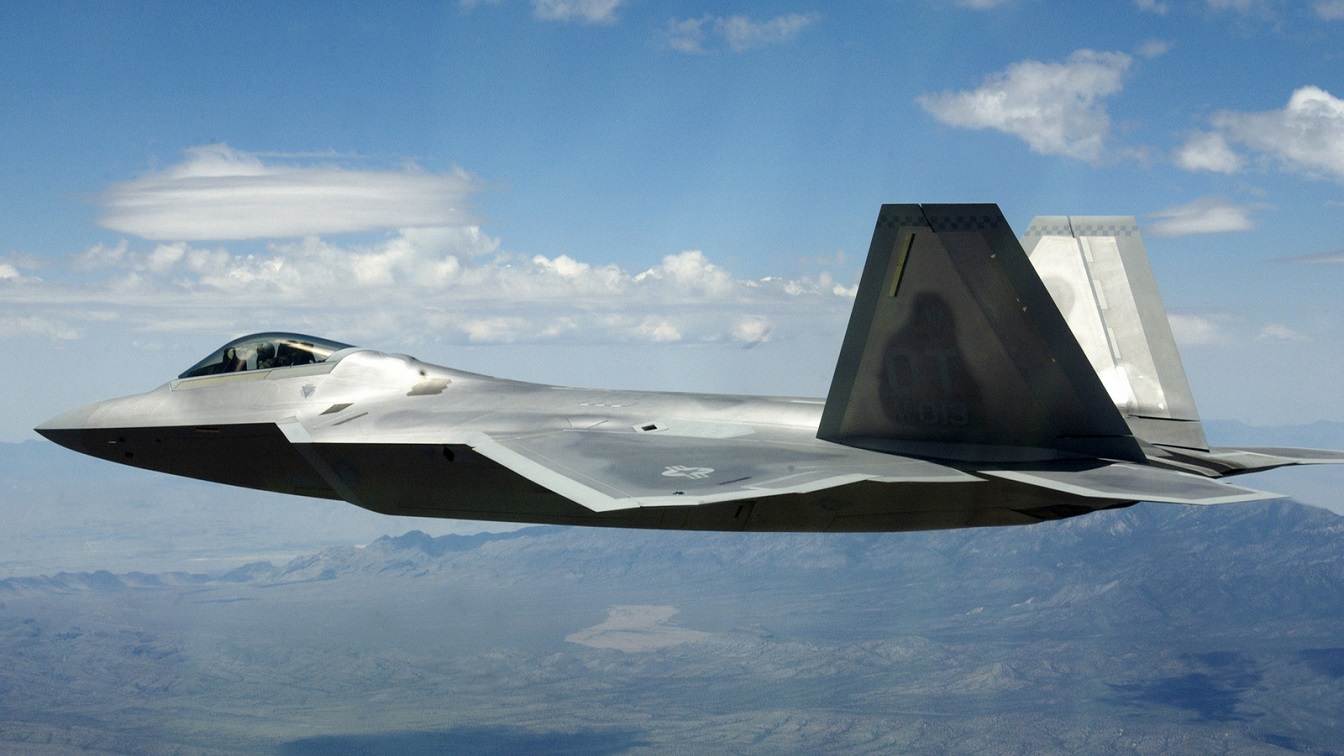
F-22 Raptor. Image: Creative Commons.
And that is just one reason why analysts doubt that the S-500 can change the stealth equation just yet.
Is the S-500 Ready For Prime Time?
Despite Russia’s claims, and even if the S-500 is technically in operational service, it’s worth noting that detecting a stealth aircraft is not the same as reliably shooting one down. Even if the S-500’s sensors can track a fifth-generation fighter jet at long range, turning that detection into a defense system that can repeatedly track and shoot down highly maneuverable fighter jets is a different thing entirely.
Modern fifth-generation aircraft are electronically protected and designed to counter threats. While it may technically be possible for Russia to achieve its stated goals with the S-500, it has yet to be proven and is unlikely at scale.
Russia’s track record should be factored into the equation, too. Previous timelines for the S-500’s entry into service have slipped repeatedly, with earlier expectations in the early 2020s failing to materialize – in large part because of stresses placed on the country and its industrial base in the wake of the war in Ukraine.
Meanwhile, combat experience in Ukraine also reveals some brutal truths for Russia: high-profile losses and successful strikes against defended targets have publicly undercut the aura surrounding its existing S-300 and S-400 systems.
And there’s another brutal reality that even proponents of the S-500 acknowledge: only a limited number of units have been made and are likely to be fielded in the near term. A system like this, designed to counter ballistic missiles and strategic threats, is inherently expensive and complex – and its impact will naturally be constrained if deployment remains sparse.
With that in mind, the news that the S-500 is ready to take on F-35s may be trustworthy in one sense – but it’s not an immediate “F-35 killer” in the sense that it can defend against American fifth-generation power at scale.
About the Author:
Jack Buckby is a British author, counter-extremism researcher, and journalist based in New York who writes frequently for National Security Journal and 19FortyFive. Reporting on the U.K., Europe, and the U.S., he analyzes and understands left-wing and right-wing radicalization and reports on Western governments’ approaches to the pressing issues of today. His books and research papers explore these themes and propose pragmatic solutions to our increasingly polarized society. His latest book is The Truth Teller: RFK Jr. and the Case for a Post-Partisan Presidency.