
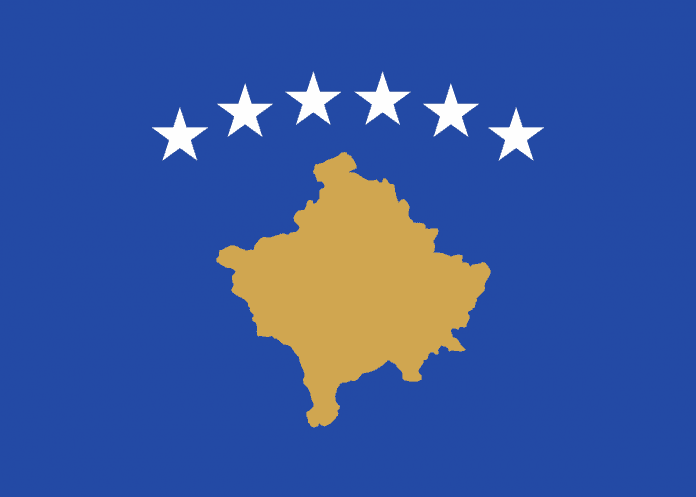
 Flag of Kosovo
Kosovo goes to the polls on Sunday, December 28, in a snap election triggered by months of political gridlock, though analysts warn the vote is unlikely to resolve the crisis that has paralyzed Europe’s youngest country for nearly a year.
The Balkan nation has been politically deadlocked since an inconclusive vote in February 2025, which Prime Minister Albin Kurti’s Vetevendosje (VV) party won but without enough seats to form a government. After months of wrangling in a stalled parliament, the caretaker prime minister is returning to the electorate in a vote that analysts say will change very little.
Kurti, widely seen as the frontrunner despite the political paralysis, is pouring enormous energy into a two week snap election campaign, travelling extensively and lobbying across the country. If he wins, it will mark the fourth consecutive time the 50 year old left wing leader has crossed the finish line first.
However, economist Mehmet Gjata told AFP that he expects the December 28 elections will not bring any clarity, predicting Kurti’s party would come out on top again but warning that VV will not secure more than 50 percent of votes needed for a majority.
Political analyst Fatime Hajdari agreed that chances were high VV would secure the most votes, but said little else was clear, suggesting another round of difficult coalition negotiations lies ahead.
Once nicknamed Che Guevara for his youthful radicalism, Kurti boasts long political experience rooted in Kosovo’s independence movement during the 1990s and later in parliament. His party swept to power in 2021 in the largest electoral victory since the country’s independence from Serbia in 2008, taking over 50 percent of the vote.
Vetevendosje, which blends a leftist agenda with fervent nationalism, again won elections in February 2025 but lost its majority in the 120 seat assembly. Kurti’s first attempt to form a government on October 26 received only 56 votes, five short of the 61 required. A second attempt on November 19 by Glauk Konjufca, VV’s alternative candidate for Prime Minister, also received only 56 votes, forcing President Vjosa Osmani to call snap elections.
The largest opposition parties, the Democratic Party of Kosovo (PDK), the Democratic League of Kosovo (LDK) and the Alliance for the Future of Kosovo (AAK), have refused to join a Kurti coalition, all but assuring a fragmented parliament. Vetevendosje has blamed the failure to elect a government on opposition parties uniting against Kurti rather than offering constructive alternatives.
Former Foreign Minister and opposition candidate Enver Hoxhaj said the only realistic challenge to VV would be cooperation between the three major opposition parties. “I think that only they can offer stability,” Hoxhaj said.
The PDK, a former dominant force with roots in the country’s independence struggle, is campaigning on promises of economic revival, closer ties with Western partners and political pragmatism, hoping to reclaim lost ground after years of scandals and internal reform. Now in opposition, the party seeks to present itself as a viable alternative to what it describes as Kurti’s confrontational politics.
The LDK, one of Kosovo’s oldest parties, presents itself as a moderate alternative, emphasizing institutional stability, dialogue with Serbia and rebuilding trust with international allies. While its support has waned in recent elections, party leaders believe voter fatigue with political confrontation could work in their favor.
For Kurti and his party, countering Serbian influence in Kosovo has long been a focus, drawing support at home but criticism abroad. When Serbian forces withdrew under NATO bombardment in 1999, they left many state structures in place for ethnic Serbs who live mainly in the north.
Kurti has labeled these services as instruments of intimidation, threat and control, and spent nearly his entire second term uprooting the system while angering Belgrade in the process. The resulting tensions in the north, which last flared into violence in 2023, have drawn sanctions from the European Union and caused Washington to accuse Kurti’s government of increasing instability.
However, among his voters, the removal of Serbian influence remains popular. “The extension of sovereignty there is perceived by the citizens as a major success,” Hajdari said.
The Serb List, which contests and retains most of the ten reserved Serb seats in parliament, regularly clashes with Kurti’s agenda in the north. The minor party, with close ties to Belgrade, has previously called the government’s moves in the north ethnic cleansing and has said it is willing to work with other parties to keep Kurti out of power.
Smaller parties and minority groups are expected to play a crucial role, particularly if no single party secures a parliamentary majority. Their backing could prove decisive in coalition talks, which many analysts predict will again be difficult and prolonged.
Without a functioning parliament, key international agreements have not been ratified, putting hundreds of millions of euros in assistance funds at risk. Konjufca warned during his failed November attempt that 2025 will be remembered as a year in which the majority was lost in attempts to establish constitutional institutions.
He also hinted that Kosovo might have to go to the polls again if Members of Parliament fail to elect a new president when Osmani’s five year term ends in March 2026, suggesting the political crisis could deepen further.
The snap election is widely seen as a test of Kosovo’s democratic resilience and its ability to overcome entrenched divisions. With economic pressures mounting and relations with Serbia remaining fragile, voters are being asked not just to choose leaders but to decide whether compromise or confrontation should define the country’s next chapter.
Kosovo, Europe’s newest country, gained independence from Serbia in 2008 with backing from the United States after a 78 day NATO bombing campaign against Serbian forces in 1999. The country remains partially recognized internationally, with Serbia refusing to acknowledge its independence and maintaining close ties with ethnic Serb communities in northern Kosovo.