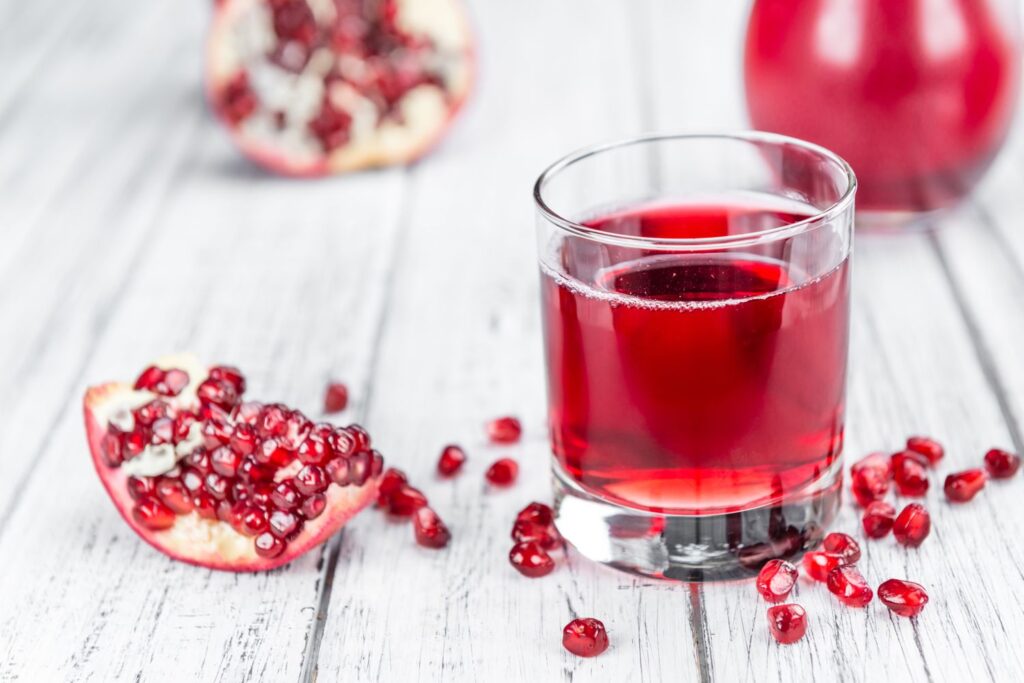
- Drink pomegranate juice daily for heart health benefits.
- Drink it in the morning or early afternoon for easier digestion.
- Check with your doctor if you’re on blood pressure or blood-thinning drugs before drinking pomegranate juice.
Pomegranate juice is rich in antioxidants and may offer blood pressure and heart health benefits when you drink it daily. The best time to drink it depends on your individual health, but you may consider having it in the morning or early afternoon for easier digestion and more energy.
When to Drink Pomegranate Juice
As long as you drink it consistently, there is no ideal time to consume pomegranate juice for heart health, according to Lauri Wright, PhD, RDN, director of nutrition programs and an associate professor at USF College of Public Health.
“What matters most is consistent intake, because the heart-healthy compounds, especially polyphenols, work by gradually improving blood vessel function and reducing oxidative stress,” she said.
However, Wright said that people with stomach sensitivities may want to drink pomegranate juice in the morning or early afternoon for easier digestion. Drinking it in the morning can also provide you with energy for your day.
When Not to Drink Pomegranate Juice
If you’re prone to reflux, drinking acidic juices like pomegranate right before bed may worsen heartburn, said Natalie Allen, RD, a clinical associate professor of nutrition and dietetics at Missouri State University.
And if you have diabetes or insulin resistance, drinking it on an empty stomach, especially first thing in the morning, may cause a sharper blood sugar rise. In that case, it’s best to pair pomegranate juice with a meal or protein-rich snack, according to Wright.
Pomegranate juice may also interact with certain blood pressure, statin, or blood-thinning drugs, so anyone on these medications should check with their healthcare provider before adding it to their daily routine.
“Overall, there’s no single ‘wrong’ time,” Wright said. “Just choose a time when it feels best for your digestion and blood sugar control.”
Why Consistency Matters Most for Heart Health
When trying to get the most benefit from drinking pomegranate juice, consistency matters more than timing.
“Drink it regularly to see health benefits,” Allen said. “Studies showing blood pressure benefits typically look at daily intake, not the timing of when you drink the juice.”
Generally, fruits and vegetables that are brightly colored are high in antioxidants, Allen explained, and pomegranates are no exception. Pomegranate juice is loaded with polyphenols, which help keep blood vessels smooth. Pomegranates also help the body make and use nitric oxide, a compound that relaxes blood vessels.
“I like to think of it this way: drinking pomegranate juice is like a gentle massage for your arteries,” Allen said. “We want them flexible, relaxed, and smooth, and this juice helps support just that.”
Some studies also show modest reductions in LDL oxidation, which is helpful for long-term cardiovascular health. But keep in mind that these effects typically occur with regular intake over weeks, Wright said, not from just one glass.
How Much Should You Drink?
Most clinical studies on the blood pressure and vascular benefits of pomegranate juice used 4–8 ounces (½–1 cup) of 100% pomegranate juice, with no sugar added, per day.
“That’s enough to provide beneficial polyphenols without excessive sugar or calories,” Wright said. “So you don’t need a large bottle; just a small daily glass is sufficient.”
As with all nutrition, Allen said pomegranate juice works best alongside overall heart-healthy habits, such as eating more fruits and vegetables, staying active, and managing stress.
“Don’t forget about pomegranate arils; they’re also great for overall health,” she added. “Toss them onto a salad, add to a yogurt parfait, or mix with avocado and mango for a festive salsa.”