
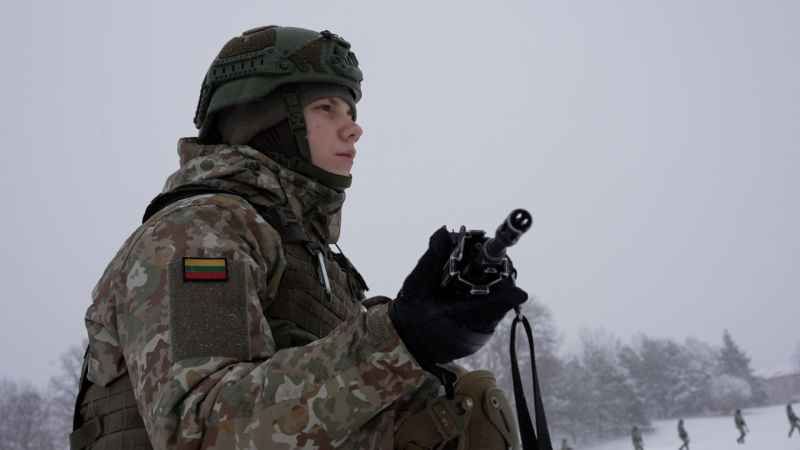
On Putin’s doorstep: Lithuanians fear they could be next
Vilnius doesn’t feel like a frontline city.
Blanketed in snow, it is calm and in places very beautiful. A capital city full of history rather than fear.
And yet almost everyone I meet here talks about the same thing – not if Russia might threaten Lithuania, but when.
Together with Estonia and Latvia, this country is one of Nato’s three Baltic states, a nation of just three million people sitting uncomfortably close to Vladimir Putin’s Russia.
To many Lithuanians, Ukraine is not a distant war. It is a chilling warning of what could come next. That anxiety stems to a large extent from geography.
To Lithuania’s west lies Kaliningrad, a Russian exclave on the Baltic Sea that is geographically cut off from Russia.
About the size of Wales, it is home to Russia’s Baltic fleet and bristling with troops and military hardware.
When then-Defence Secretary Grant Shapps’s aircraft lost its GPS signal while flying from the UK to Poland in 2024, it was almost certainly zapped by Russian jammers inside Kaliningrad.
To the east and south is Belarus, ruled for decades by Putin’s stooge, Viktor Lukashenko.
Wedged between them is tiny Lithuania.
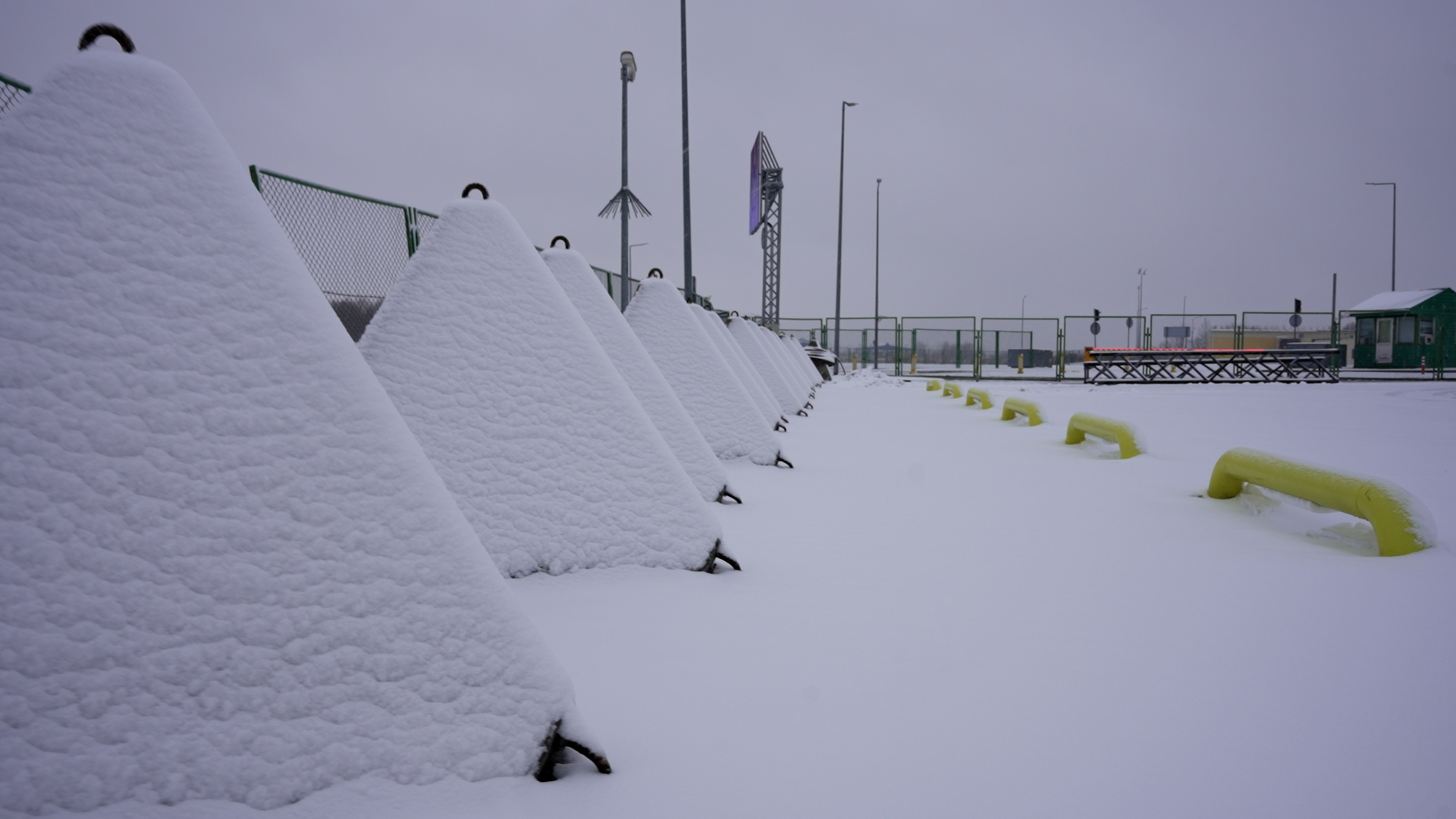 Dragon’s teeth anti-tank obstacles wait to be dragged in place – should the need arise
As the snow fell, my local fixer and I drove west from Vilnius towards the Russian border.
After a couple of hours, road signs for Kaliningrad begin to appear. The countryside is quiet, flat, and unremarkable, which somehow makes the tension sharper.
It looks like tank country.
“I’ve never seen those before,” says my fixer as we pass what look like the footings for giant anti-tank bollards installed across the road.
In the town of Kybartai, Lithuanian border officials drive us to a crossing point – the only way Russian vehicles can now get in and out. Since Russia’s full-scale invasion of Ukraine, all the others have been shut.
On the other side, dozens of Russian trucks wait in line. The number of vehicles allowed to cross each day is now severely restricted under EU sanctions.
As I start filming, the Russian border guards take intense interest.
Nearby, there’s a row of concrete dragon’s teeth anti-tank obstacles – ready to be dragged into place if this border ever needs to be sealed in a hurry.
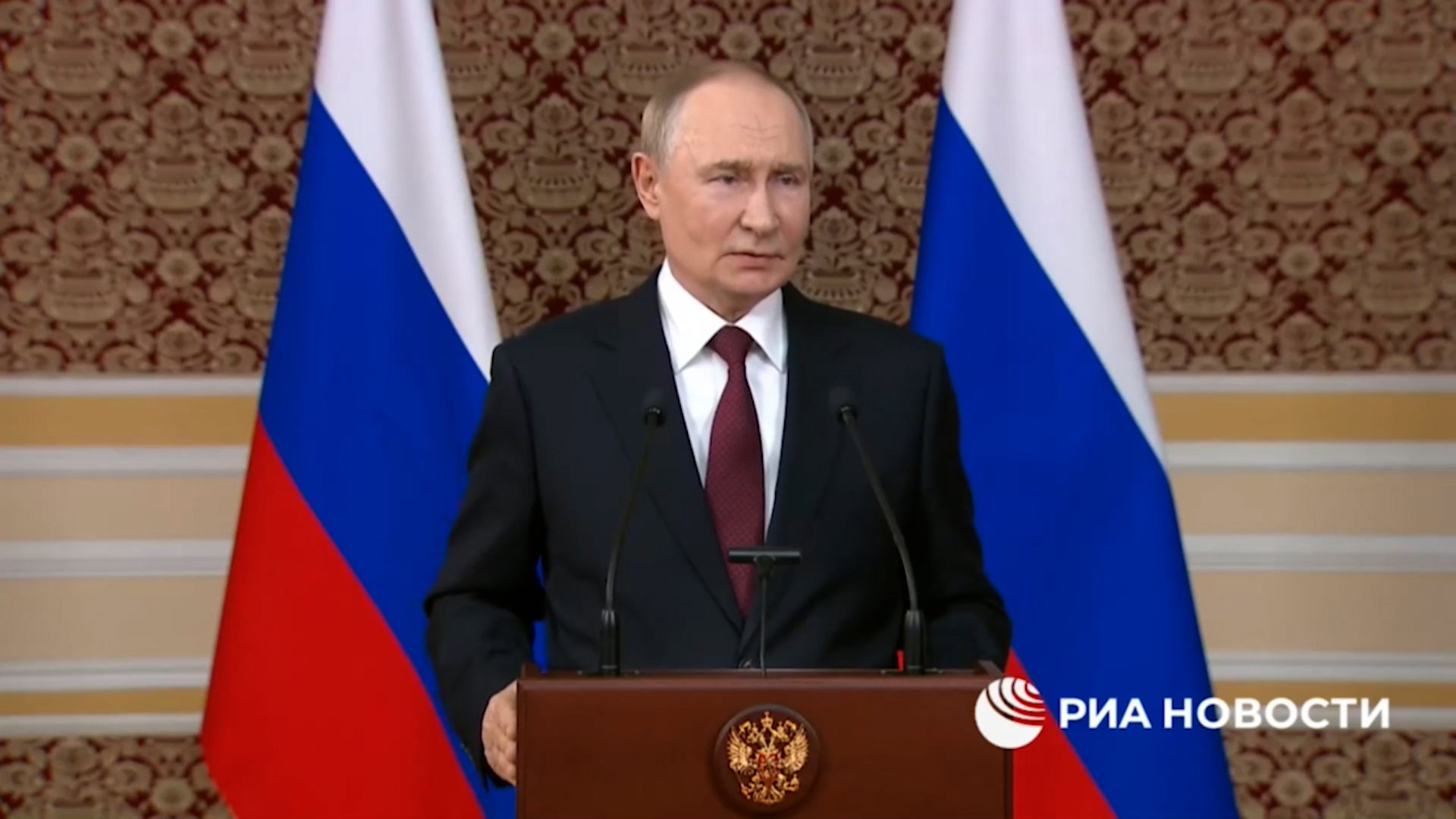 Vladimir Putin orchestrated the full-scale invasion of Ukraine, and many Lithuanians wonder if it’s only a matter of time before he attempts to do the same with their country (Picture: Russian defence ministry)
Kaliningrad itself is a place shaped by conquest. Once the German city of Königsberg, it was captured by the Red Army in 1945, emptied of its German population and transformed into a Soviet garrison.
As it was getting dark, we followed the border guards to Kybartai’s railway station. Each day, several sealed Russian passenger trains pass through Lithuania on their way to Moscow.
I watch as Lithuanian border guards patrol the platform. The doors remain locked. Passengers cannot get off; a surreal reminder of how odd this place is.
Lithuania is taking this looming Russian threat seriously.
Together with Poland and the other Baltic states, it has asked the EU to help fund a vast defensive line along its borders with Russia and Belarus.
In places, the plan would see the construction of defences 30 miles deep consisting of anti-tank ditches, minefields, trenches and bridges primed for demolition.
By 2027, thousands of concrete obstacles and hundreds of miles of razor wire are meant to be in place.
In the town of Šakiai, just 20 miles from Kaliningrad, I meet Martynas Remeikis, a local official responsible for implementing these plans, and for organising civilian evacuations if Russian troops ever cross the border.
“We are very worried,” he tells me. “All of Lithuania is worried.” Defence spending, he says, has exploded and is now 5% of GDP.
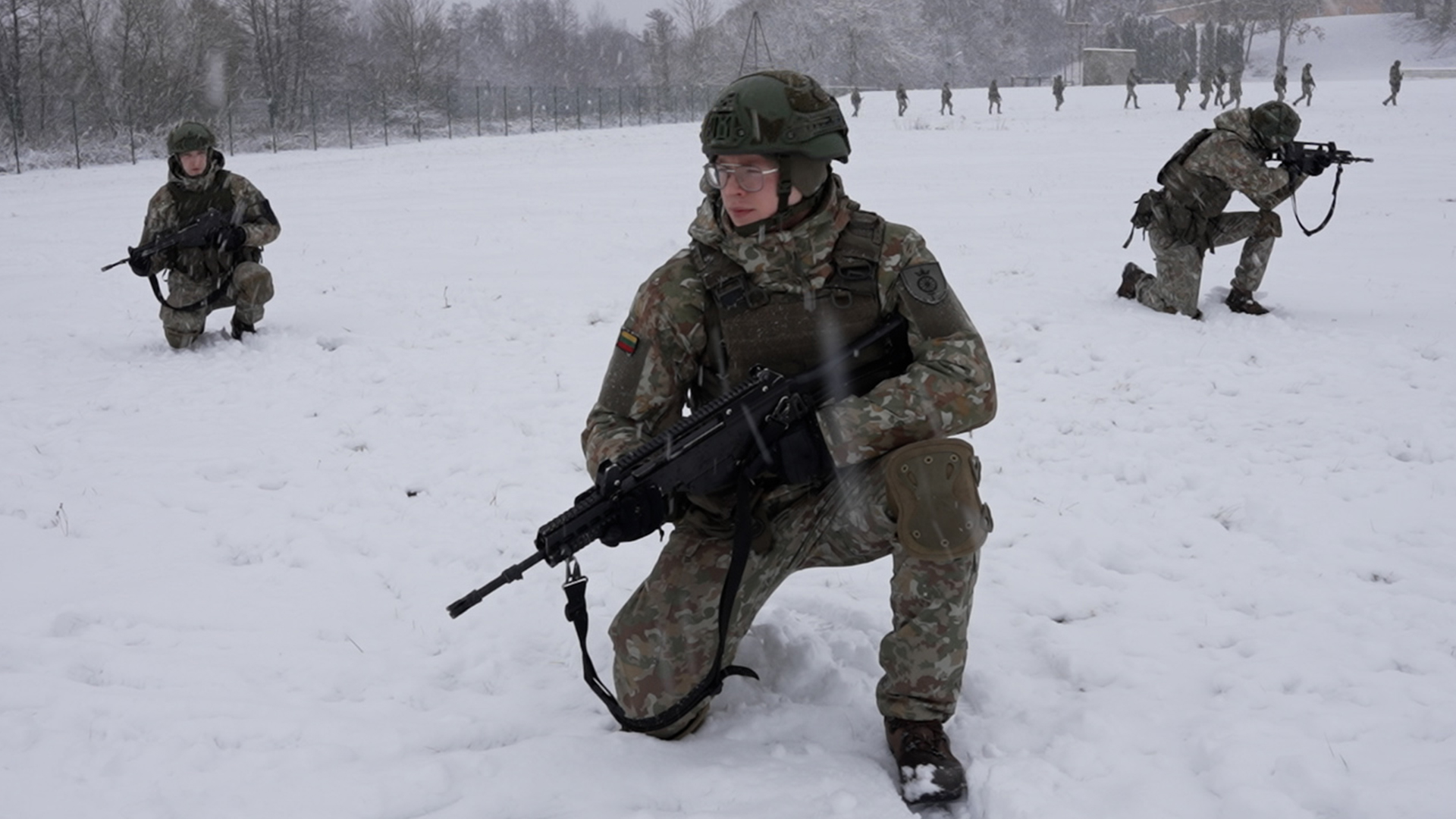 These teenagers are among 11 friends who all decided to join the Lithuanian armed forces
But the preparations aren’t just physical. Lithuania has also revived something deeper: a sense that defence is everyone’s responsibility.
At an Army training centre in Marijampolė, I film some teenage soldiers as they go through drills in the snow.
Among them is a group that immediately stands out – 11 friends from Vilnius who have known each other since they were children and volunteered together.
One of them, Jonas Ašmonas, tells me it was not a complicated decision.
“When you see what’s happening in the world, you want to defend your fatherland. You don’t want this to happen here,” he says.
Another, Joris Nenartavičius, admits that a few years ago he hoped to avoid military service altogether. But the war in Ukraine changed his mind.
“The idea that my family would defend the country without me felt wrong,” he says. “If it happens, we defend together.”
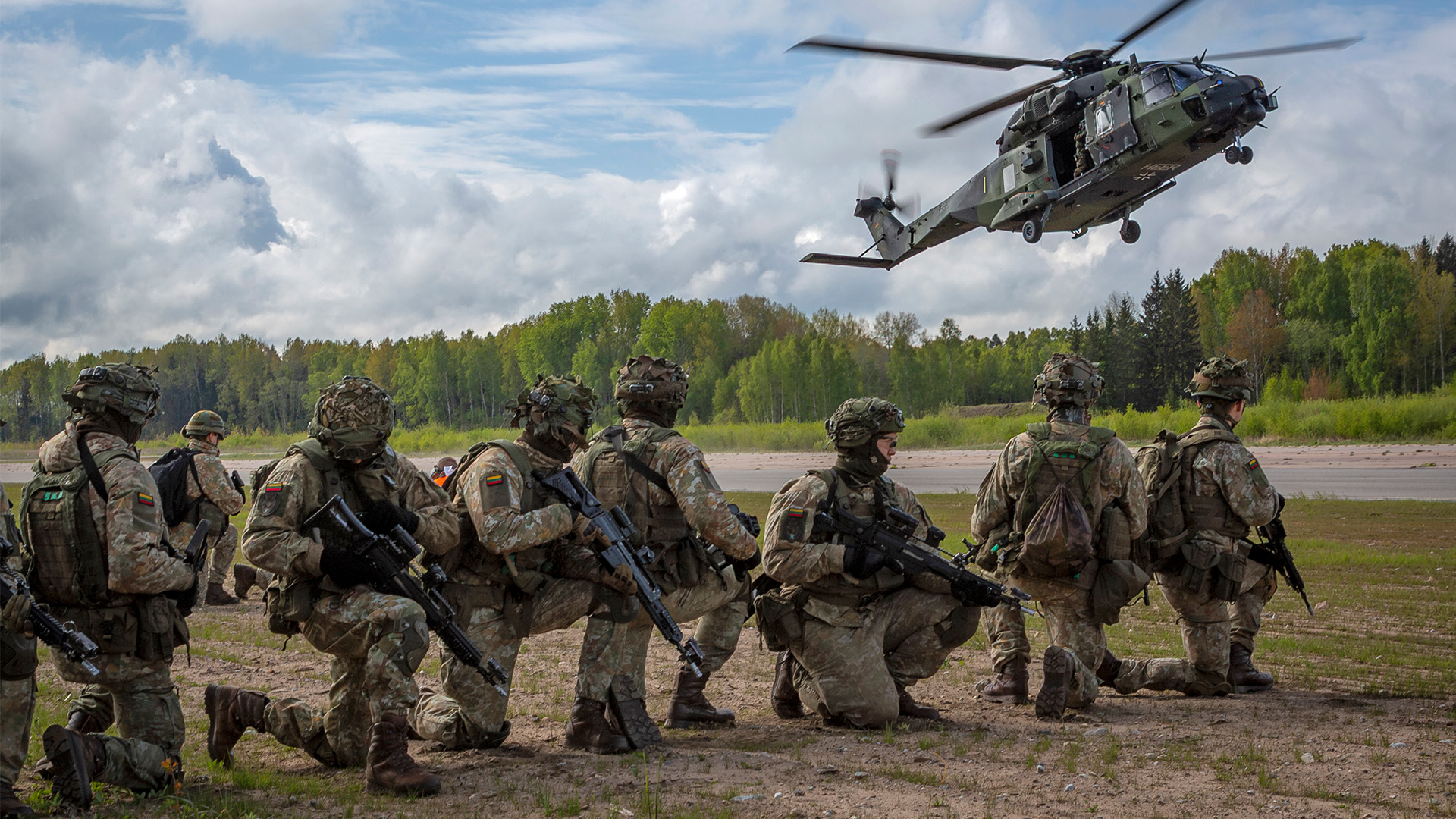 These German soldiers on exercise in Lithuania could one day be called on to defend the country (Picture: Bundeswehr)
If war ever comes, much of it may focus on a narrow strip of land to the south known as the Suwałki Gap.
On the map, the Suwałki Gap looks insignificant, a 40-mile corridor between Kaliningrad and Belarus. In military terms, though, it is anything but.
This is the only land route Nato would have to reinforce the Baltic states if Russia attacked. If it were cut, Lithuania, Latvia and Estonia could be isolated.
Some estimates say Russian troops could reach the capitals of all three Baltic states within 72 hours.
Military planners here fear any assault would begin invisibly, with cyberattacks, GPS jamming and Russian disinformation before fast-moving ground forces tried to create a sudden, brutal fait accompli.
Nato is trying to make that a gamble Russia will not take.
Near Pabradė, just 10 miles from the Belarusian border, I met up with a German mechanised infantry battalion, the lead element of a multinational battlegroup.
By 2027, Germany plans to station 5,000 troops permanently in Lithuania – a remarkable step given Germany’s military history.
Further south in Poland, I also met a battalion of British soldiers from 2nd Battalion, The Royal Anglian Regiment, at a base just an hour from the Suwałki Gap.
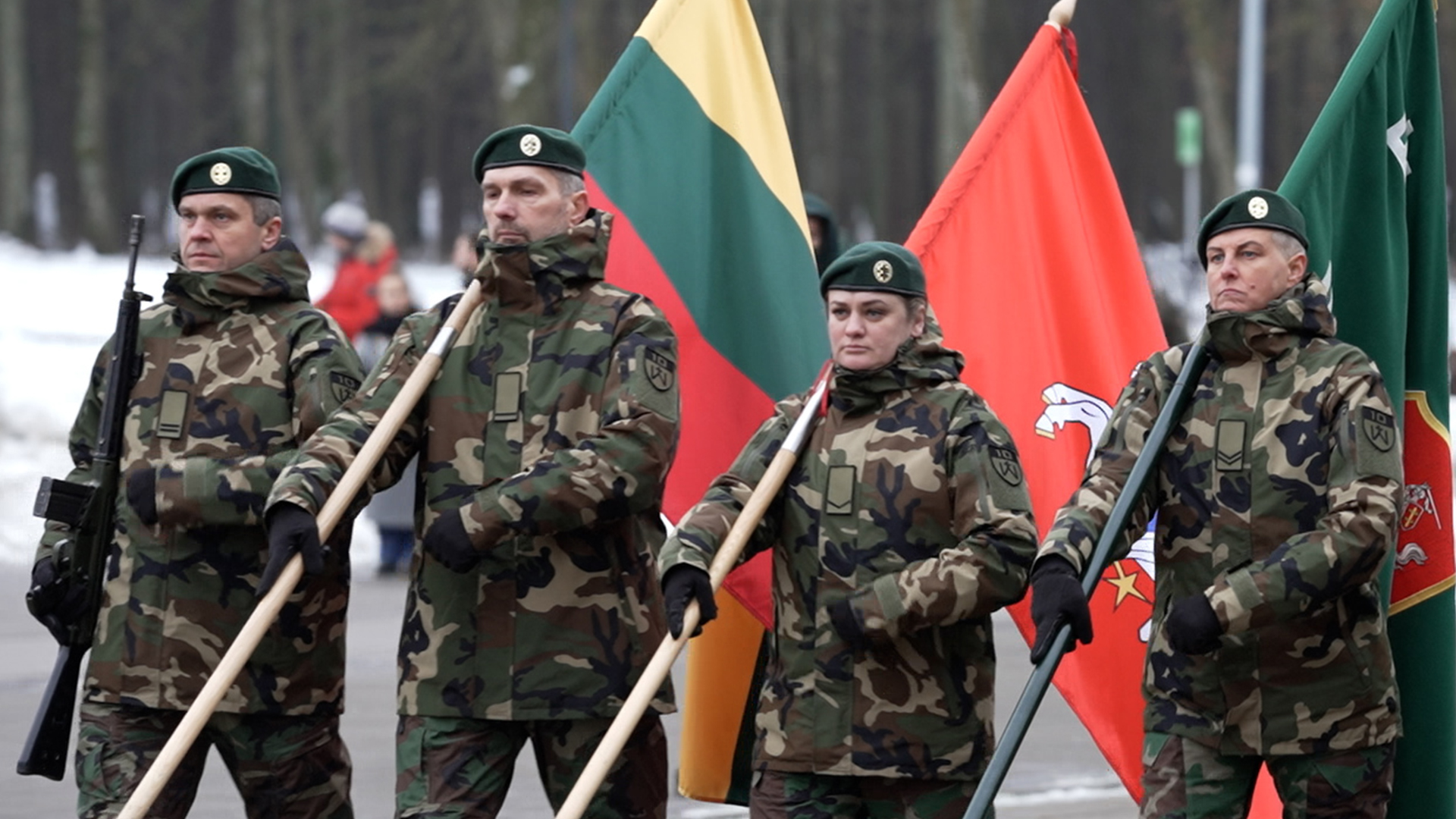 These flag-bearers are preparing to oversee the swearing-in of 500 new defenders
But Lithuania is not just relying on Nato troops.
Its own army now numbers 23,000, and the country is also rapidly building up a paramilitary force – the Lithuanian Riflemen’s Union – a volunteer militia founded in 1919.
Today it has 14,000 members, from teenagers to pensioners. Some train with drones, while others prepare for guerrilla warfare.
In a park in Vilnius, I watch 500 new members swear an oath. They kiss the flag, sing the national anthem and promise not to stand by passively.
They are not professional soldiers, but they are preparing to defend their country if no one else can.
Back in Marijampolė, I met Egidijus Papečkis, who commands the Riflemen in this part of central Lithuania.
If Russia ever did invade, these men and women would be tasked with helping the army, carrying out sabotage missions, and trying to hold key towns and cities.
“We understand that we will probably be dead in the very first days of any war,” he tells me.
“But this is our duty to our country, and we are ready to do it.”

