
Recent reporting has highlighted a national fall in housing supply of around 26%, with even sharper declines in districts such as Leiria and Coimbra. Behind these figures are real people: young professionals delaying independence, families struggling to find suitable homes, and communities feeling the strain of limited availability. While the issue is often discussed in numerical terms, it is increasingly clear that Portugal’s housing challenge is not only about how many homes are built, but about how they are built.
This situation is far from unique to Portugal. Across Europe, countries including Germany and the Netherlands are facing similar pressures, as rising demand, labour shortages and escalating construction costs combine to create a perfect storm. Traditional construction methods, long relied upon as the industry standard, are struggling to keep pace with modern needs. Projects are frequently delayed, budgets overrun, and environmental impacts remain significant. As the debate continues, there is growing recognition that the current model is not delivering the speed, affordability or sustainability required to meet today’s housing realities.
At the heart of this discussion lies what many describe as an unspoken challenge: a gap in quality, knowledge and methodology. Much of the public focus remains on increasing volume, yet the conversation often overlooks the inefficiencies inherent in conventional building practices. On-site construction can generate high levels of waste, is vulnerable to weather-related disruption, and often results in homes that fall short of modern energy-efficiency expectations. At the same time, innovative construction methods are still sometimes misunderstood, viewed as niche or temporary solutions rather than robust, high-quality systems capable of reshaping the sector.
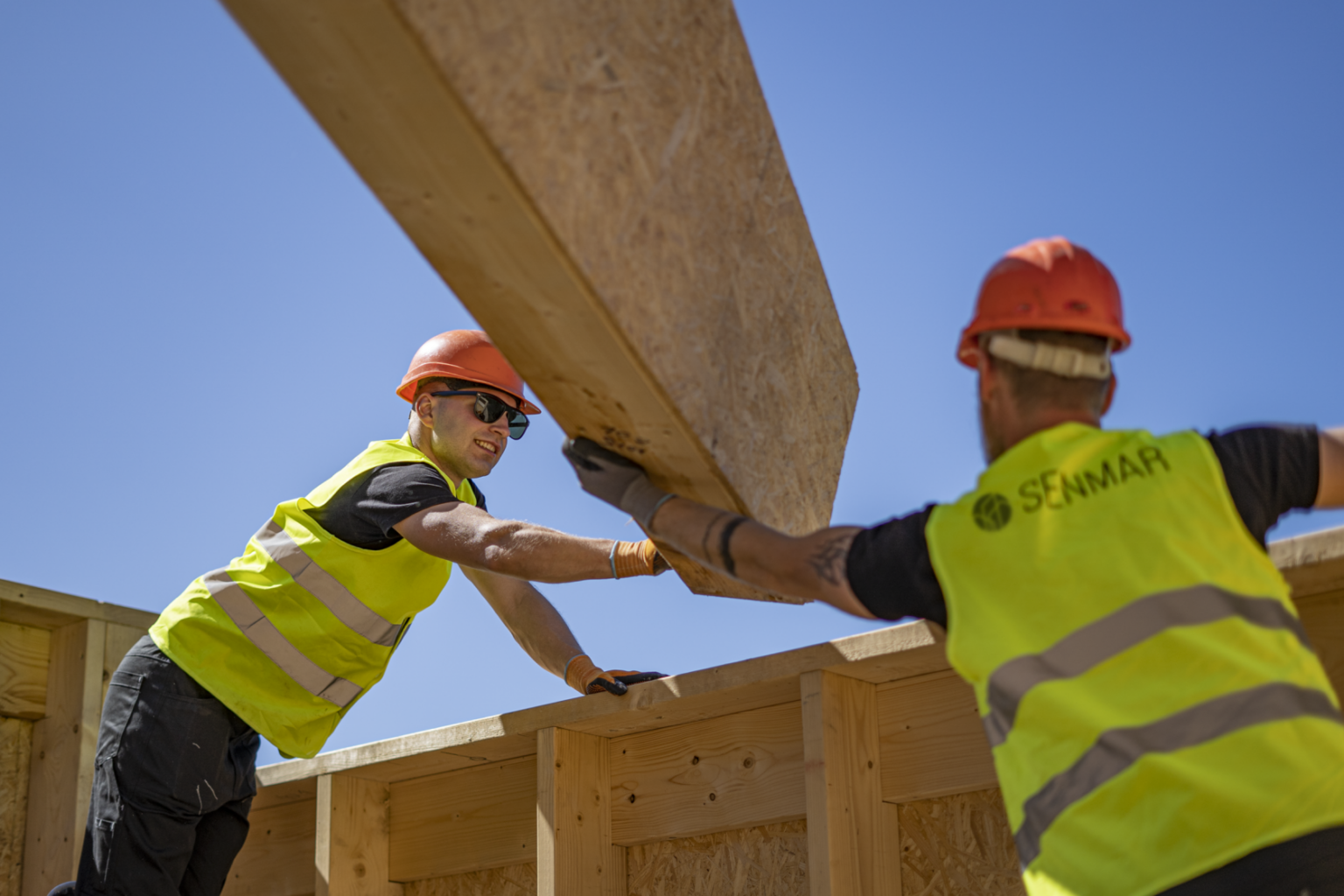
It is within this context that companies such as Senmar are gaining attention for their approach to residential development in Portugal. Specialising in advanced timber-frame prefabricated construction, Senmar reflects a growing shift in mindset, where innovation is seen not as an optional extra, but as a necessary evolution. By transferring a significant portion of the construction process to a controlled factory environment, Senmar is addressing many of the limitations associated with traditional building methods, while closely aligning its work with national and European sustainability goals.
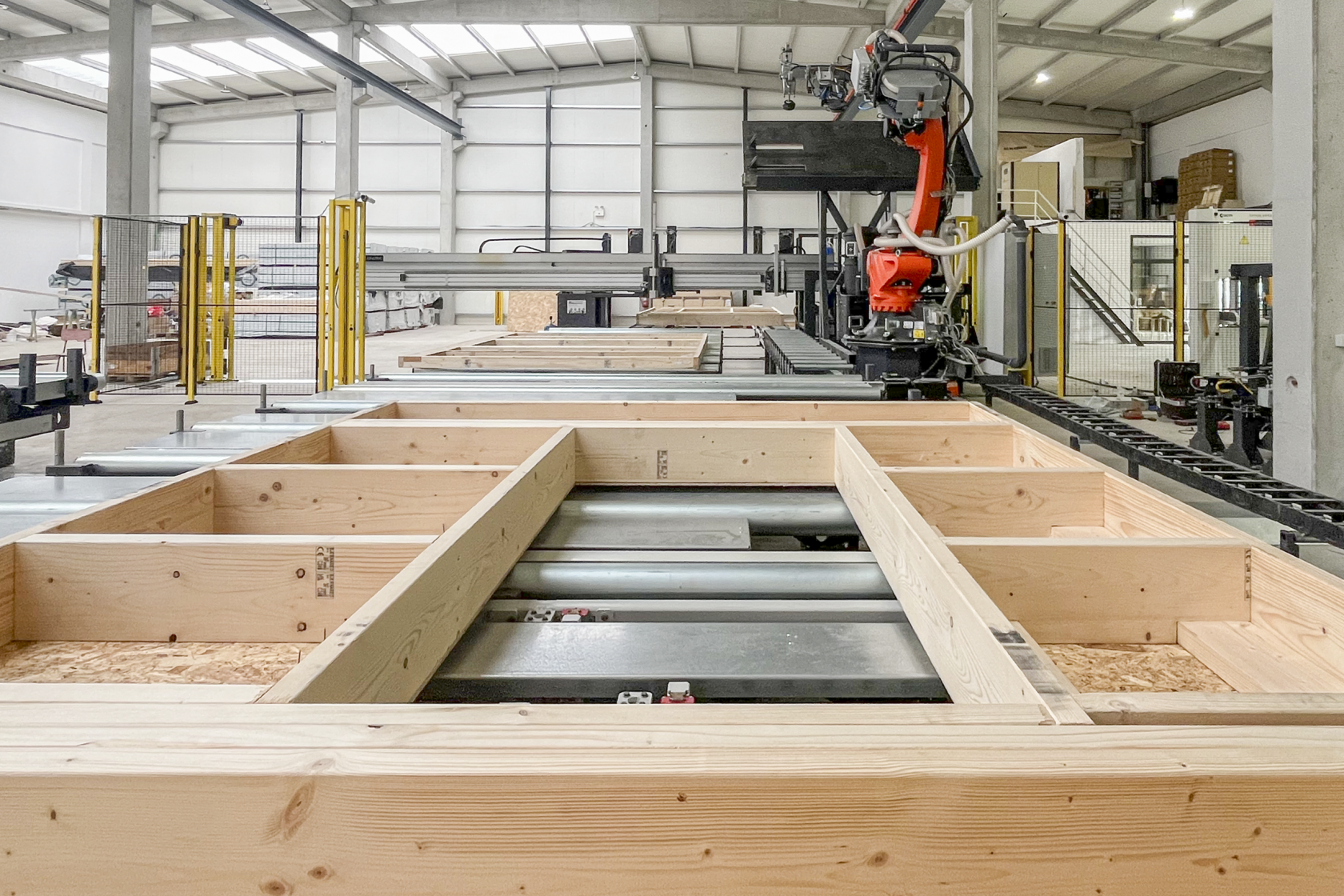
Senmar’s developments are based on modern prefabrication techniques, encompassing both panelised and modular construction solutions. In panelised projects, structural elements are precisely designed and manufactured off-site before being delivered as a complete structural kit for on-site assembly. In parallel, Senmar also develops modular solutions, where entire sections or fully finished modules are produced in the factory and then placed on site. This dual approach allows for flexibility in project delivery while maintaining the same core principles of efficiency, quality and precision. Notably, Senmar is now expanding this focus with the launch of Senmar MOD – Modular On Demand – a new product line dedicated exclusively to modular construction.
These prefabricated approaches significantly reduce construction timelines, helping to bring homes to market faster and with greater cost predictability. In a country where delays can stretch projects by many months, the ability to deliver homes efficiently is a major advantage, particularly at a time when demand continues to outstrip supply. Factory-based production also reduces exposure to weather-related disruptions, one of the most common causes of delay in traditional construction.
 Credits: Supplied Image; Author: Client;
Quality remains a central pillar of Senmar’s work. Building in a controlled environment allows for consistent standards that are difficult to replicate on open building sites. Precision engineering improves insulation performance, airtightness and overall structural reliability, resulting in homes that are comfortable, resilient and well suited to Portugal’s varied climate. Rather than focusing on unlimited customisation, Senmar prioritises well-engineered, flexible design solutions that balance architectural integrity with efficient, repeatable construction processes.
Sustainability is where Senmar’s developments stand out most clearly. Timber, when responsibly sourced, is a renewable material with a considerably lower carbon footprint than many conventional construction materials. Combined with reduced on-site waste, optimised logistics and high energy performance, Senmar homes are designed to consume less energy throughout their lifespan. This translates into lower running costs for occupants and a reduced environmental impact, benefits that are increasingly important as energy efficiency becomes a core requirement rather than a premium feature.
Beyond individual homes, Senmar is also actively involved in its own real estate developments. One example is Coja Vida, a residential project that brings these construction principles into a cohesive community setting. Developments of this nature, which include thoughtfully designed villas and semi-detached homes, demonstrate how prefabricated construction can be applied at a broader scale without sacrificing architectural quality or a sense of place. With options ranging from structural shells to turnkey solutions, these projects offer buyers and investors practical choices in an evolving property market, making them particularly relevant for features such as Property of the Week.
Senmar’s approach also contributes to addressing wider challenges within the construction sector itself. By relying more heavily on skilled manufacturing processes and less on large on-site labour forces, prefabrication helps mitigate labour shortages while improving workplace safety and efficiency. This shift mirrors a broader transformation taking place across Europe, as construction increasingly adopts methods more commonly associated with advanced manufacturing industries.
As Portugal stands at a crossroads, the decisions made today will shape the housing landscape for decades to come. Continuing to rely solely on outdated construction models risks deepening shortages, increasing costs and missing vital sustainability targets. Embracing well-planned, innovative building solutions offers an alternative path, one that prioritises speed, quality and environmental responsibility without losing sight of human needs.
The housing crisis has rightly become a catalyst for change. It has prompted difficult questions about how homes are delivered and who they are built for. Developments such as those undertaken by Senmar suggest that the answers may lie not in repeating the practices of the past, but in rethinking them from the ground up. By combining modern technology, sustainable materials and efficient design, Portugal has the opportunity not just to build more houses, but to create healthier, more affordable and greener communities for the future.
For further information, please email: info@senmar.pt or call +351 960 494 339
Disclaimer:
The views expressed on this page are those of the author and not of The Portugal News.