
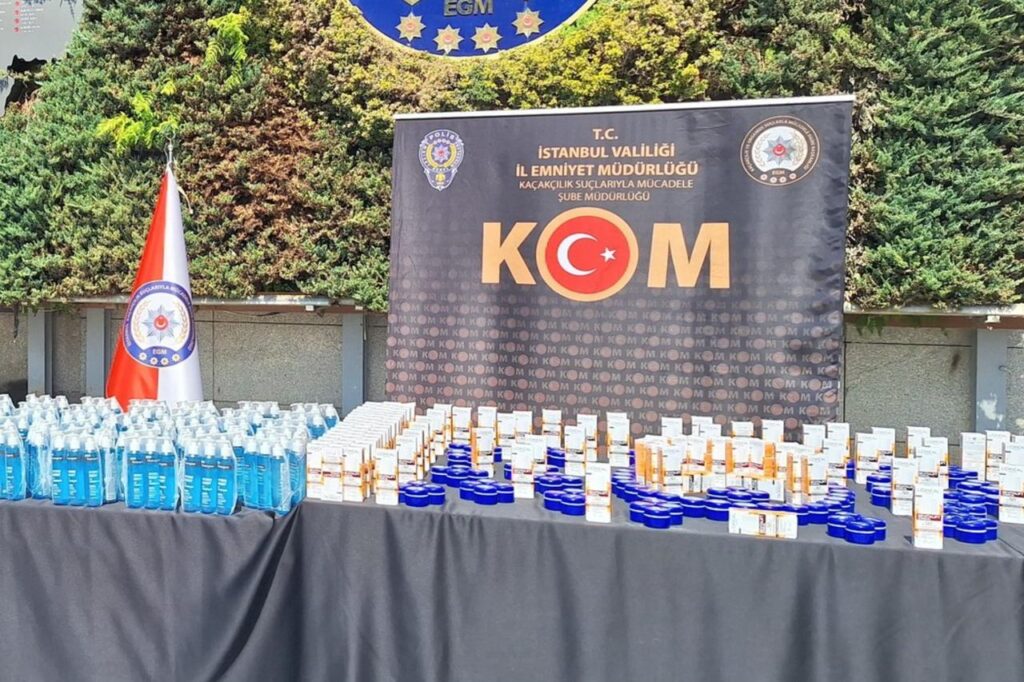
Türkiye’s Health Ministry has stepped up enforcement against misleading health-related marketing, handing down a total of ₺185 million (nearly $4.3 million) in administrative fines in 2025 to those found promoting unproven medical claims online. The measures form part of a broader campaign targeting illegal sales and deceptive advertising across digital platforms, television, and social media, according to information obtained by Anadolu Agency reporters.
Broad crackdown on deceptive health marketing
The Health Ministry, acting through the Turkish Medicines and Medical Devices Agency, known internationally as the authority overseeing pharmaceuticals, medical devices, cosmetics, and related products, continued yearlong inspections focused on sales and promotions involving health claims. Officials reported that many online sellers had been promoting products by indirectly claiming they were “good for diseases,” “a cure for cancer,” or capable of “rapid weight loss,” statements considered misleading and unlawful under national regulations.
As a result of these inspections, access to thousands of websites was blocked. More than 3,400 sites using deceptive health claims were reported to the Access Providers Association, the body responsible for implementing internet access bans in Türkiye. In parallel, authorities filed criminal complaints against a limited number of individuals and entities whose activities were deemed to warrant judicial review, while cases involving consumer deception were also referred to the Trade Ministry for further action.
Penalties and legal action explained
Under Turkish law, administrative fines can be imposed for promotions that violate public health regulations, while more serious cases may be referred to prosecutors. In this context, the total fine of ₺185 million reflected penalties for advertising and sales found to be in breach of existing rules. In addition, several cases were formally brought to prosecutors, signaling potential criminal proceedings beyond financial sanctions.
Authorities also moved against online platforms involved in the illegal sale or promotion of medicines, blocking access to more than a thousand websites and filing criminal complaints against others. These steps were described as part of an ongoing effort to cut off unregulated digital markets that pose risks to consumers.
Cosmetics inspections highlight safety concerns
Beyond health claims, regulators also turned their attention to cosmetics, a category that includes products applied directly to the body and therefore subject to strict safety rules. More than a thousand cosmetic products were inspected during the year under a risk-based approach. The agency determined that a large share did not comply with technical standards, while a smaller number were classified as risky for consumer use.
Fines totaling just over Türkiye’s Health Ministry has stepped up enforcement against misleading health-related marketing, handing down a total of Türkiye’s Health Ministry has stepped up enforcement against misleading health-related marketing, handing down a total of ₺185 million in administrative fines in 2025 to those found promoting unproven medical claims online. The measures form part of a broader campaign targeting illegal sales and deceptive advertising across digital platforms, television, and social media, according to information obtained by Anadolu Agency reporters.
Broad crackdown on deceptive health marketing
The Health Ministry, acting through the Turkish Medicines and Medical Devices Agency, known internationally as the authority overseeing pharmaceuticals, medical devices, cosmetics, and related products, continued yearlong inspections focused on sales and promotions involving health claims. Officials reported that many online sellers had been promoting products by indirectly claiming they were “good for diseases,” “a cure for cancer,” or capable of “rapid weight loss,” statements considered misleading and unlawful under national regulations.
As a result of these inspections, access to thousands of websites was blocked. More than 3,400 sites using deceptive health claims were reported to the Access Providers Association, the body responsible for implementing internet access bans in Türkiye. In parallel, authorities filed criminal complaints against a limited number of individuals and entities whose activities were deemed to warrant judicial review, while cases involving consumer deception were also referred to the Trade Ministry for further action.
Penalties and legal action explained
Under Turkish law, administrative fines can be imposed for promotions that violate public health regulations, while more serious cases may be referred to prosecutors. In this context, the total fine of ₺185 million reflected penalties for advertising and sales found to be in breach of existing rules. In addition, several cases were formally brought to prosecutors, signaling potential criminal proceedings beyond financial sanctions.
Authorities also moved against online platforms involved in the illegal sale or promotion of medicines, blocking access to more than a thousand websites and filing criminal complaints against others. These steps were described as part of an ongoing effort to cut off unregulated digital markets that pose risks to consumers.
Cosmetics inspections highlight safety concerns
Beyond health claims, regulators also turned their attention to cosmetics, a category that includes products applied directly to the body and therefore subject to strict safety rules. More than 1,000 cosmetic products were inspected during the year under a risk-based approach. The agency determined that a large share did not comply with technical standards, while a smaller number were classified as risky for consumer use.
Fines totaling just over ₺12 million (nearly $286,000) were imposed on companies found to be in violation. At the same time, law enforcement agencies, courts, and prosecutors coordinated the seizure and destruction of a significant volume of counterfeit and smuggled cosmetic products, removing them from the market entirely.
Medical devices and biocidal products also targeted
Inspections extended to medical devices, a term covering items ranging from basic medical equipment to more specialized devices used in health care settings. Thousands of such products were checked throughout the year, with authorities identifying both non-compliant and unsafe items. Companies responsible for these products were fined more than ₺34 million in total.
Regulators also carried out targeted checks on biocidal products, such as antimicrobial hand sprays and antibacterial soaps, which are categorized in Türkiye as products that come into direct contact with the body. These inspections resulted in additional fines after several products were found to be either non-compliant or risky.

December 26, 2025 02:11 PM GMT+03:00