
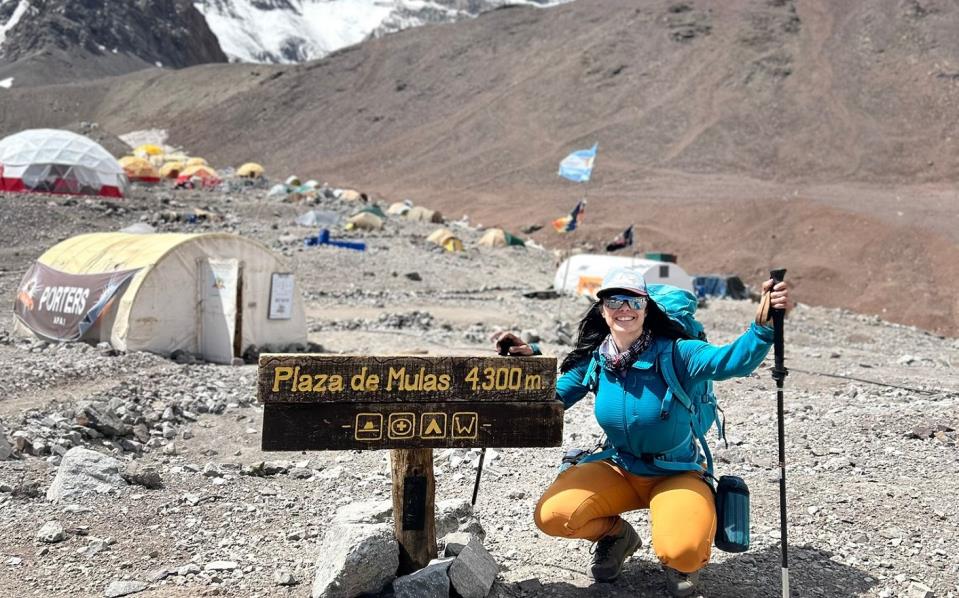

Maltese mountain climber Rita Saliba has successfully reached base camp on Mount Aconcagua in Argentina, marking a significant milestone in her latest expedition in aid of abandoned animals.
The 31-year-old climber officially set off last Friday, travelling to Argentina to begin her ascent of Aconcagua, the highest peak in South America at nearly 7,000 metres. After days of trekking and acclimatisation, Saliba has now arrived safely at base camp, where preparations are under way for the demanding stages ahead.
Saliba is expected to attempt her final push towards the summit in early January, weather permitting. Conditions on Aconcagua are known to be unpredictable, with strong winds and extreme cold often posing major challenges even for experienced mountain climbers
Well known for her achievements in both mountain climbing and rock climbing, Saliba’s Aconcagua expedition represents more than a personal athletic goal. The climb forms part of her long-term ambition to complete the Seven Summits — scaling the tallest mountain on each continent — while simultaneously raising funds and awareness for Malta’s Association for Abandoned Animals (AAA).
Animal welfare has been a central motivation behind the expedition. Through this climb, Saliba aims to draw attention to the ongoing challenges faced by abandoned animals in Malta, encouraging public support for the work carried out by the Association for Abandoned Animals.
Over the past two years, Saliba has steadily progressed towards her Seven Summits objective. She has already successfully summited Mount Kilimanjaro in Tanzania and Mount Elbrus in Russia, building both experience and resilience for increasingly demanding expeditions. Aconcagua, however, represents one of the most physically and mentally taxing climbs she has attempted so far, due to its extreme altitude and harsh environment.
Alongside her mountain climbing ambitions, Saliba’s climb is being used to raise funds and awareness for Malta’s Association for Abandoned Animals, highlighting the ongoing need for support for animal welfare initiatives on the islands.