
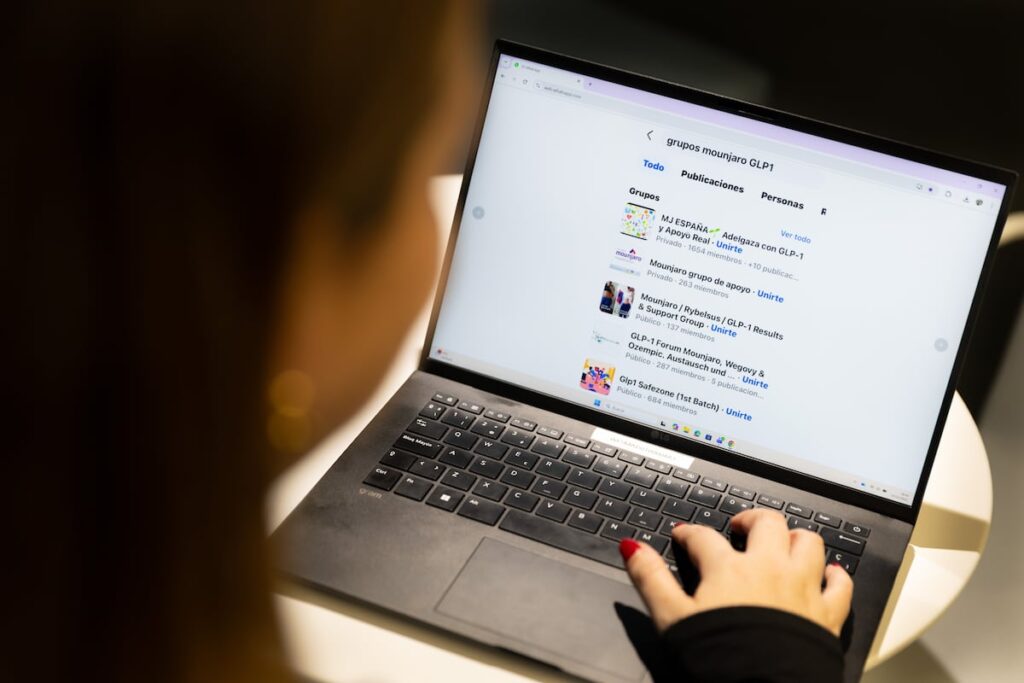
Lorenzo sells Mounjaro, a potent weight-loss pharmaceutical, on the black market. He’s been at it for two years from his home in the European microstate of Andorra, selling the product to clients from nearby Spain with neither prescription nor medical supervision. “I began to do this because of my sister, who had a weight problem. Then I sought it out for myself, because I’m an athlete,” he says in a conversation via Telegram with a potential client. He tells his story via audio messages in which you can hear his phone beeping endlessly; notifications from customers interested in acquiring the pharmaceutical.
According to the black-market vendor, he’s not doing anything illegal: “We make tax-free sales that are cheaper than market price. We are selling health,” Lorenzo (not his real name) says. He charges €175 ($204) for two milligrams of Mounjaro, plus an additional €14 ($16.30) to send via courier to Madrid. “We are professionals. I am a nutritionist and physical trainer. We only accept payment through Revolut [a financial app] so that everything is registered,” he says. “We’ve been doing this for two years very successfully. A lot of people aren’t buying it just for the price. The product they sell in pharmacies requires refrigeration, and ours doesn’t, though once you blend it, it should be kept in the refrigerator,” he says. He’s talking about freeze-dried powdered presentations of the drug, “a form of medication that is not approved in Spain,” explains Cristóbal Morales, an endocrinologist from Seville’s Hospital Vithas. “This means we’re not sure of the components that it may contain, nor the conditions under which it was prepared.”
Mounjaro and Ozempic are part of a new generation of pharmaceuticals that are revolutionizing the treatment of obesity; medicines imitating the hormones that naturally generate the feeling of fullness in the body, which can translate into the loss of 15% to 25% of one’s weight, according to the treatment. In Spain, these drugs can only be acquired with a medical prescription; the public health system only includes Ozempic, and only for the treatment of diabetes.
Diego Bellido, president of the Spanish Society for the Study of Obesity (SEEDO), has witnessed the migratory flow of Mounjaro with his own eyes. “I have seen how entire buses full of people go from Cádiz to Gibraltar [a British overseas territory at the southern tip of the Iberian peninsula] in order to buy the pharmaceutical without a prescription in the pharmacies there. A few months ago, they were selling it at half its price in Spain,” says Bellido, who has spoken out against this black market, and says that he’s never seen anything like it related to another medication. “Right now, Ozempic and its family of drugs could well be the most sought-after products in the world.”
The reason for this is simple: excess body fat now affects half of the adult population in countries like Spain. Additionally, according to data from the International Diabetes Federation, one in every seven adults in the country suffer from the disease. Add to this the people who don’t need the drugs, but who, through pressure from social media, believe that the magical medicines used by Hollywood stars will finally change their life. “Who doesn’t want to drop an inch from their waistline in a couple weeks?,” asks Lorenzo, intent on making his sale.
His fellow “Ozempic narcos”, as they are known by medical associations, come and go. This publication has confirmed that there are people in Colombia who travel to Spain to buy the product and resell it back home in Medellín, U.S. citizens who also come to Spain to buy it, as well as Spaniards who go to Andorra and Gibraltar to acquire the pharmaceuticals at a better price. It’s all a matter of supply and demand. Prescriptions, doctors who require them or any other non-negotiables take a back seat when it comes to getting a better price for a supposedly easy path to slimming down.
Just search any social media platform for “Mounjaro sales Spain” or “Ozempic” and a list will appear of groups selling the medication. A Colombian woman sells Mounjaro via WhatsApp to her clients in Medellín for $618 per 10-milligram dose. She acquires her supply by traveling to Madrid, Spain every month, where she buys it cheap to later resell. “Rest assured that all this is very easy to use. I’ll send a couple of TikTok videos to explain everything, and we’re ready to go,” she says.
The same woman explains that information is shared in these groups as to how to trick customs and go undetected. To do so, the product is divided between smaller packages that don’t arrive directly to Spain, but rather, go through other countries with less restrictive border control and are then driven into the country. For the moment, the biggest shipment registered by the National Patients’ Association for Obesity Treatment (ANATO) was valued at $3,500.
Trafficking of these drugs is becoming a public health problem. Three months ago, ANATO alerted the National Police and the Spanish Agency of Medications and Health Products’ (AEMPS) of several alleged scams related to the supply of the drugs that affected more than 200 people in total.
On another occasion, the European Medicines Agency and the Heads of Medicines Agencies, of which AEMPS is part, have warned of an alarming increase in the amount of illegal drugs marketed as GLP-1 receptor agonists. According to their statement, “These products, often sold via fraudulent websites and promoted on social media, are not authorized and do not meet necessary standards of quality, safety and efficacy,” as this publication has independently confirmed.
EL PAÍS contacted a dozen vendors of the medication through social media. All have the same working method. Julio, for example, says he runs a pharmacy in Colombia and ships Ozempic internationally. “Don’t worry about the prescription, we have one here belonging to another patient that we’ll give you,” says the seller, who promises the shipment will arrive in a week at Madrid’s Barajas airport.
No-prescription risks
Teresa Millán, director of corporate affairs at Lilly (the pharmaceutical company that develops and manufactures Mounjaro) in Spain, explains that the drug should only be used when prescribed by a healthcare professional, and that it must be dispensed at a pharmacy. “Any other way of accessing tirzepatide (Mounjaro), offered without a prescription or purchased on social media, is illegal and either counterfeit or being resold. In both cases, patients are put at risk.”
Millán, who is part of EMA’s campaign to raise awareness about the risk of these drugs’ black-market sales, offers the reminder that unregulated pharmaceuticals, which include falsified versions and those acquired on the black market, may lack the advertised principal active ingredient, or any active principal ingredient at all. “They can also contain incorrect doses, various mixed ingredients or even contaminated substances, bacteria and adulterants. No one should sell medication that does not have the guarantee of having been researched and tested, and no one should introduce such products into their body.”
Morales has more than two decades of experience in the treatment of obesity, and has never seen anything like this. “We are in the era of influencers and TikTok,” he summarizes. Medications that previously were only circulated by specialists are now on social media, where illegal copies proliferate, as well as falsified versions and anonymous vendors who promise fast results with no medical oversight. According to Morales, this explosive popularity — which is fed by the algorithm — has pushed thousands of people to buy Ozempic or Mounjaro outside of the healthcare system. “The problem is not just use without a prescription. Many times, we don’t even know what these copies have in them,” he warns.
The price of these pharmaceuticals varies widely between countries. According to experts, this is the primary reason for the surge in trafficking. For example, in Spain, with a prescription from the public health system, Ozempic costs just $4.66. But on the regular market, according to the country’s Health Ministry, its cost to the public is around $150.
Last month, the U.S. government announced a new phase in its plan to “Make America Healthy Again”, a deal with Novo Nordisk and Eli Lilly — companies that manufacture GLP-1 receptor agonists — to lower the price of Ozempic, Wegovy, Mounjaro and Zepbound. They will be available via Medicare and Medicaid for $274 per month (according to Novo Nordisk, after having originally been announced by the federal government at $245 per month), and apparently available to Medicare beneficiaries for $50 per month — for the treatment of diabetes and other diseases, but not weight loss.
“You have to be very careful”
Andrea Ciudin, an endocrinologist at Vall d’Hebron Hospital, is an expert in the treatment of obesity and new drugs, and she does not balk at warning of the risks of taking these medications. “Not having a prescription or medical supervision can cause many health problems,” she says. Cuidin has seen cases of people who gradually increase their own dose, based only on reading the package insert. “That can’t be. These are hormones, and you have to be very careful. This doesn’t happen with any other medication in the world. But because obesity is seen as a moral or aesthetic issue — which it is not — it is trivialized. It is a chronic disease.”
The specialist sees patients who have gone to Gibraltar to buy higher doses and have would up getting sick. “In theory, it is legal if you have a prescription, but if you don’t, you shouldn’t be able to get it. Also, it’s important to control the prescription by registration number, but no one does that. There is still no regulation,” says Cuidin.
Her conclusion is that all this is based on taking advantage of the desperation of many people who have spent their whole lives trying to lose weight or, worse still, people who do not need to and are driven to do so by the aesthetics of perfect bodies promoted by social media.
Sign up for our weekly newsletter to get more English-language news coverage from EL PAÍS USA Edition