
The presenter of the show ‘La Vita in Diretta’, Alberto Matano, 53, and the field journalist Barbara Di Palma, 46, have been sued for aggravated defamation by the guardian AS.
The 45-year-old woman was initially under investigation and then sentenced in November last year to two years in prison for exploiting mental incapacity.
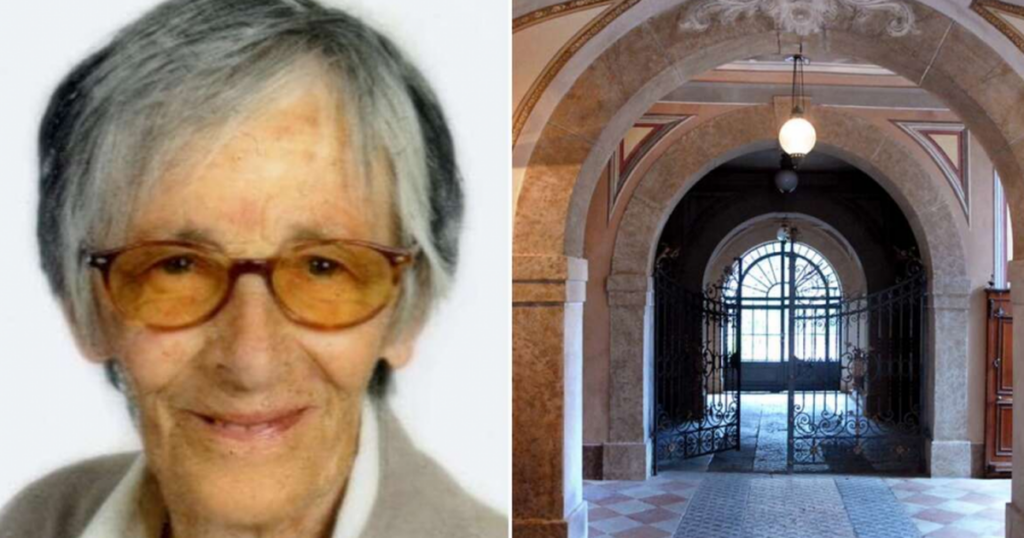
The assistant, originally from Albania, is suspected of having encouraged Baroness Maria Malfatti, who died on October 31, 2023 at the age of 87 in Rovereto, taking advantage of her cognitive decline, to name her universal heir and leave her all assets worth around five million euros. This is also the thesis supported by the nine grandchildren who appeared as civil parties in the process.
lawsuit
AS’s case was covered on the show ‘La Vita in Diretta’, broadcast on April 16, when the preliminary hearing was still in progress. What has angered the current restaurant entrepreneur is the description of her as “evil” by both the presenter and his colleague during the report. In her lawsuit, she also refuted the hypothesis put forward by the two journalists that she could be part of a fraudulent organization.
Archiving the request
The defamation lawsuit against the two journalists suffered a blow on June 25, when the deputy prosecutor of the Rovereto Prosecutor’s Office, Viviana Del Tedesco, filed a request for the case to be closed with the judge for preliminary investigations. However, the 45-year-old did not give up and, together with her lawyer Nicola Canestrini, filed an objection to the Prosecutor’s Office’s request. The file is now in the hands of the judge of the preliminary hearing, who is expected to schedule a hearing in the coming days to examine the case and then decide on the defense’s request.
“Purely journalistic reconstruction”
Matano and Di Palma, defended by the Veronese lawyer Luca Tirapelle, declare that it is a matter of “a purely journalistic reconstruction, without any denigrating or insulting intention towards the injured person”. The reportage, moreover, also quotes statements from the elderly woman’s friends, who describe the caregiver’s behavior as “loving”, in order to provide a balanced picture of the event. As for the qualification “evil”, “although it evokes a negative meaning – states the memo by lawyer Tirapelle – in its actual meaning it refers to cunning and deceptive behavior, which is fully consistent with the actions of the complainant”.
The guardian’s lawyer
On the other hand, the guardian, in her objection to the filing of the case, claims that “there is no doubt about the clearly offensive nature of the adjective ‘evil’ – writes lawyer Canestrini – which is not used to describe the behavior of my assistant, but her personality itself”. According to him, this is a defamatory adjective, as it is synonymous with “worthy of the devil, malicious and perverse”.
The lawyer also points out that in the request for archiving, the prosecution “has completely ignored the parts of the report of ‘La Vita in Diretta’ related to Mrs. S.’s affiliation with a phantom organization, which had allegedly planned to defraud the elderly woman”. According to him, this is “a conjecture without any evidence and that has never been taken into consideration by the prosecution”. In short, it was enough to read the procedural acts to understand that the caregiver “was never called evil nor was the hypothesis raised that she was part of an organization”. For this reason, the defense requests that the judge impose on the prosecutor the mandatory filing of charges against the two journalists or, at least, the continuation of the preliminary investigations.