
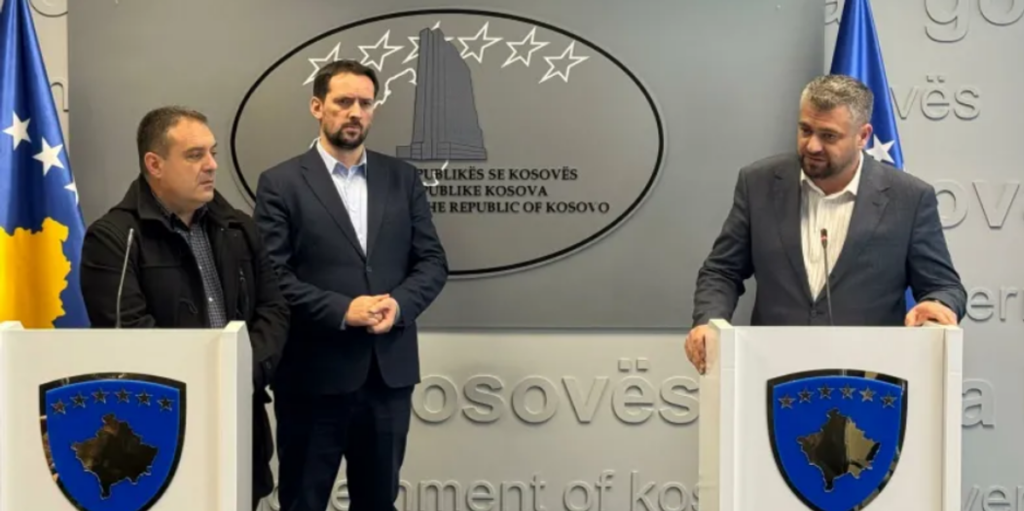
Serbia is working to change the agreement on missing persons and has not responded to the European Union’s call for joint meetings with Kosovo.
This was stated by the members of the Government Commission for Missing Persons, who emphasized that they will not accept any change to the agreement reached, reports kp.
The chairman of this commission, Andin Hoti, said that they continue to face challenges because Serbia continues to not cooperate in providing credible information and providing archives. He said that Serbia has refused three times in a row to participate in the joint commission with the European Union, with the justification that they do not agree with some points of the agreement reached between Kosovo and Serbia.
“One of the points states that the head of this joint commission is obliged to notify the 27 member states of the European Union of the non-work or non-cooperation or non-agreement, or non-provision of information by one or the other party, which in this case Serbia is trying to remove this point from the terms of reference because it is trying to escape the responsibility it has for this issue. We will of course not agree and such a thing will not happen. We will continue our constant pressure together with our international friends, be it the United States of America, the European Union, or the United Kingdom, which has been with us during these years, for Serbia to definitely accept the opening of the mainly classified archives, in which we claim that it contains data on the fate of over 1571 persons that we continue to have missing today,” he said.
According to him, within this year they have managed to complete 32 locations in Kosovo.
“When we talk about documents that we have received from the Hague Tribunal, they are confidential from the Red Cross Committee, which we as a commission are not allowed to distribute or use for solving crimes, we are only allowed to use them in a limited way to solve the fate of missing persons. Any information we receive from those 150 gigabytes will only serve to solve the fate of missing persons,” he said.
Viktor Haliti from the Institute of Forensic Medicine spoke about their commitment to searching for the locations planned in Kosovo.
Meanwhile, Kushtrim Gara from the commission said that it remains a priority and immediate to return to other locations in the territory of Serbia, locations already marked, or to continue excavations in locations that have been treated over the years.
According to him, there are mass graves confirmed since the first years after the war.
“For us, the request to return to the mass grave in Batajnica, near Belgrade, remains a special priority, since according to the analysis and information, we have confirmed that the bodies of at least 58 victims of the war in Kosovo continue to be in this location… The data we are examining again brings us back to those territories, but unfortunately, even in 2025, we do not have a date for when we can return to these locations or continue excavations in other locations in Serbia,” said Gara.
He added that they will soon return to Rahovec to continue the excavations, as they suspect that there may be up to eight people in the excavations they have done.
They also presented a map where they said that all the institutions involved have carried out over 2500 excavations in the territory of Kosovo.