
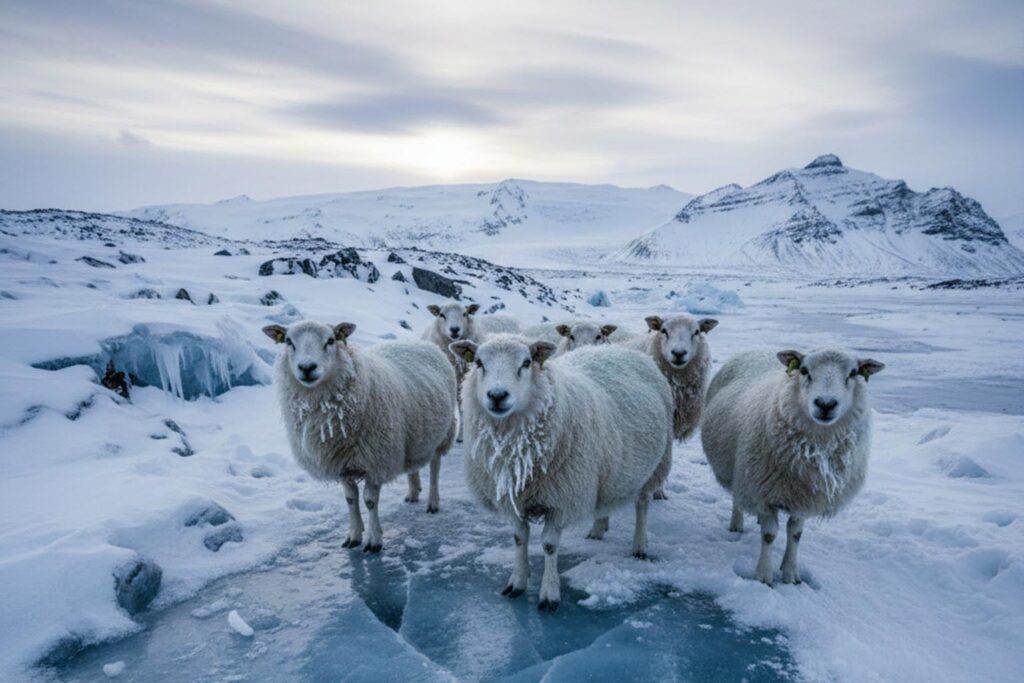
When temperatures plummet to -52.6°C in northern Norway, we witness nature at its most unforgiving. Animals are literally freezing to death, their bodies unable to cope with conditions that push biological survival mechanisms beyond their limits. Just as humans can experience dangerous thermal shock when exposed to extreme temperature changes, wildlife faces similar physiological crises when environmental conditions exceed their adaptive capabilities. This Arctic catastrophe offers a stark reminder that climate change doesn’t simply mean uniform warming across the globe.
The paradox strikes many as counterintuitive. How can record-breaking cold temperatures coexist with discussions of global warming? The answer lies in understanding that climate disruption manifests through extremes in both directions, creating weather patterns that challenge both wildlife and our preconceived notions about planetary heating.
These frozen landscapes in Norway’s northernmost regions represent more than meteorological curiosity. They signal fundamental shifts in atmospheric circulation that scientists have been tracking for decades, changes that make extreme weather events increasingly common and severe.
When Wildlife Biology Meets Meteorological Extremes
Arctic animals have evolved remarkable adaptations for cold survival, but -52.6°C represents conditions that exceed even their extraordinary capabilities. Reindeer, Arctic foxes, and other northern species possess dense fur layers, specialized blood circulation systems, and behavioral strategies that typically ensure survival through harsh winters.
Research into animal thermoregulation shows that most Arctic mammals can maintain core body temperature down to approximately -40°C. Studies published in Earth-Science Reviews have documented how extreme weather events in northern regions are becoming increasingly severe, with warming Arctic airmasses paradoxically contributing to more intense cold snaps. Beyond this threshold, even the most cold-adapted species face life-threatening metabolic stress. Their bodies begin shutting down non-essential functions, and if shelter or food sources become inaccessible, death follows rapidly.
“Warming of the coldest airmasses is consistent with model-derived conclusions that Arctic climate changes will ultimately influence extreme cold events in northern regions” – Earth-Science Reviews research
The current situation in northern Norway demonstrates how quickly environmental conditions can shift from survivable to lethal. Wild animals cannot simply migrate overnight when temperatures drop this dramatically, leaving them trapped in a landscape that has become temporarily uninhabitable.
The Global Warming Paradox Explained
The apparent contradiction between extreme cold and global climate warming reflects a fundamental misunderstanding of how planetary heating actually works. Climate scientists have long predicted that rising global temperatures would destabilize weather patterns, creating more frequent and severe extremes at both ends of the temperature spectrum.
Warming Arctic regions disrupt traditional polar air circulation patterns. When the polar vortex becomes unstable, frigid air masses that normally remain contained in the Arctic can plunge southward into regions unprepared for such extreme conditions. Research from NOAA Climate.gov explains how Arctic warming influences mid-latitude weather patterns, contributing to extreme cold snaps even in a warming world. This phenomenon explains how global warming can actually trigger record-breaking cold snaps.
Studies of atmospheric circulation reveal that the jet stream, which typically keeps Arctic air contained in northern latitudes, has become increasingly erratic. This instability allows polar air to penetrate further south while simultaneously drawing warmer air northward, creating temperature swings that wildlife and human communities struggle to manage.
Regional Climate Systems Under Stress
Northern Norway sits at the intersection of multiple climate influences, making it particularly vulnerable to dramatic temperature fluctuations. The region experiences effects from both Atlantic maritime currents and continental Arctic air masses, creating conditions where small atmospheric changes can produce outsized impacts.
Local meteorological stations have documented increasing variability in winter temperatures over the past two decades. While average temperatures have indeed risen, the range between extreme highs and lows has expanded significantly. This increased volatility poses greater challenges for wildlife than gradual temperature changes would, much like how prolonged exposure to environmental stressors can trigger fatigue and stress responses in biological systems.
The current crisis illustrates how climate change affects not just average conditions but the predictability that ecosystems depend upon. Animals time reproduction, migration, and food storage based on historical weather patterns that are becoming increasingly unreliable.
The Biological Cascades Often Overlooked
The immediate tragedy of frozen wildlife represents only the most visible consequence of extreme cold events. Beneath the surface, these temperature crashes trigger complex ecological disruptions that can persist long after conditions return to normal.
Soil organisms essential for nutrient cycling face massive die-offs when ground temperatures drop this severely. Beneficial bacteria and fungi that support plant root systems cannot survive such extreme conditions, potentially affecting vegetation recovery for multiple growing seasons. This creates a cascade effect that impacts herbivores even after the cold snap ends.
Insect populations, already under pressure from climate variability, suffer devastating losses during extreme cold events. Since many Arctic animals depend on insects for protein during summer months, these population crashes can affect wildlife nutrition and reproduction success for years following a severe winter. The interconnected nature of Arctic ecosystems means that temporary weather extremes can produce lasting biological consequences that extend far beyond the immediate freezing event.
Adaptation Strategies and Future Scenarios
Local communities in northern Norway are developing new approaches to protect both domestic animals and wildlife during extreme weather events. Early warning systems now provide more accurate predictions of dangerous temperature drops, allowing farmers to move livestock to heated shelters and wildlife managers to position emergency food sources. Just as households are adopting more efficient technologies like energy-saving cooking methods to reduce environmental impact, communities are implementing innovative solutions to minimize wildlife casualties during extreme weather.
“The polar vortex disruption allows Arctic air masses to penetrate regions unprepared for such extreme conditions, creating temperature swings that challenge both wildlife and human adaptation strategies” – NOAA Climate research
Scientific research into climate adaptation focuses on understanding which species might develop greater cold tolerance and which face potential local extinction. Some animal populations may need human assistance to survive increasingly unpredictable weather patterns, while others might adapt through behavioral changes or migration to more stable regions. Advanced monitoring systems, similar to how NASA’s Parker Solar Probe collects data from extreme environments, help scientists track wildlife responses to temperature extremes.
The frequency of extreme cold events in a warming world remains difficult to predict precisely, but climate models suggest that such dramatic temperature swings will likely become more common rather than less. This reality forces both natural systems and human communities to prepare for a future where weather extremes, rather than average conditions, become the primary challenge for survival.
What emerges from this Arctic crisis extends beyond immediate animal welfare concerns. The frozen landscape of northern Norway offers a glimpse into how climate disruption reshapes the natural world through extremes that test the limits of biological adaptation. As these events become more frequent, understanding their cascading effects becomes essential for protecting both wildlife populations and the ecosystems they inhabit.