
Published on
December 27, 2025

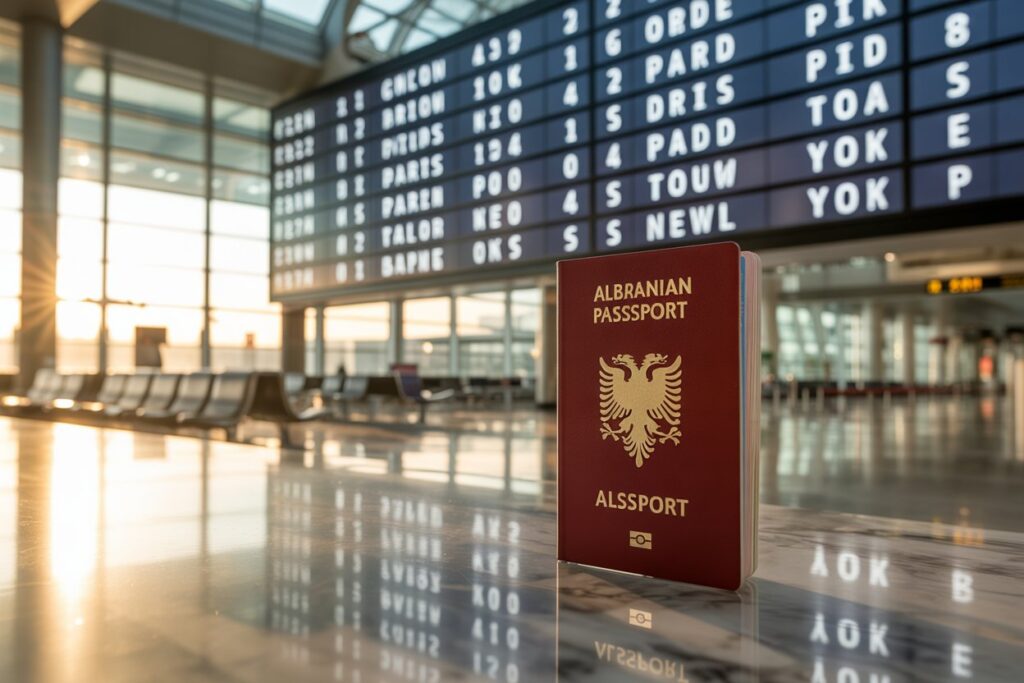
For decades, the Albanian passport was a symbol of isolation, a document that required mountains of paperwork and weeks of waiting at embassies for even a simple weekend trip. But as 2025 draws to a close, the story has changed completely. According to the latest Henley Passport Index, the Albanian passport has officially ascended to 46th place in the world.
This isn’t just a minor statistical bump; it is a monumental shift in the “travel freedom” of an entire nation. Today, an Albanian citizen can pick up their passport and fly to 122 destinations worldwide with either visa-free access or simplified entry requirements.
A Decade of Transformation
To understand the gravity of this achievement, one must look back. Just ten years ago, in 2015, Albania sat at a distant 75th place on the same index. At that time, many of the world’s most iconic destinations were locked behind restrictive visa walls.
The climb from 75th to 46th reflects more than just travel logistics; it is a reflection of Albania’s growing diplomatic standing and its integration into the Western world. The primary catalyst for this growth was the hard-won Schengen zone visa-free entry, which opened the doors to nearly all of Europe. This was followed by a steady stream of bilateral agreements with countries across Asia, South America, and the Middle East, each one adding a new layer of freedom to the Albanian traveler.
Why Passport Power Matters
A passport is more than a travel document; it is a tool of economic and personal freedom. Higher passport rankings generally correlate with:
- Economic Opportunity: Business travelers can attend international conferences and meet partners without the bureaucratic lag of visa applications.
- Educational Mobility: Students can easily visit potential universities and attend short-term academic programs abroad.
- National Pride: For many Albanians, the rise in ranking is a badge of honor, signaling that the world now views their nation with a level of trust and openness that didn’t exist a generation ago.
The Human Perspective: Stories from the Airport
In the bustling halls of Mother Teresa International Airport in Tirana, the impact is felt daily. We spoke with Besmir, a 34-year-old software developer who recently took a last-minute trip to Singapore—one of the 122 destinations now accessible.
“My parents tell me stories about how they needed a special invitation just to cross the border to Greece in the 90s,” Besmir says. “Now, I can see a cheap flight on my phone, pack a bag, and be in a different continent by tomorrow morning. It makes the world feel small, in a good way.”
For the older generation, the “Red and Black” passport reaching the top 50 in the world is a dream they once thought impossible. It represents a “normalization” of Albanian life on the global stage.
Looking Ahead: The Journey to the Top 40
While 46th place is a historic high, the momentum doesn’t seem to be stopping. Diplomatic efforts are currently underway to further expand access to key markets in the Americas and Oceania. As Albania continues its path toward European Union membership, the eventual “EU Passport” status would propel the nation into the top 10 globally, alongside powerhouses like Singapore and Japan.
For now, Albanians are celebrating a world that is more open to them than ever before. From the beaches of Brazil to the skyscrapers of the Emirates, the Albanian passport is no longer a barrier—it is a key.
