
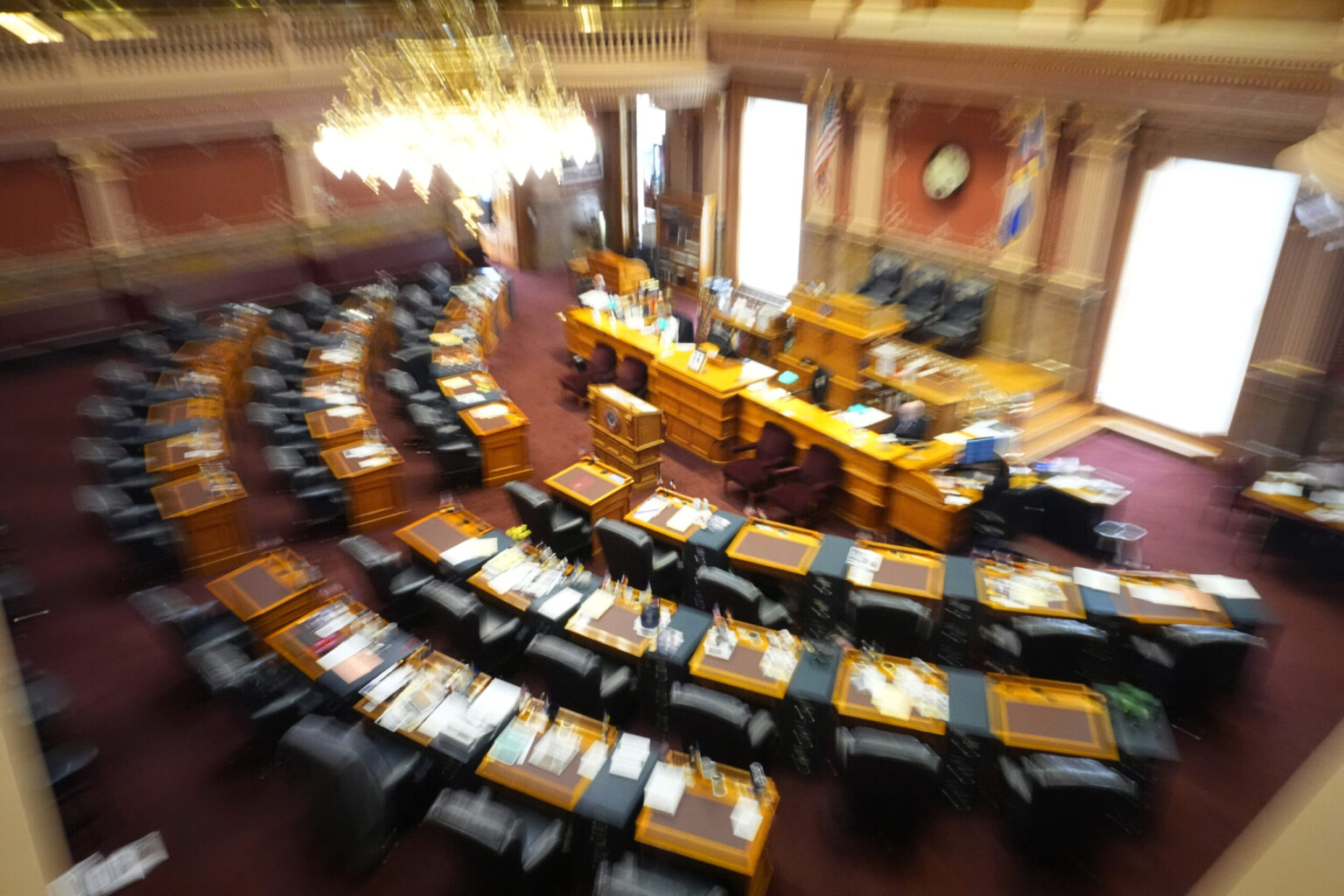

In 2025, the Colorado legislature faced a budget deficit, sought to tackle a lingering housing crisis and saw a wave of lawmakers leaving for other opportunities, prompting multiple vacancy committees to act.
Here are a look at the year’s top issues:
Vacancies. Lots of them.
The 2024 election produced 21 first-time lawmakers for the House. In the Senate, eight new senators joined the chamber, seven of whom had previously served in the House.
Then there were the vacancies: In 2025, 10 lawmakers left their seats. Sen. Kevin Van Winkle, R-Highlands Ranch, won a seat on the Douglas County Commission, with Sen. John Carson replacing him in the legislature. The resignations of Sens. Chris Hansen, D-Denver, and Janet Buckner, D-Aurora. brought in new senators in Iman Jodeh and Matt Ball.
Jodeh’s departure from the House led to a vacancy election for Rep. Jamie Jackson.
Sen. Sonya Jaquez Lewis, D-Longmont, resigned in the wake of an ethics investigation into the mistreatment of staff, which brought in Sen. Katie Wallace as her replacement.
Senate Minority Leader Paul Lundeen, R-Colorado Springs, stepped down a year ahead of term limits, which brought in Sen. Lynda Zamora Wilson to represent Senate District 11. House Minority Leader Rose Pugliese, R-Colorado Springs, resigned, leading to an unusual vacancy election for the House District 14 seat that required a do-over after the committee failed to follow the rules. The winner, for both times, was Rep. Ava Flanell.
Rep. Ryan Armagost, R-Berthoud, announced his resignation twice — first in June to say he was stepping down, and again in August, this time to avoid a censure resolution. A vacancy committee chose Rep. Scott Slaugh as his replacement.
Rep. Shannon Bird, D-Westminster, resigned on Dec. 7. By law, a vacancy must be filled within 30 days. That vacancy election is expected to take place in early 2026.
The last vacancy to be resolved in 2025 will be the seat held by the late Sen. Faith Winter, D-Broomfield. The meeting is scheduled for Dec. 23. The only candidate declared for the seat, as of mid-December, is Rep. William Lindstedt. If he wins the seat, that will create yet another vacancy that will have to be filled in 2026.
Lawmakers, taking heat for the high number of vacancy elections, passed legislation to establish a new system: House Bill 1315 required candidates to obtain signatures from 30% of the vacancy committee or 200 voters from the same party, as well as campaign-finance reporting requirements.
None of the vacancies in 2025 fit the criteria for the new process.
For the 2026 General Assembly, as many as 27 lawmakers, more than a quarter of the body, will have gained their seats through the vacancy process.
Artificial intelligence
The 2024 law that made Colorado the first in the nation to regulate “algorithmic discrimination” in artificial intelligence remains on a bumpy path toward a June 30, 2026 implementation date.
The bill’s chief sponsor, Senate Majority Leader Robert Rodriguez, D-Denver, tried twice in 2025 to find a fix, as requested by Gov. Jared Polis. Still, the only change lawmakers signed off on was changing the implementation date from February to June.
The issue with the 2024 law, according to a 2024 letter penned by Rodriguez, Polis, and Attorney General Phil Weiser, was an overly broad definition of AI. The fix, the trio wrote, should clarify the definition, focus regulation on AI developers, instead of small businesses, and use a more standard enforcement model under the Attorney General’s Office.
A proposal in the 2025 session failed to gain support from tech developers and venture capitalists and died before the session ended. A second attempt during the August 2025 special session also went nowhere. Polis has convened a second task force to work on the issue.
The Trump administration added an extra layer of complications this month, when the president signed an executive order banning states from implementing AI regulations.
Billion-dollar deficits
Budget writers had more than their fair share of work this year, as they sought to plug two big holes in the state’s 2025-26 budget. The first was $1.2 billion, a shortfall caused by higher-than-expected Medicaid costs and a structural deficit that has been looming for five years. Lawmakers eliminated specific programs, swept cash from various accounts and shuffled funds around.
The second hole, at around $783 million, showed up after President Trump signed H.R. 1 in July, according to analysts. Lawmakers responded in the August special session with corporate tax increases. The governor took care of the rest, taking money out of the state general fund reserve, imposing a hiring freeze and implementing budget cuts, with Medicaid providers taking the biggest hit.
Problems at the state lab
Allegations of misconduct against Yvonne “Missy” Woods, a forensic scientist at the Colorado Bureau of Investigation, led to multiple bills during the 2025 session.
Woods was accused of mishandling DNA evidence in 1,045 cases, leading to a backlog that could take years to resolve. Woods has been criminally charged in the matter.
Lawmakers came up with three bills to address the backlog, require CBI employees to report suspected misconduct and allow the agency to use existing funds to hire a third party to process rape kits.
The issue took on added attention when Rep. Jenny Willford alleged she was sexually assaulted by a Lyft driver in 2024 and that she was among those waiting on rape kit processing.
Government transparency
Senate Bill 77 sought to change the state’s open records law by increasing the costs of open records requests, creating three classes of requesters and extending the time a governmental entity must comply with those requests. One of the main criticisms against the bill was that it allowed the media to receive public records more quickly than the public. It also won a decisive bipartisan vote from both chambers.
Polis vetoed the bill on April 17, citing worries over its creation of three classes of requesters — reporters, individuals who seek open records for financial gain, and everyone else.
While lawmakers discussed another override, on May 2, the Senate postponed the vote until after the session ended.
One bill made it to Polis’ desk and was signed into law: House Bill 1041 carves out exceptions to the open records act tied to contracts student-athletes sign with publicly-funded colleges and universities for their use of an athlete’s name, image, and likeness.
University of Colorado officials testified in committee that the bill is necessary to protect competitiveness. Critics, including the Colorado Freedom of Information Coalition, said “concealing NIL records from the public disserves the interests of every stakeholder — the public, the athletes, and college sports itself — in making sure that competition is fair, honest, and passes the test of legitimacy and that athletes have equitable earning opportunities befitting their level of accomplishment.”
Override vote never materialized
Meanwhile, Senate Bill 86 would have imposed restrictions on social media platforms around criminal activity. The bill passed both chambers with strong bipartisan support. Polis vetoed the bill on April 24. The state Senate moved quickly, voting 29-6 on April 25 to override the veto, well above the 24 votes needed.
But the House delayed action on the bill until the following week, giving the governor and his allies time to work on legislators who might support a veto override. The House sponsors never brought up the override vote.