
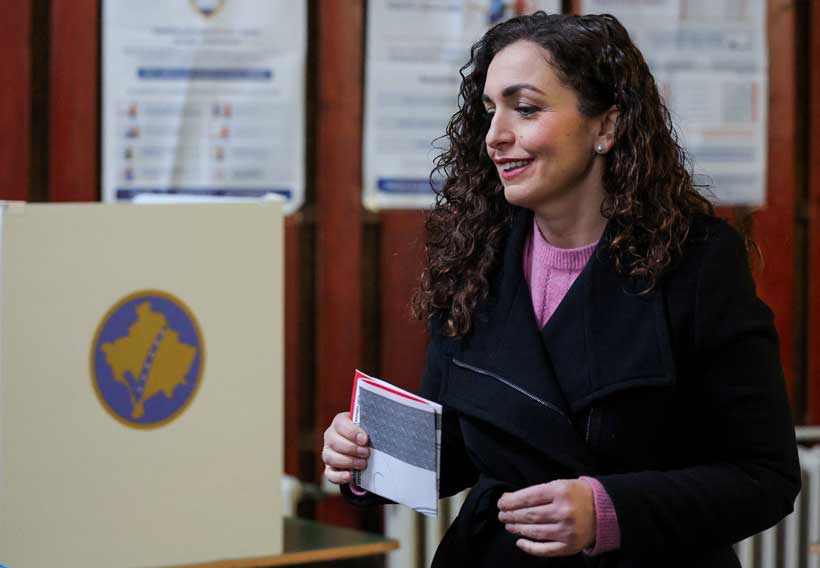
Kosovo held elections on Sunday aimed at breaking a political deadlock that has hindered parliament and stalled international funding. Prime Minister Albin Kurti’s Vetevendosje party was seeking a majority after it failed to do so in February. The political situation prompted President Vjosa Osmani to dissolve parliament in November and call early elections.
The failure to form a government would exacerbate the crisis, especially with a new president needing to be elected in April and critical loan agreements from the EU and World Bank expiring soon. Polling stations opened at 7 a.m. and closed at 7 p.m., with initial results expected shortly after voting concluded.
Opposition parties have declined to collaborate with Kurti due to disagreements over foreign relations and his management of the north, which has a Serb minority. In an effort to attract voters, Kurti promised additional public sector salaries, increased investment, and a new unit to combat organized crime. Living standards remain a crucial concern for voters.
Voter sentiments reflected skepticism about significant positive changes regardless of the election outcome, with one voter expressing doubt about the potential for drastic improvements.
Kurti encouraged citizens to vote, arguing that higher participation would strengthen parliament’s legitimacy. Kosovo declared independence from Serbia in 2008 and has faced ongoing challenges like poverty, instability, and tensions with Serbia, leading to EU sanctions that were recently lifted.
With information from Reuters