
This story is part of a selection of our top news from 2025 that we’re republishing during the holiday break. We’ll be back to our regular schedule in the new year.
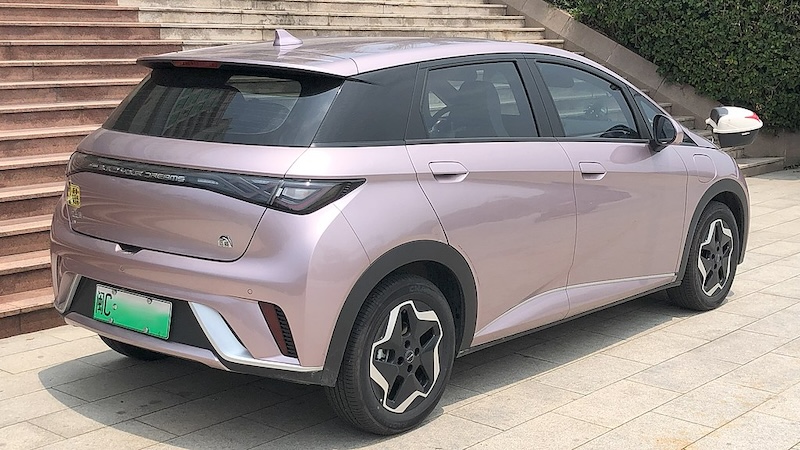
A Canadian energy analyst’s vacation rental turned into an opportunity to compare China’s BYD electric car with North American models—sparking reflections on how Canada’s trade policy shapes its EV market.
“So, what was it like driving a BYD? It was… perfectly fine?” Trevor Melanson, communications director at Clean Energy Canada, wrote in a LinkedIn post after renting a BYD Dolphin while in Iceland.
“Driving this car actually changed how I viewed Chinese EVs—but not in the way you might think. After all, for Canadians, Chinese EVs are mythical unicorns we read about but never actually drive.”
Melanson’s story is anecdotal, but his chance to test-drive the Dolphin was rare for a Canadian. Canada imposes a 100% tariff on electric vehicles imported from China, with similar tariffs in place in the United States. There, BYD cars could be a “mythical unicorn” or a basilisk—depending on which side of the American EV debate you stand on.
“A 100% tariff isn’t leveling the playing field,” Melanson told The Energy Mix. “It’s putting up a wall that exists nowhere else in the world, including in other automaking nations.”
Clean Energy Canada has been advocating for Canada to lower tariffs and allow BYD and other Chinese EVs into its market. While cars like the Dolphin sold for around US$26,000 (€22,990, or about C$36,000) in European countries as of May, Clean Energy Canada says there are no good under-$40,000 options in Canada.
“That is a real problem, especially since we know from market research we’ve conducted (to be published in September) that $40,000 is a hard line for a lot of buyers,” Melanson said.
In Melanson’s experience, a BYD Dolphin’s performance can be casually compared to a Chevy Bolt—both are economy hatchbacks with a roughly 400-kilometre range. His hunch is that the Dolphin is unlikely to crush any domestic competition—he said it still underperformed compared to his Tesla Model 3.
In May, Reuters reported that BYD had outsold Tesla in the EU for the first time.
While critics cite unfair labour conditions and subsidies as reasons to block Chinese EVs, a 2024 analysis by researcher Hannah Ritchie found that BYD’s low costs stem primarily from automation, not labour exploitation. Still, documented cases of “slave-like” conditions in a BYD-linked Brazilian factory remain concerning, and North American autoworkers warn that EV production overall requires fewer workers—posing a threat to local jobs.
Autoworker unions have urged Canada and the U.S. to keep tariffs in place to prevent unfair competition. But Clean Energy Canada argues that some level of market openness is crucial if Canada wants to see broader EV adoption. A recent BloombergNEF study cited in a Clean Energy Canada article found that openness to Chinese automakers was “a clear factor dividing which countries are seeing faster EV adoption and which are going slower.”
The advocates seek a middle ground—reduced tariffs that will level the playing field while still allowing Chinese EVs into the North American market as an affordable competitor. The EU, for example, imposed 45.3% tariffs that were crafted to offset the advantage of state subsidies poured into China’s carmaking sector.
“Healthy market conditions should be our north star here: both in terms of opening up the market to more electric models from other countries, and in terms of finding some tariff level that truly is fair,” Melanson told The Mix.