
Within just a few days, Serbia received three messages from Moscow. They were not contradictory; on the contrary, they were perfectly coordinated.
The director of the Russian foreign intelligence service, the President of the Russian Federation, and the Russian ambassador in Belgrade each sent the same message: Serbia must choose only what is acceptable to Russia. Anything else will come at a high price.
Follow our coverage of the war on the @Kyivpost_official.
No diplomacy, only pressure
This is not diplomacy, let alone friendship. It is raw pressure, and it is no longer covert but a public warning to the Serbian leadership, delivered without any respect for form, sovereignty, or basic political decency.
The statement by Sergei Naryshkin, director of the Russian foreign intelligence service SVR, published by TASS, serves as a classic example of intelligence-political intimidation, wrapped in the language of false neutrality.
He claims that Russia “does not interfere” and that it will “respect whatever choice Serbia makes”, but in the same sentence he clearly states that Serbia should choose “national interests” and not “Western lies,” with an additional claim about the West’s alleged plans for a “Maidan-style uprising” in Serbia.
In other words, any decision by Serbia that does not align with Moscow’s interests will be declared someone else’s project, a deception, and a prelude to destabilisation.
Moscow’s message to Belgrade
When the director of the foreign intelligence service of one country comments on political processes in another, it is not merely an opinion. It is a message – one intended to delegitimize any political decision by Belgrade that leads toward the West, the EU, or strategic autonomy.
Other Topics of Interest
Bulgaria to Join Eurozone Amid Political Turmoil, Russian Influence Fears
The country faces unique challenges, including anti-corruption protests that recently swept a conservative-led government from office.
A few days later, Vladimir Putin further hammered that message home. At his annual press conference, he no longer spoke in allusions, but openly.
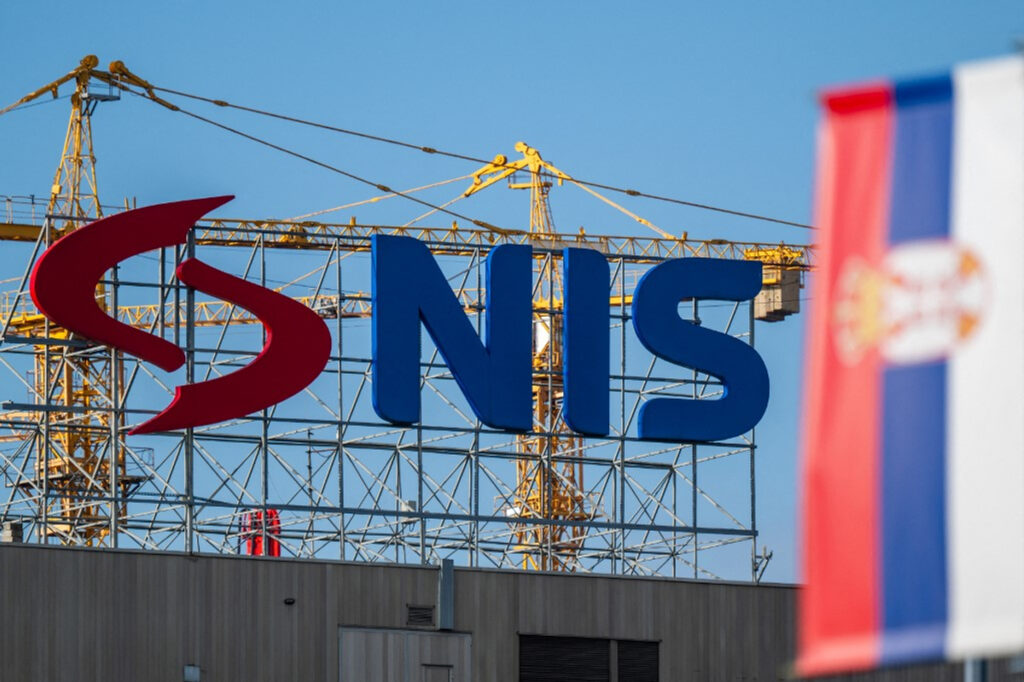
Putin cynically stated that Russia “assumes” that “friendly Serbia” will fulfil its obligations towards the joint oil company NIS. He referred to the intergovernmental agreement and questioned what would happen if those agreements were not followed – and how Russia could invest in Serbia at all.
This is not an economic analysis. It is an open political threat to the President of Serbia and the state leadership. Vladimir Putin’s message is clear: if Belgrade makes a decision on NIS against Moscow’s will, Russia will treat it as a hostile act and a violation of “obligations”, with all the political and strategic consequences that follow.
Language of hierarchy
That message is not about investments but about loyalty. Not about money, but about obedience. Even more importantly, Putin speaks as if Serbia has no right to seek a solution that protects its economy and energy security but only an obligation to “keep in mind” Russian interests. It is the language of hierarchy, not partnership.
After all, if Serbia is a friend, why does Russia not want to sell its share in NIS? That question is simple. To this day, there is no answer. Serbia has publicly stated – and President Vučić has repeated several times – that it is ready to pay for the Russian share of NIS at the market price, or even above, to remove the reason for sanctions and ensure market stability. Russia refuses.
Yet, according to the same intergovernmental agreement that Putin cites, Serbia, as co-owner of NIS, has the right of first refusal. But Russia is not interested in this.
Holding friends hostage
That is where all talk of “friendly relations” ends. A friend does not hold a friend hostage. A friend does not use a key energy company as a lever for political pressure.
If NIS operates as a commercial company, the problem is solved through sales. If the problem is deliberately not solved, it means that NIS is not an economic issue but merely an instrument of control.
Ambassador Aleksandr Botsan-Kharchenko’s statements are perhaps the most drastic example of a complete lack of diplomatic boundaries. He does not speak like a diplomat; he speaks like a political tutor.
In an interview with Serbian media, he advises that “silence is the best atmosphere,” that it is not beneficial to explain the details of NIS, that it is important not to criticize Russia and to understand the “bigger picture.” He practically instructs the Serbian leadership on how to communicate, what to say, and what to keep silent.
Humiliation not by chance
Any serious, sovereign state would treat such behaviour by an ambassador as unacceptable interference in internal affairs. Many countries would declare the ambassador persona non grata and expel him after such statements.
In Serbia, however, he is given media space to explain what is good for Serbia and what is not.
It is humiliating for the host country. And that humiliation does not happen by chance.
Russia claims that the American sanctions are “illegitimate” and “directed against Serbia.” It is a typical Soviet strawman argument. Sanctions were not introduced because of Serbia, but because of Russian ownership of NIS and its aggression against Ukraine.
Serbia is a hostage to that ownership: the problem is not Serbian politics but the fact that the key energy company in the country is under Russian control. Without Russian participation, there would be no sanctions, no blackmail, no crisis.
Serbia caught between powers
At the same time, the USA, through OFAC, pursues a policy that formally puts pressure on Russia but in practice prolongs Serbia’s agony. Deadlines are extended for Russia to find a buyer, but NIS is not given a full operating licence to operate and produce derivatives. The result is absurd: Russia gains time, and Serbia loses energy stability.
Serbia finds itself caught between two powers playing their own games, while Serbia pays the price – without a refinery, without a secure supply, without a clear perspective.
This no longer regards NIS; it is a matter of political dignity.
Russia’s orders
Statements by Putin, Naryshkin, and Ambassador Botsan-Kharchenko are not diplomatic observations. They are direct, public threats to the Serbian leadership. The message is clear: either you behave according to Russian expectations, or you will face the consequences.
That is not the behaviour of allies. It is the behaviour of a power that does not see Serbia as a partner, but only as an area of influence.
Therefore, the most important question today is not how long the negotiations on the NIS will last, but whether Serbia has the strength to say clearly: we will not be held hostage to others’ interests, regardless of what they are called or how they present themselves.
Because a state that accepts humiliation for the sake of “silence” will soon be left without silence – and without a state.