
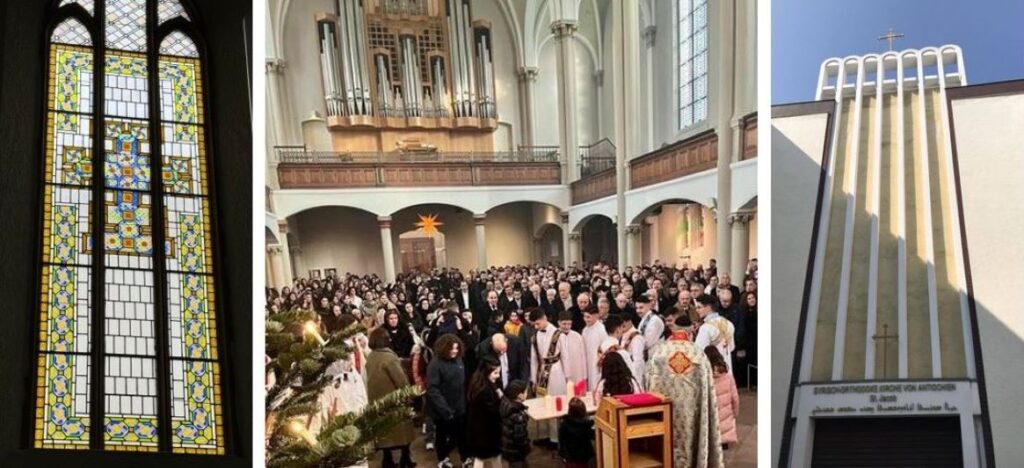
BERLIN — Across Germany, church bells still ring, but for a steadily shrinking audience. From Berlin to smaller provincial towns, churches are grappling with declining congregations, aging memberships, and a growing wave of closures that is reshaping the country’s religious and urban landscape.
Once anchors of community life, many churches now stand largely empty. As attendance falls, some buildings have been sold and repurposed as apartments, gyms, cultural venues, or shops. Others have been closed entirely, their doors shut not by scandal or conflict, but by absence.
According to official church statistics, more than one million people left Germany’s churches in 2024 alone, a result of declining religious participation and demographic change. The trend continues a long-term pattern that has accelerated over the past two decades.
“We are experiencing a profound transformation of religious life in Germany,” the German Bishops’ Conference said in a statement cited by Deutsche Welle, noting that shrinking congregations have made it increasingly difficult to sustain church infrastructure.
Today, members of the Protestant and Roman Catholic churches together account for less than 45 percent of Germany’s population. Thirty years ago, that figure was approximately 69 percent. The shift represents one of the most significant changes in Germany’s postwar social landscape.
Between 2000 and 2024, hundreds of churches were closed across the country. Data published by the German Bishops’ Conference and reported by Deutsche Welle shows that 611 Catholic churches ceased regular religious use during that period. Protestant churches experienced a similar trend, with an estimated 300 to 350 closures nationwide, bringing the total number of closed churches to nearly 900.
Church leaders have acknowledged the emotional weight of these decisions. “Every church that is closed represents a painful loss,” a spokesperson for the Catholic Church in Germany told Deutsche Welle, adding that closures are considered only after “all pastoral and financial options have been exhausted.”
In Berlin, where secularization has been particularly pronounced, some abandoned churches have taken on new religious roles. Orthodox Christian communities, often made up of immigrants from Eastern Europe and the Middle East, now worship in several former Protestant and Catholic church buildings.
Elsewhere, the transformation has been more secular. Former sanctuaries have been converted into boxing gyms, fitness centers, residential buildings, libraries, hotels, and retail spaces. Some have become cultural venues, hosting concerts and exhibitions beneath vaulted ceilings once reserved for prayer.
Urban planners and preservation experts describe the process as a delicate balancing act. “The challenge is to preserve the historical and architectural value of these buildings while finding sustainable new uses for them,” German heritage officials have noted in multiple public assessments.
The fate of Germany’s churches reflects a broader shift in belief, belonging, and public life. As religious affiliation continues to decline, church buildings, once symbols of permanence, are becoming markers of a society in transition, adapting pragmatically to changing values while quietly reckoning with the loss of an era.