
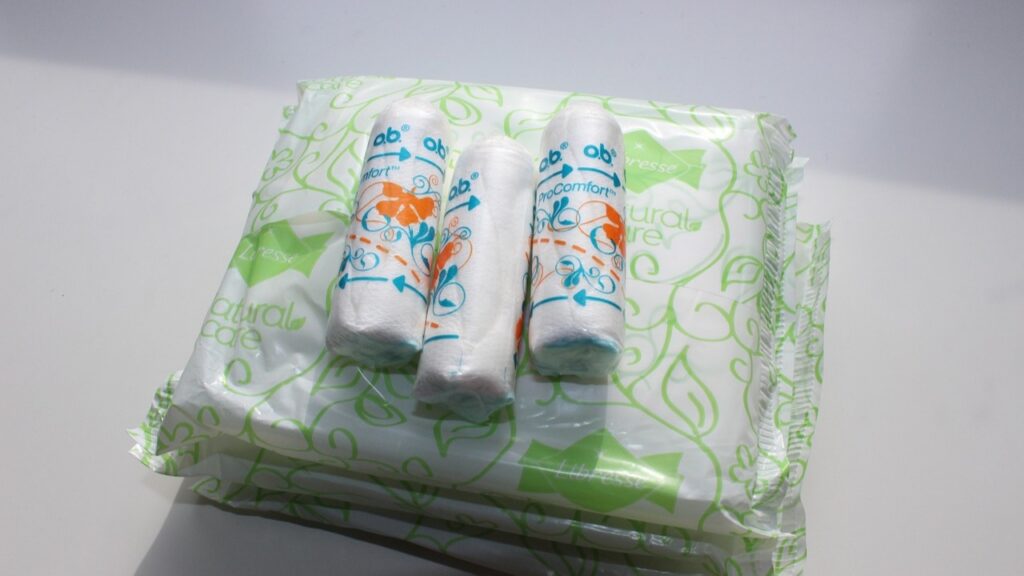
In general, however, local surveys have shown that the vast majority of Czechs are in favour of making menstrual products freely available in schools. The debate, which comes against the backdrop of other like-minded measures adopted across European countries in recent years, has also contributed to increasing awareness about period poverty at large.
“Periods and period poverty are still a big taboo in Czech society,” Lucie Gregorova says, citing a 2021 survey that put it as the number one issue people don’t want to talk about.
“We’re slowly changing it and making it a topic of public discussion, but next year will really be about becoming more of a watchdog, see how schools implement the new measure and bring in more information,” she says, adding that their next goal is to push for menstrual products to be freely available not just in schools, but in all public buildings.
Another reform many have been advocating for is to reduce Czechia’s VAT rate on menstrual aids – the so-called ‘tampon tax’ – which, at 21 per cent, is currently one of the highest among EU states, behind only Hungary.
Back in 2020, the then-finance minister Alena Schillerova had already started working on a proposal to drop the fiscal rate to 10 per cent, before scrapping the plans.
“Menstrual poverty is a serious issue that I am prepared to pay attention to,” Schillerova, who returned as finance minister this month, told BIRN in an emailed statement. “We will consider any possible VAT adjustments, which unfortunately may not always be reflected in the price for the customer.”
Regardless, some are not convinced any fiscal reform would be a real game-changer. “It’s not a very popular thing to say, but we don’t really care if they change the tax rate,” Gregorova says, arguing a reduced VAT rate could only lead to increase profit margins of the distributors and companies with no ultimate reduction in the retail price. “It would be a nice gesture, but if you don’t have 50 crowns for tampons, you don’t have 35 crowns for tampons either.”
Most of the change needed comes down to better education from a young age, she believes, reminding that while menstruation is briefly taught as part of the biology curriculum, some schools continue to separate boys and girls to address more specifically the topic of reproduction.
“It’s important that schools create an atmosphere where periods are shown as a natural part of growing up,” she says. “Boys don’t know much about it, but they want to, they’re very curious and interested. We teach them how to be allies, to discreetly offer a hoodie to put around her waist if they see a girl is leaking, for instance.
“I really believe that if you give kids such an opportunity, they’ll use it,” she adds.