
COLUMBUS, Ohio — Artificial intelligence has moved fast this year, from tools that can write, create and analyze in seconds to new questions about how much of our lives we want technology to touch.
AI is showing up in classrooms, workplaces and even our daily routines, changing the way we work and communicate.
Inside Vince Castillo’s classroom, the Ohio State University professor is embracing the sudden rise of artificial intelligence.
“AI is here to stay. We can’t really push that toothpaste back in the tube,” said Castillo.
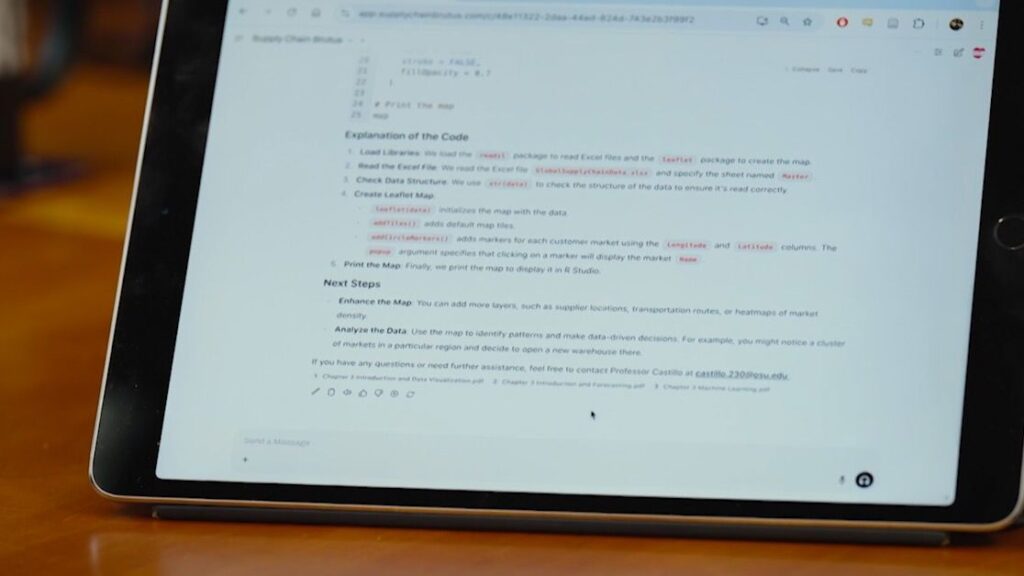
It’s something the professor incorporated into his lesson plans by creating his own AI chatbot, supply chain Brutus.
“And if you’ll notice at the bottom we have these citations, chapter 2 chapter 3 — chapter 3, that’s the evidence that it’s using my textbook. Could they go back and say they want to brush up on chapter 2 for example, exactly and they can even click on the reference and it pulls up that chapter and section,” Castillo said.
Ohio State introduced its AI fluency initiative last semester where every undergraduate curriculum used AI. Sunny Hasija, a research graduate at Ohio State University, praises the university for incorporating AI into the students’ learning.
“It does not eliminate critical thinking, but it’s really easy for people to offload their critical thinking onto the AI, and some cases, it actually raises the bar for critical thinking especially in industries,” said Hasija.
He said they’ve talked to businesses that want to hire workers who are experts that also know how to use AI. He said this is exactly what OSU is trying to teach their students.
“Students are going to use it, people are using it. How do we develop a better integrated approach of teaching how to critically think and have fluency in the capacity and the ethics behind using artificial intelligence tools,” Hasija said.
And even from a young age, students are finding AI in their classrooms.
“I started using it this year, particularly with our read-aloud books, where we would read the book and then the kids would chat with characters from the book on AI and then we moved into using it for writing feedback so the kids would use it kind of as a peer editor,” said Angelow Rowe, a fourth-grade language arts teacher for Dublin schools.
Educators said AI won’t replace teachers, but understanding it will be essential for the next generation of students.
“I think that this is a piece of the kids’ future, and it’s a piece of their future workforce to some capacity and so this has been a great opportunity for them to explore in a safe environment and they have the parameters there and they have an adult in the room that’s there to support them that as opposed to letting them run wild with this technology,” Rowe said.