
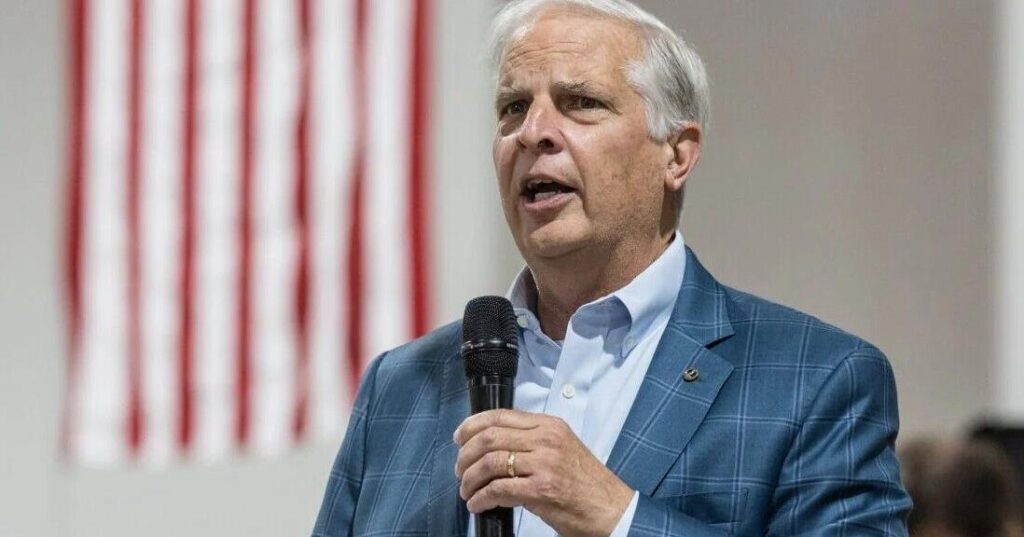
Shenandoah Valley state Sen. Mark Obenshain has concerns about existing Virginia laws or proposed ones he believes threaten Virginia’s economic progress.
His worry supersedes his own legislative agenda in the 2026 General Assembly.
Obenshain, R-Rockingham, said Virginia’s Right-To-Work law has promoted robust economic development in the commonwealth during Gov. Glenn Youngkin’s administration.
One General Assembly bill has already been pre-filed to repeal the law if passed. Obenshain is vehemently opposed to the law’s repeal.
The Right-To-Work law has been in existence in the commonwealth since 1947. Supporters argue that the law protects Virginia workers from having to join a union or pay dues as a condition of hiring, firing or continued employment. But opponents of the law argue that right-to-work laws make it more difficult for workers to form unions and collectively argue for better working conditions.
The pre-filed bill is offered by Sen. Jennifer Carroll Foy, D-Prince William. She said in a social media post after filing the repeal legislation that the bill, in part, is to “protect the rights and opportunities of Virginia workers.”
Virginia’s Clean Economy Act, passed in 2020, requires Virginia utilities to transition from fossil fuel plants and build/purchase massive amounts of solar, onshore wind, offshore wind, and create community solar efficiency programs.
Obenshain’s Senate district includes two of Virginia’s top agricultural counties, Augusta and Rockingham. The goals of the Clean Economy Act could bring massive solar arrays to the pristine farmland in those counties, Obenshain said.
“People in rural Virginia didn’t ask for this,” he said. The senator said “people on the other side of the aisle” would allow “construction of massive solar arrays through farmland.” The senator supports legislation that would repeal the Clean Economy Act.
Obenshain’s top priority remains improvements to Interstate 81. The interstate cuts a swath through his district. Work to widen the interstate through Harrisonburg is set to begin in 2026.
The senator is hopeful that the Commonwealth Transportation Board will recommend the next batch of I-81 upgrades when that body meets in January. The next round of I-81 work would not start until 2035.
During the upcoming General Assembly session, Obenshain is proposing bills to protect elders from exploitation and Virginia residents moving to rural areas.
The senator said Virginia residents moving from a city to a rural area often get large tax bills because the land they purchased is no longer in agricultural production. Obenshain’s bill would provide appropriate notice to the new landowner.
Obenshain is a Republican, and Virginia Gov.-elect Abigail Spanberger is a Democrat. Despite representing different parties, Obenshain said he is impressed with two of the governor-elect’s cabinet selections. He endorses the choices of Rockingham County native Katie Frazier for secretary of agriculture and forestry, and Nick Donohue as secretary of transportation.
Obenshain has known Frazier for many years and thinks she will do well as an agricultural leader. Donohue played a pivotal role as a deputy transportation secretary in the Ralph Northam administration, focusing on the I-81 Corridor Improvement Program.
Obenshain said the future of Virginia’s economic development depends on continuity.
“Economic development depends in large part on whether the new administration builds on the economic foundation Gov. Youngkin has established,” Obenshain said. He said Youngkin has accomplished much for Virginia’s economy by attracting pharmaceutical companies, microchip manufacturers, and data centers.
While data centers consume significant energy, they are an important revenue generator, Obenshain said.
“Loudoun County receives a billion dollars in tax revenue from data centers there,” he said. “They can build roads, schools and keep real estate taxes low.”
Augusta County is developing an ordinance regarding data centers that would address their location in that county and access to energy.
Obenshain holds out optimism about working with Spanberger. He hopes the governor-elect will prove savvy in her legislative veto choices.
“There are about 200 bills each over the past two years passed by the Democratic majority that were vetoed by the governor,” Obenshain said. “We’ll have to see what the governor-elect does when bills arrive on her desk.”
He said Youngkin’s vetoes blocked bills that would have damaged the Virginia economy, undermined fundamental rights, and increased taxes.