


Expert reveals how to add more superfoods to your diet
Nutrition therapist Lauren Kelly explains what foods are designated as a “superfood” and how they can benefit your overall health goals.
Once regarded in Western countries as little more than a traditional Japanese ceremonial drink, matcha has become a mainstream staple. It now appears everywhere from coffee shop menus and smoothie chains to supermarket shelves and home pantries.
That’s because, since the turn of the 21st century, the beverage has undergone a major rebranding, fueled in large part by social media. It’s now widely marketed as a gentler alternative to coffee – one that delivers steady energy, focus and antioxidants. “Consumers are moving beyond traditional caffeinated beverages toward functional drinks that offer added health or performance benefits,” says Kristen Smith, a registered dietitian nutritionist and spokesperson for the Academy of Nutrition and Dietetics.
Here’s what makes matcha unique among other green powders and beverages, how it can benefit your health and why moderation still matters.
What is matcha? What is matcha made of?
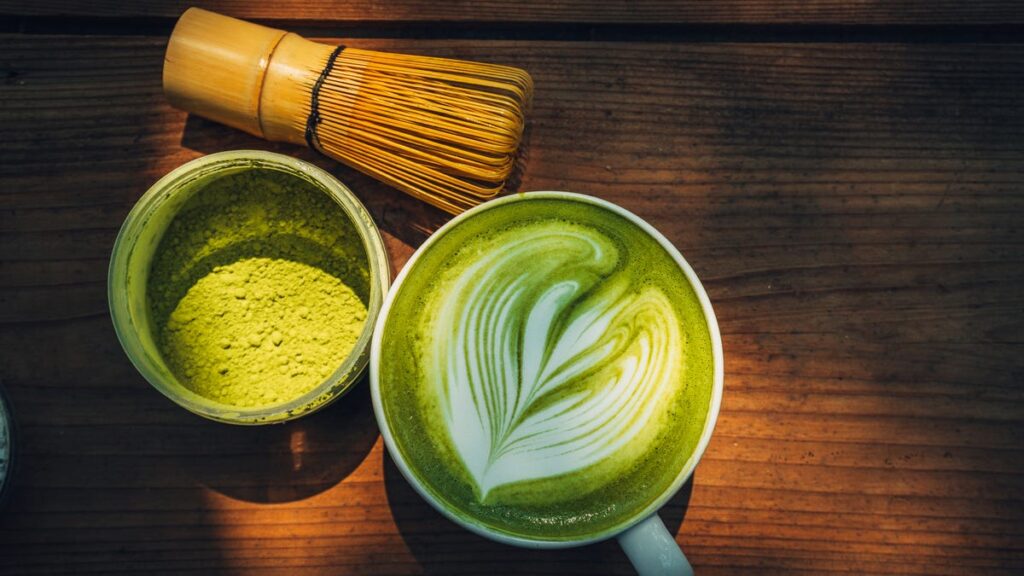
Matcha is a finely ground powder made from specially grown green tea leaves. Unlike most teas, where leaves are steeped and discarded, matcha involves consuming the entire leaf – “even the stem and veins,” explains Jen Messer, a nutrition consultant and registered dietitian at Jen Messer Nutrition. This approach dramatically affects both matcha’s flavor and nutritional profile.
The cultivation process begins weeks before harvest, when tea plants are shaded to limit sunlight exposure. This shading boosts chlorophyll production, giving matcha its vivid green color while also increasing levels of amino acids, particularly L-theanine. After harvesting, the leaves are steamed and dried to produce tencha. The result is then stone-ground into an ultra-fine powder, which can be mixed with liquid – typically water, though milk and milk alternatives are also common – to create the signature beverage.
Along with being whisked in hot liquid to be sipped plain, matcha powder is also added to lattes, smoothies, baked goods, ice cream and even savory dishes.
“Originally from Asia in regions of China and India, matcha is now produced in many countries across the globe,” says Messer. Japan, Taiwan, Vietnam, South Korea, China and the United States are among the major producers and cultivators of matcha today.
What is matcha good for?
Matcha’s health appeal stems from its dense concentration of bioactive compounds. One of the most potent of these is catechins – “antioxidants with anti-inflammatory, anticancer and cardioprotective effects,” explains Messer. Some research suggests that catechins may also “contribute to lowering both blood pressure and LDL cholesterol levels,” adds Smith.
Matcha also contains the amino acid L-theanine, which crosses the blood-brain barrier to “promote relaxation, reduce stress and possibly even improve attention and cognitive performance,” says Messer.
In addition to such nutrients, matcha is a rich source of vitamins A, C, E, K and various B vitamins, as well as minerals like calcium, potassium, iron, magnesium, phosphorus, zinc and selenium. These vitamins and minerals help with everything from immune support to bone health.
Matcha also offers a significant amount of caffeine, typically a lower amount than in coffee but higher than in most green teas. This content can “enhance alertness, attention and psychomotor speeds,” says Messer.
And because the entire leaf is consumed, “matcha is a surprising source of insoluble dietary fiber and omega-3 unsaturated fatty acids,” says Messer, “which may contribute to its digestive and cardiovascular health benefits.” These essential nutrients could also explain why matcha has been shown to support insulin sensitivity in some studies.
Quality matters. Ceremonial-grade matcha has a brighter color, smoother taste and uses the youngest, highest-quality leaves, which provide more amino acids and caffeine. Culinary-grade matcha “is slightly more bitter and typically used for cooking or blending, where subtle flavors are less noticeable,” says Messer.
Can you drink matcha every day?
For most healthy adults, moderate daily matcha consumption is nothing to be concerned over, but drinking it is not without potential downsides. Because matcha contains high amounts of caffeine, excessive intake is “associated with a few negatives such as insomnia, anxiety or palpitations in sensitive individuals,” says Messer. “Still, one to two servings (about 2 to 4 grams of powder) per day is considered safe for most adults.”
Matcha may also interact with certain medications. For example, its vitamin K content could interfere with blood-thinning medications, and its catechins may affect iron absorption when consumed in large amounts alongside meals. People with iron-deficiency anemia or specific medical conditions should also be mindful of timing and intake.
Additionally, “many commercial matcha beverages – including lattes and bottled teas – are often formulated with significant amounts of added sugar to offset matcha’s inherent bitterness,” says Smith. These added sugars and syrups can quickly negate any upsides associates with drinking the beverage.
When choosing unsweetened preparations or enjoying the drink in moderation, Smith adds, “matcha offers a flavorful, energizing boost that can be part of a balanced, healthy lifestyle.”