
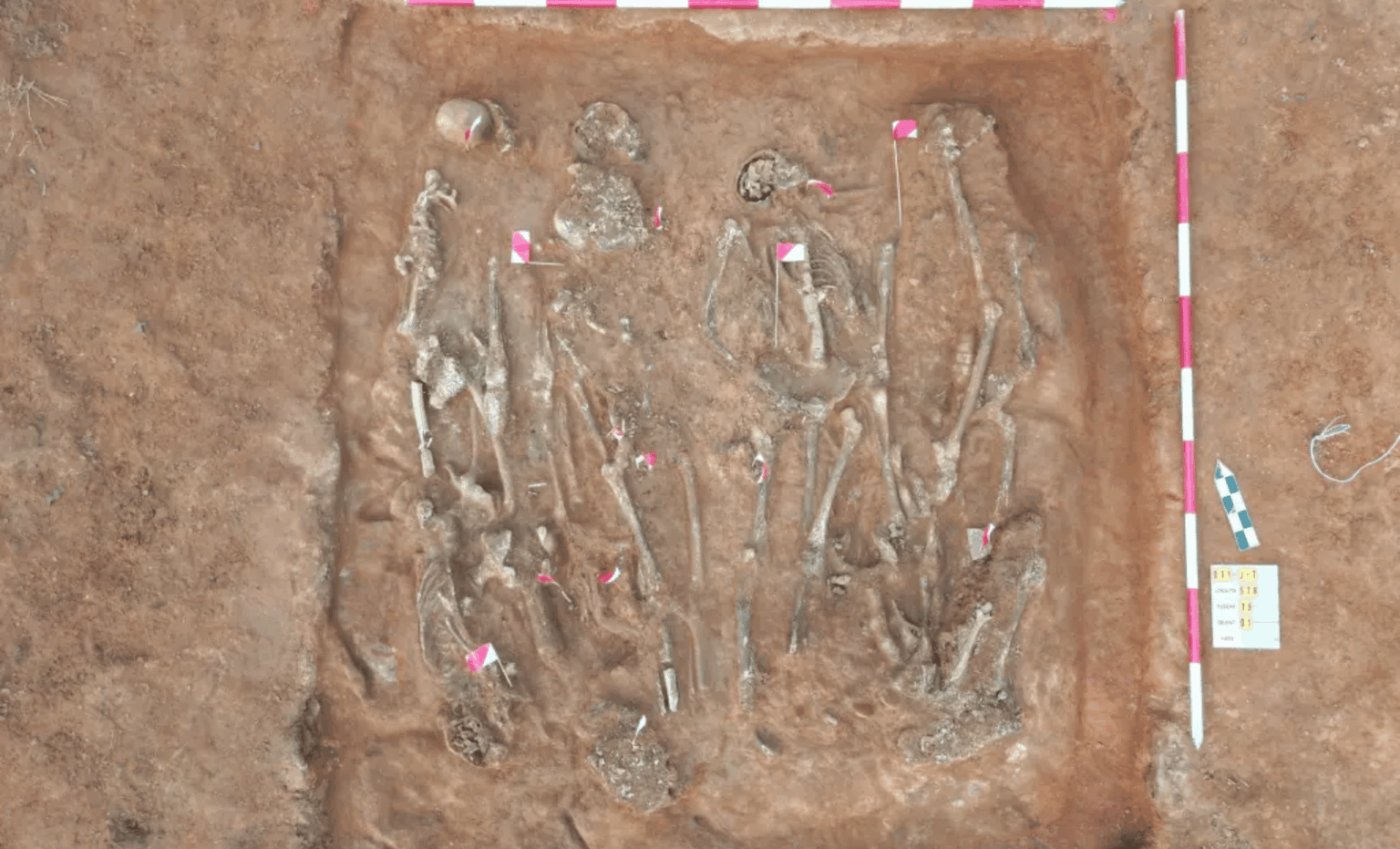
Archaeologists in the Czech Republic have uncovered a series of mass graves along a stretch of highway, revealing the remains of soldiers killed in European battles more than a century ago. According to a recent report by the New York Post, the findings are linked to both the Second Silesian War (1745) and the Austro-Prussian War (1866). They were made during a metal-detection survey ahead of construction along the D11 highway near Jaroměř and Trutnov. The site has yielded artifacts of remarkable preservation and historical significance, drawing international attention from both military historians and archaeologists.
Unearthed On The Front Lines Of History
The excavation was led by the Archaeological Center Olomouc (ACO), which announced the discovery earlier this month. Their investigation uncovered multiple graves dating to different historical periods, stretching over a 2.3-mile section of highway. The oldest grave unearthed dates back to the 1745 Battle of Žďár, part of the Second Silesian War, while three other graves are believed to be linked to the 1866 Battle of Nový Rokytník, a brutal clash during the Austro-Prussian War.
While analyzing the site, researchers encountered powerful evidence of battlefield trauma. “Several individuals died from gunshot wounds to the head,” the ACO added. “The skeletal remains and artifacts were transported to laboratories in Olomouc for further analysis.” These remains not only reflect the violent nature of the conflicts but also carry deeply personal echoes of the individuals who perished. In one grave, 12 skeletons were recovered, though experts could not yet determine whether the fallen were Austrian or Prussian soldiers.
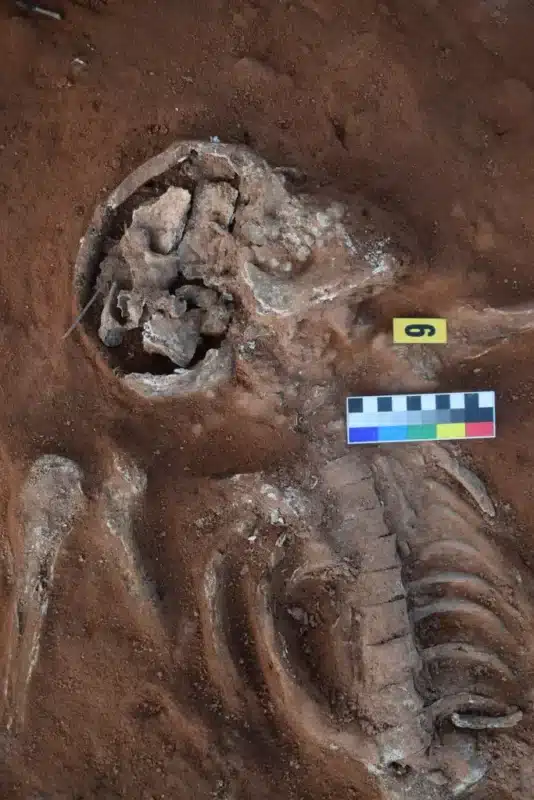 The oldest grave dates back to the 1745 Battle of Žďár during the Second Silesian War, part of the War of the Austrian Succession. Credit: Archeologické centrum Olomouc
A Treasure Trove Of Time-Capsule Artifacts
Beyond the skeletal remains, the site revealed an array of artifacts that have astonished researchers with their level of preservation. Textiles, military gear, and personal items survived in the soil despite the passage of time. They provide unique insight into the lives and deaths of the soldiers.
“We found exceptionally well-preserved textiles and military items in the grave, such as parts of coats, equipment components, and personal belongings of the fallen soldiers [in that grave],” said archaeologist Bartoš Dvořáková, who led much of the on-site work. One of the standout discoveries was “a silver pocket watch with a dog motif and a gold franc minted in 1854.”
This rare item offers a glimpse of individuality on a long-forgotten battlefield. Other items included a coffee grinder, religious tokens, and rings, all of which added layers of complexity to the narrative.
“Other interesting items like rings and other personal items [included a] coffee grinder and army items like textile parts of uniforms,” Dvořáková added.
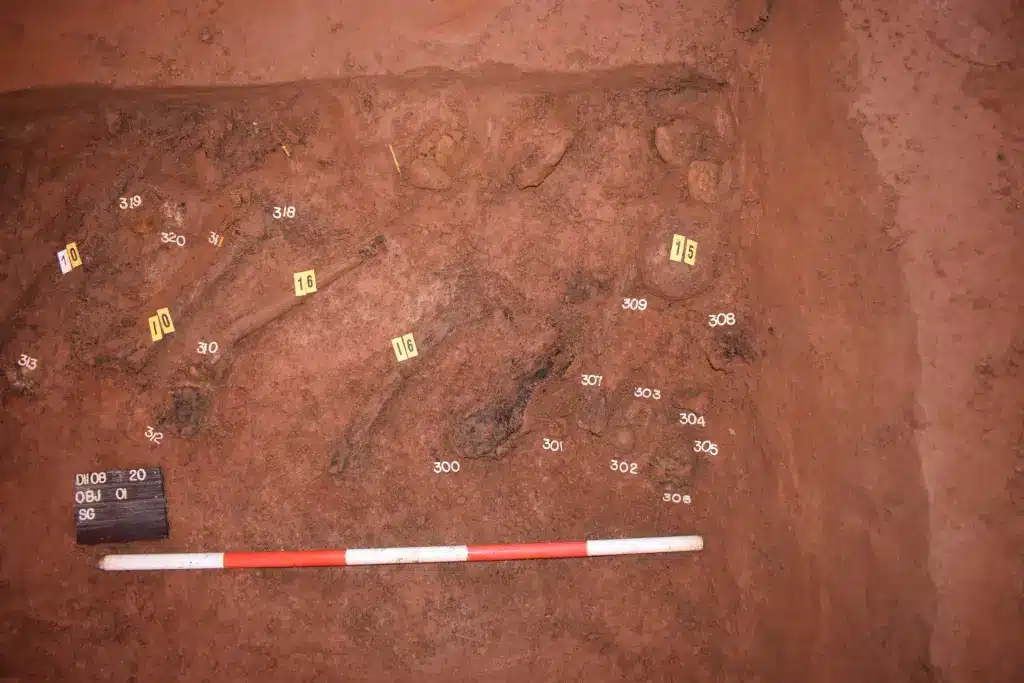
While the artifacts have defied the centuries in remarkable condition, the bones were not as fortunate.
“Unfortunately, the bones were in bad condition… [It] was important that we had an anthropologist on the site,” she explained.
 Credit: Archeologické centrum Olomouc
This made expert documentation and handling a critical part of the recovery process.
A Rare Snapshot Of European War History
The significance of these findings goes far beyond archaeology. According to the ACO, “this 18th-century mass grave has never been documented elsewhere and is considered a European rarity.” That rarity adds immense value not only to historical scholarship but also to public memory. The organization described the discovery as “an exceptional archaeological assemblage that enriches our understanding of both military conflicts.”
Speaking with Fox News Digital, Dvořáková emphasized the individuality preserved in the artifacts. This personal dimension helps humanize the otherwise faceless narratives of war. Each item, from the combs to the coins, contributes to an intimate portrait of soldiers’ daily lives and deaths. Once the analysis is completed, the artifacts will be housed in the Museum of Eastern Bohemia in Hradec Králové. The remains will be reburied in accordance with Czech legislation.
These discoveries serve as a haunting reminder of the human cost of war, resurfacing after centuries beneath the earth. They are now set to enter the historical record not as statistics but as tangible stories of loss, identity, and legacy.