
Published on
December 29, 2025

Italy issued an urgent travel warning following Mount Etna’s explosive eruption in late December 2025, which sent ash clouds and molten lava surging across the eastern Sicilian sky. The eruption, which began on December 26, intensified over the weekend, disrupting flights at Catania Fontanarossa Airport, affecting nearby ski resorts, and covering picturesque towns like Taormina with volcanic ash. While skiers continued on the slopes below the erupting volcano, the eruption created significant travel challenges and raised concerns about the safety of visitors and locals. Authorities responded quickly with heightened monitoring, warning tourists to stay informed and avoid non-essential travel in affected areas.
Mount Etna, Europe’s largest and most active volcano, erupted with spectacular force at the close of December 2025, sending plumes of ash, molten lava, and rock fragments into the wintry Sicilian sky. This unexpected natural drama unfolded just as tourists flocked to the island’s east coast to enjoy the ski season, creating a surreal scene where skiers continued gliding down the snow-covered slopes while the volcano raged above them. As Etna’s eruption intensified, Italian authorities issued an urgent travel warning, heightening monitoring measures, especially for the nearby Fontanarossa Airport in Catania and other regions affected by ashfall. This marks the beginning of a new phase in Etna’s activity, raising concerns about safety, travel disruptions, and potential impacts on tourism.
The Eruption’s Explosive Nature
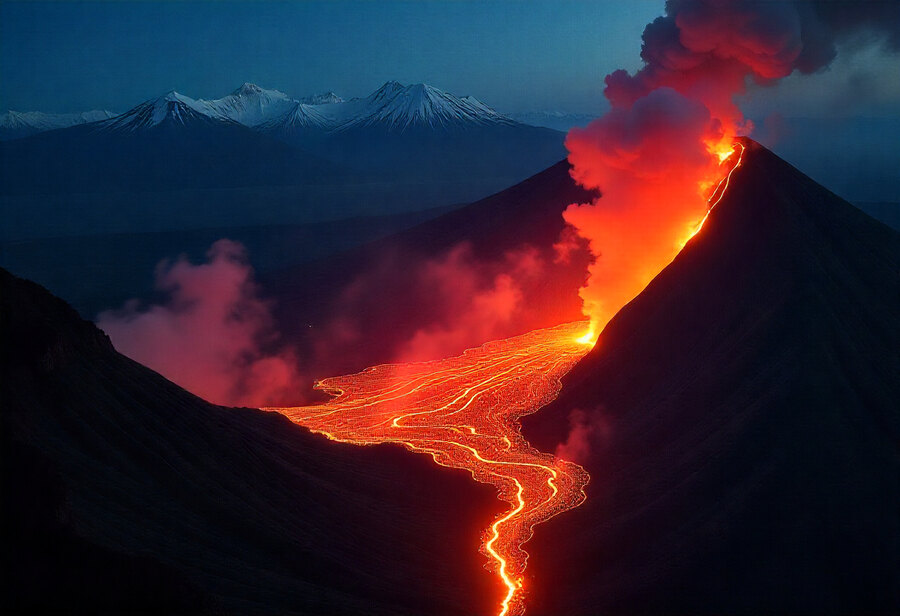
The eruption began on December 26, 2025, and quickly intensified over the next several days. According to the National Institute of Geophysics and Volcanology (INGV), Etna entered a new eruptive stage, marked by strong volcanic explosions and the ejection of lava fountains that soared over 1,000 feet (300 meters) into the air. As lava spilled down the volcano’s slopes, rocks were flung several kilometers into the sky. The eruption sent a mix of glowing lava and ash clouds sweeping northeastward, dramatically affecting the region and causing ashfall in nearby towns, including Taormina and Piano Provenzana, an area popular with tourists. The lava flow stretched as far as Valle del Bove, a large depression on the volcano’s eastern flank, adding to the intensity of the natural event.
The eruption was not only a striking natural spectacle but also a cause for concern due to its potential impacts on both local infrastructure and the tourism industry, which forms a major part of the economy in the region. Although the eruption was fierce, the situation has thus far been relatively controlled with no immediate threats to life, thanks to the swift response by Italian authorities and monitoring agencies.
Skiers Continue Down the Slopes as Volcano Erupts Above
What made this eruption even more astonishing was the juxtaposition of the ongoing volcanic activity and the serene images of skiers making their way down the slopes of Mount Etna. Despite the dramatic eruption above, skiers were seen continuing their activities on the snow-covered slopes of the Piano Provenzana ski resort, blissfully unaware of the full scale of the volcanic eruption. This odd contrast captured the attention of global news outlets, with some outlets highlighting the surreal nature of seeing winter sports enthusiasts undisturbed by the fire and ash filling the sky above them.
The ski season in Sicily, especially around Piano Provenzana, is an important draw for both international visitors and locals, and for many, the eruption added a layer of unique drama to their winter holidays. As the ash cloud billowed into the sky, it became a stark reminder of the constant geological activity that takes place on this volcanic island, where nature’s power remains unpredictable.
Travel and Tourism Disruptions
The eruption caused a ripple effect across local transportation systems, with the most immediate concern being the disruption of flights at Catania Fontanarossa Airport, the main air gateway to Sicily. While flights continued operating with minimal disruption in the early stages of the eruption, the situation changed as ash clouds spread, forcing the Italian authorities to issue a yellow alert for the region. The ash clouds were carried by strong winds to the northeast, leading to several delays and some flight cancellations as a safety precaution. Although no major airport closures were reported, the air traffic control and airport operations were closely monitored.
Aerial footage taken on December 27 highlighted the significant ashfall that had already impacted the Piano Provenzana ski resort and reached as far as Taormina, a picturesque town renowned for its ancient Greek theater and scenic views. The ash, though not a major health hazard at this point, added a layer of inconvenience for local businesses and tourists. Several businesses along the coast, including restaurants and hotels, were forced to manage the effects of ashfall, with cleaning efforts underway to remove the volcanic material from roads, buildings, and tourist sites.
In the immediate aftermath of the eruption, tourism operators in the region began issuing advisories, encouraging visitors to stay updated on travel alerts and avoid non-essential trips to areas directly impacted by the volcanic activity. The eruption also raised concerns about the broader impact on the winter tourism season, which is an important economic driver for Sicily.
Mount Etna’s Volcanic Activity and Government Response
Mount Etna has long been one of the most active volcanoes in Europe, with frequent eruptions that are closely monitored by the INGV and the Civil Protection Department of Italy. The latest eruption follows a series of increasing seismic and volcanic activities, which were recorded in the weeks leading up to the event. Authorities were prepared for the potential escalation, and civil protection teams were immediately deployed to monitor the situation and assist with the management of affected areas.
As the eruption continued into December 28, authorities maintained their heightened alert status, issuing ongoing updates to ensure public safety. The yellow alert was especially pertinent due to the proximity of critical infrastructure, including Catania Fontanarossa Airport and the nearby tourist resorts. Additionally, the Italian Air Force was on standby to provide emergency response if the volcanic activity escalated further.
The Impact on Local Businesses and Ski Resorts
While the eruption has certainly caused temporary disruptions, it also shed light on the resilience of the tourism sector. Ski resorts like Piano Provenzana remained operational despite the ashfall, with many tourists continuing their skiing activities amidst the natural chaos. For local businesses, however, the eruption presented a challenge that went beyond just managing ash – it meant adapting quickly to changes in weather and adjusting operations accordingly.
Restaurants, hotels, and other establishments along the coast had to adjust their operations to accommodate the ashfall and ensure that tourists were safe while still being able to enjoy their vacations. As many tourists were already in the region when the eruption began, the immediate response was to offer alternative options for excursions and to focus on safety while ensuring that travelers could continue enjoying their winter activities without major disruptions.
Looking Ahead: Tourism Recovery and Ongoing Monitoring
As of December 29, authorities in Italy are closely monitoring the situation, and the volcanic eruption continues to remain under heightened watch. The immediate travel warnings and disruptions have been managed effectively, with flights gradually returning to normal and the majority of tourist sites reopening after clearing ash from their premises. However, the eruption is a reminder of the unpredictability of volcanic activity in regions like Sicily, where the presence of Mount Etna creates both awe and concern for residents and tourists alike.
For tourists planning to visit the region in the coming weeks, it’s advisable to check travel alerts and stay informed about potential volcanic activity and any disruptions that may affect local infrastructure. The ongoing monitoring of Mount Etna’s activity will provide updated warnings and guidance, and visitors can rest assured that Italy’s Civil Protection services are equipped to handle the situation effectively.
Despite the disruptions, Sicily remains a must-visit destination, with its rich history, beautiful landscapes, and unique volcanic attractions. Travelers planning to visit the island in the future will find that the region continues to offer breathtaking natural beauty – even when nature’s power is on full display.
Italy issued an urgent travel warning after Mount Etna erupted in spectacular fashion at the end of December 2025, sending ash clouds and lava flowing across Sicily. The eruption caused flight delays, disrupted ski resorts, and raised concerns over the safety of tourists in the region.
The eruption of Mount Etna in December 2025 has been a dramatic reminder of the raw power of nature. While it has created challenges for tourists and businesses in the region, Italy’s swift response and efficient management of the situation have helped mitigate the immediate impacts. As skiers glide down volcanic slopes and tourists admire the dramatic ash clouds, Sicily’s volcanic landscape continues to captivate the imagination of visitors from around the world. However, as always, the eruption serves as a reminder that when it comes to natural disasters, preparation, and vigilance are key.
