

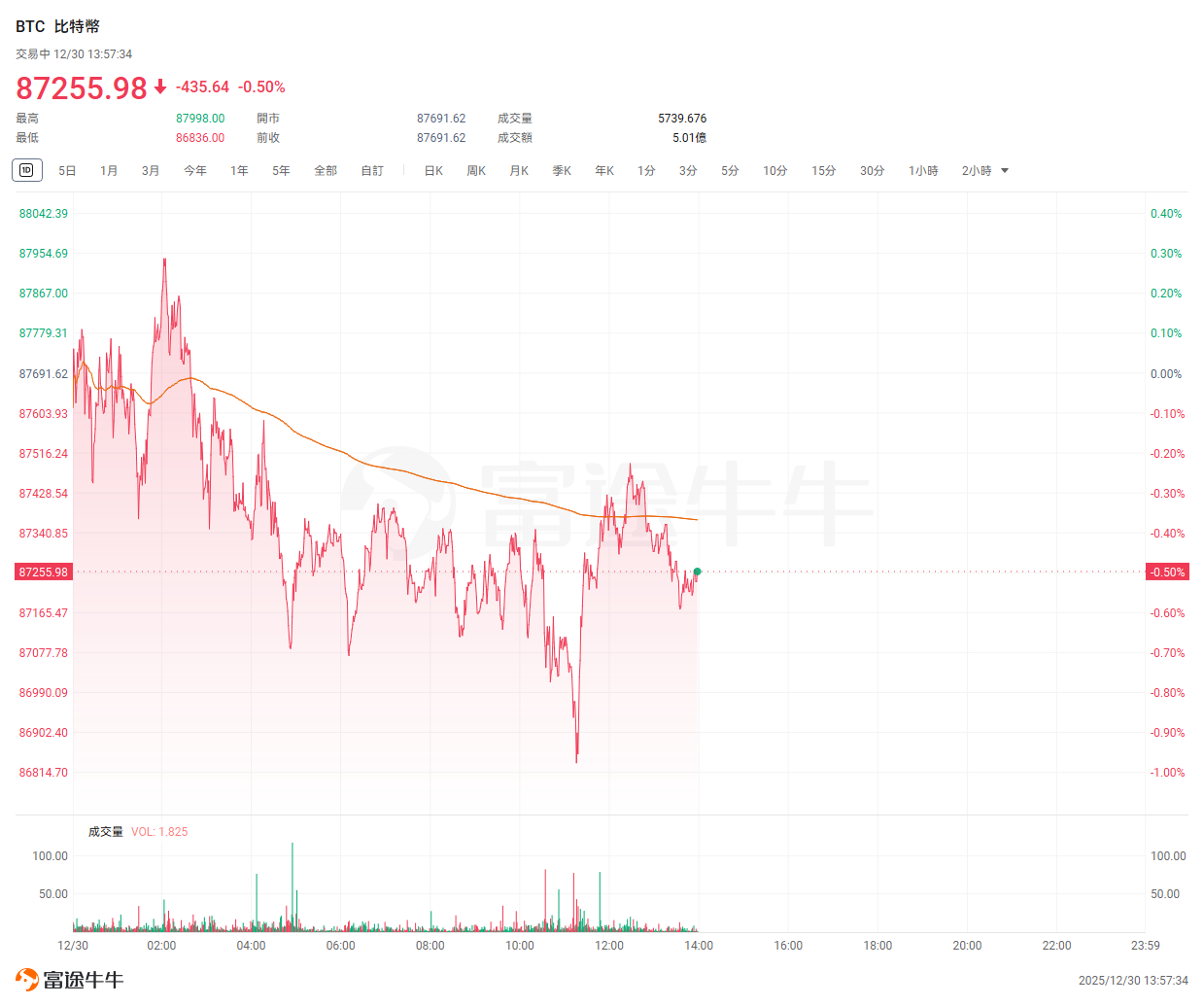
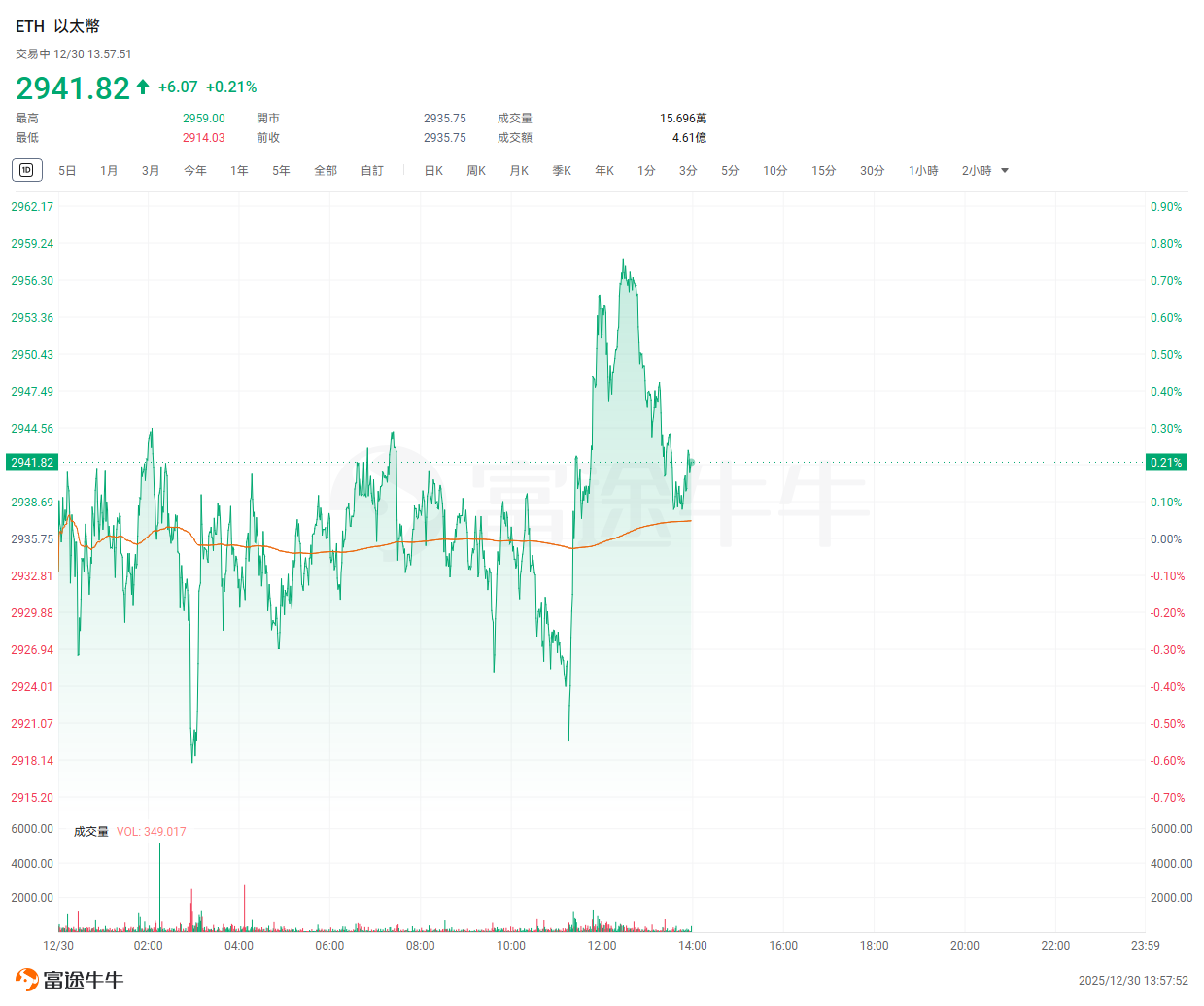
News on December 30, the cryptocurrency market continues to experience volatility. As of press time,$Bitcoin (BTC.CC)$dropped by 0.5%, trading at $87,255.98;$Ethereum (ETH.CC)$rose by 0.21%, trading at $2,941.82.
Key focus
-
Six major crypto companies, including Kraken, Consensys, and BitGo, are planning IPOs in 2026.
 According to DL News, this year’s IPO fundraising by crypto enterprises totaled approximately $3.4 billion,$Circle (CRCL.US)$and$Bullish (BLSH.US)$with each surpassing the $1 billion mark. Looking ahead to 2026: Kraken confidentially filed its S-1 with the SEC in November 2025 and is aiming for a listing in the first half of the year; Consensys is advancing towards a mid-year IPO, with core products including MetaMask, Infura, and Linea;$JPMorgan (JPM.US)$、$Goldman Sachs (GS.US)$BitGo has updated its S-1A, targeting a Q1 listing with an estimated valuation of $1.75 billion; Animoca Brands plans to list on Nasdaq through a reverse merger with Currenc Group, with a target valuation of around $6 billion; Ledger is preparing for a large-scale financing round to strengthen Ledger Live and its self-custody business; Bithumb aims to go public in South Korea by the end of 2025, reclaiming approximately 25% of its domestic market share.Mergers and acquisitions
-
Bitmine added 44,463 ETH to its holdings last week, pushing its total holdings past 4.11 million ETH.
According to an official press release from Bitmine, as of December 28, 2025,$Bitmine Immersion Technologies (BMNR.US)$A total of 44,463 ETH (approximately $130 million) were newly purchased within a week. The current ETH holdings have reached 4,110,525 ETH, with a market value of approximately $12.04 billion, accounting for 3.41% of Ethereum’s total supply. Among these, 409,000 ETH have been staked, with an estimated annual yield of 2.81%. Bitmine is advancing its MAVAN (US-based validation network) staking solution, which is scheduled to launch in Q1 2026. Additionally, Bitmine’s total cryptocurrency assets and cash reserves amount to $13.2 billion. The company plans to hold its annual general meeting on January 15, 2026, in Las Vegas, where it will push forward four proposals, including authorized share capital expansion and incentive programs. The company aims to achieve holding 5% of the total ETH supply, becoming the largest Ethereum treasury globally.
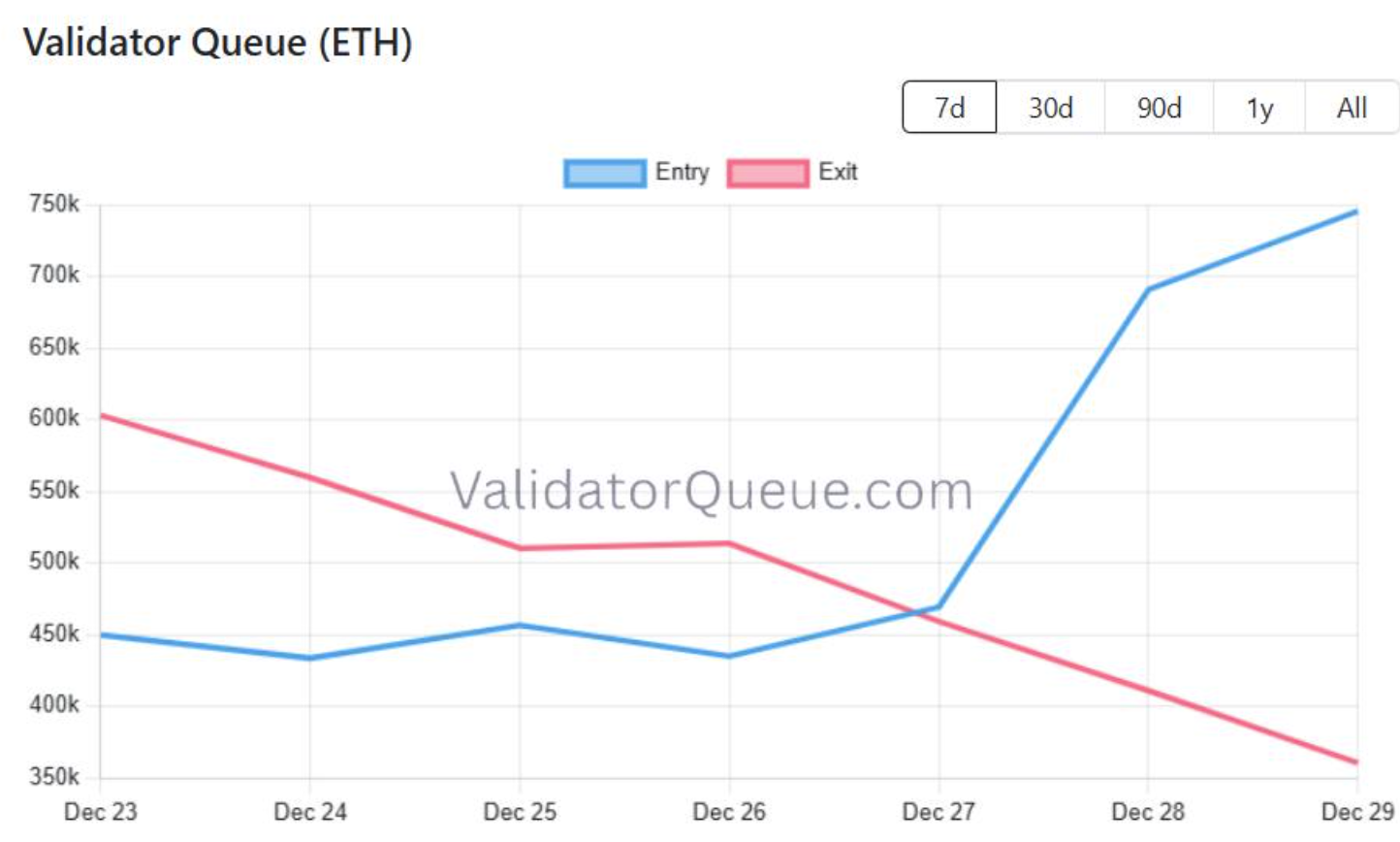
According to Cointelegraph, the size of Ethereum’s validator entry queue has surged to nearly double the exit queue for the first time in six months. This growth indicates a rebound in staking demand, primarily driven by$Bitmine Immersion Technologies (BMNR.US)$companies such as digital asset treasuries, potentially supported by the Pectra upgrade.
-
Dragonfly Partner: BTC to surpass $150,000 by the end of 2026, but its market dominance will decline.
Dragonfly Managing Partner Haseeb shared his predictions for 2026, with the following key points: BTC will exceed $150,000 by year-end, though its market share will decline. Fintech public chains such as Tempo, Arc, and RobinhoodChain may underperform market expectations; in contrast, Ethereum and Solana are expected to outperform, with top developers continuing to favor neutral infrastructure-focused blockchains. A major tech company (such as Google, Facebook, or Apple) will either launch or acquire a crypto wallet in 2026. Three large Perp DEXs will dominate 90% of the market share in this sector, leaving the remaining projects to compete for the residual 10%.
Equity investments will grow rapidly, accounting for over 20% of total DeFi investments by the end of the year. Stablecoin supply will increase by approximately 60% in 2026, with dollar-backed stablecoins maintaining a share above 99%, while USDT’s dominance will slightly decrease to around 55%. The Clarity Act will officially become law but will require significant negotiation. Prediction markets will develop rapidly, though 90% of prediction market products will see little interest and gradually fade away by the end of the year. Artificial intelligence applications in the crypto space will remain largely confined to software engineering and security, with other areas still in the prototype stage.
Delphi Digital noted: “2025 was a challenging year for GameFi, with funding plummeting by more than 55% compared to the previous year. Highly anticipated projects underperformed upon launch, and market enthusiasm remained subdued. However, the overall situation is more nuanced. We are witnessing the quiet rise of Web2.5 games. These games view blockchain purely as infrastructure, often bypassing tokenization entirely, competing instead based on real revenue. Studios like Fumb Games, Mythical Games, and Wemade/Wemix leverage blockchain in unique ways while generating substantial income. Blockchain enhances profit margins, increases user engagement, or introduces new revenue streams. While Web3-native games generated six- to seven-figure revenues this year, their player bases remain small and are often dominated by bots. Once incentives fail, gaming enjoyment disappears, but some teams are experimenting with new models to address this issue. Web2.5 studios can now harness the benefits of blockchain without forcing users into speculation or excusing poor user experiences. The widespread adoption of stablecoins should accelerate this trend. Microtransactions, global payment channels, and participation-based reward mechanisms will all become more accessible.”
Framework Ventures Co-founder Vance Spencer stated: “2025 may not be the breakout year many in the crypto industry anticipate, but it is likely a necessary transitional year for sustained development. The industry has largely moved past Meme coins, NFTs, low-circulation high-FDV projects, and consumer-centric narratives. I predict that token issuance will sharply decline in 2026, with the market focusing more on mainstream assets (ETH, BTC). Institutional funds will continue flowing into DeFi blue-chip projects with sound value capture mechanisms. This buying pressure could far exceed expectations, especially given ongoing buybacks and strong financial discipline at the protocol level. The industry’s future direction is clear: stablecoins, real-world assets (RWA), lending and capital markets, and asset management will dominate. By refining operations, reducing reckless expansion, and pursuing compliance, we will address many issues within the crypto space. This is a bullish outlook, but rallies, surges, and exit opportunities will be highly concentrated.”
According to a video shared by KKaWSB, co-founder of CarbonSilicon AI, CEO of real estate investment firm Cardone Capital and billionaire Grant Cardone has just announced that he will launch the world’s largest real estate Bitcoin company in 2026, positioning himself as the next Michael Saylor. He stated: “We will create the world’s largest publicly traded Bitcoin treasury company. We will use real estate cash flow – monthly rental income and depreciation – to purchase Bitcoin. Starting from March this year, we have completed five transactions. By the end of next year, we aim to accumulate 3,000 Bitcoins. This is the new model: real estate plus Bitcoin. It is similar to Michael Saylor’s approach, but with real cash flow.”
According to Cointelegraph, data from Token Terminal shows that driven by strong growth in September and December, the total market capitalization of tokenized stocks has climbed to a record $1.2 billion. Token Terminal stated: “Today’s tokenized stocks are like stablecoins in 2020.” This highlights that the market is still in its early stages. In 2020, stablecoins were just getting started, but this year they have grown into a $300 billion industry. Other industry insiders have compared tokenized stocks to the DeFi boom in early 2020, pointing out that more global stocks may go on-chain in the future, benefiting from faster settlement, 24/7 trading, and divisible ownership.
-
Blackrock’s first tokenized money market fund, BUIDL, has distributed cumulative dividends exceeding $100 million.
According to Finance Feeds, since its launch,$Blackrock (BLK.US)$Blackrock’s first tokenized money market fund, BUIDL, has distributed cumulative dividends exceeding $100 million. This data indicates that tokenized securities have moved beyond pilot and proof-of-concept stages to achieve practical application. The fund invests in short-term U.S. dollar-denominated instruments such as U.S. Treasury bonds, repurchase agreements, and cash equivalents.
-
Cicely LaMothe, Deputy Director of the SEC’s Division of Corporation Finance, is set to retire after helping formulate cryptocurrency guidelines.
According to The Block, a key figure at the U.S. Securities and Exchange Commission (SEC) who shaped the agency’s approach to cryptocurrency regulation is retiring. On Monday, the SEC announced Cicely LaMothe’s retirement in a statement. The SEC noted that over the past year, LaMothe was involved in drafting several significant staff statements related to cryptocurrencies, including one clarifying that meme coins are not securities, and another explaining the agency’s stance on staking. Beyond cryptocurrency-related matters, LaMothe also led policy recommendations for draft registration statements submitted by companies.
-
Trend Research has purchased over 46,000 ETH in a single day, continuing to lower its average cost per unit.
According to @ai_9684xtpa’s tracking, Trend Research withdrew an additional 13,462 ETH (approximately $39.31 million) from Binance five minutes ago, bringing its total daily accumulation to 46,036.72 ETH. The current on-chain total ETH holdings have increased to 626,071, with a total market value exceeding $1.83 billion. The average cost has decreased to approximately $3,105.5, reflecting an unrealized loss of about $110 million.
According to an announcement by CME Group, its cryptocurrency benchmark pricing system has added US dollar reference rates and real-time indices for three native tokens: Aptos, Bittensor, and Hedera, offering enhanced pricing transparency. Users can access the relevant price data on the CME official website starting today.
-
Strategy Purchases Additional 1,229 Bitcoin, Total Holdings Exceed 672,000 BTC
According to$Strategy (MSTR.US)$The 8-K filing submitted to the SEC shows that as of December 28, 2025, the company raised $108.8 million through its ATM stock offering program and purchased 1,229 BTC between December 22 and 28 at an average purchase price of $88,568 per BTC. As of this date, the company holds a total of 672,497 Bitcoin, with cumulative acquisition costs amounting to approximately $50.44 billion and an average holding cost of $74,997 per BTC.
Xiao Hong, founder of Manus, included the tag ‘BTC holder’ (Bitcoin holder) in his profile on the Jike platform. In previous news, Meta acquired Butterfly Effect, the developer of AI application Manus, for billions of dollars, marking Meta’s third-largest acquisition since its founding. Following the acquisition, Butterfly Effect will continue to operate independently, with founder Xiao Hong serving as Meta’s Vice President.
Editor/Vincent