
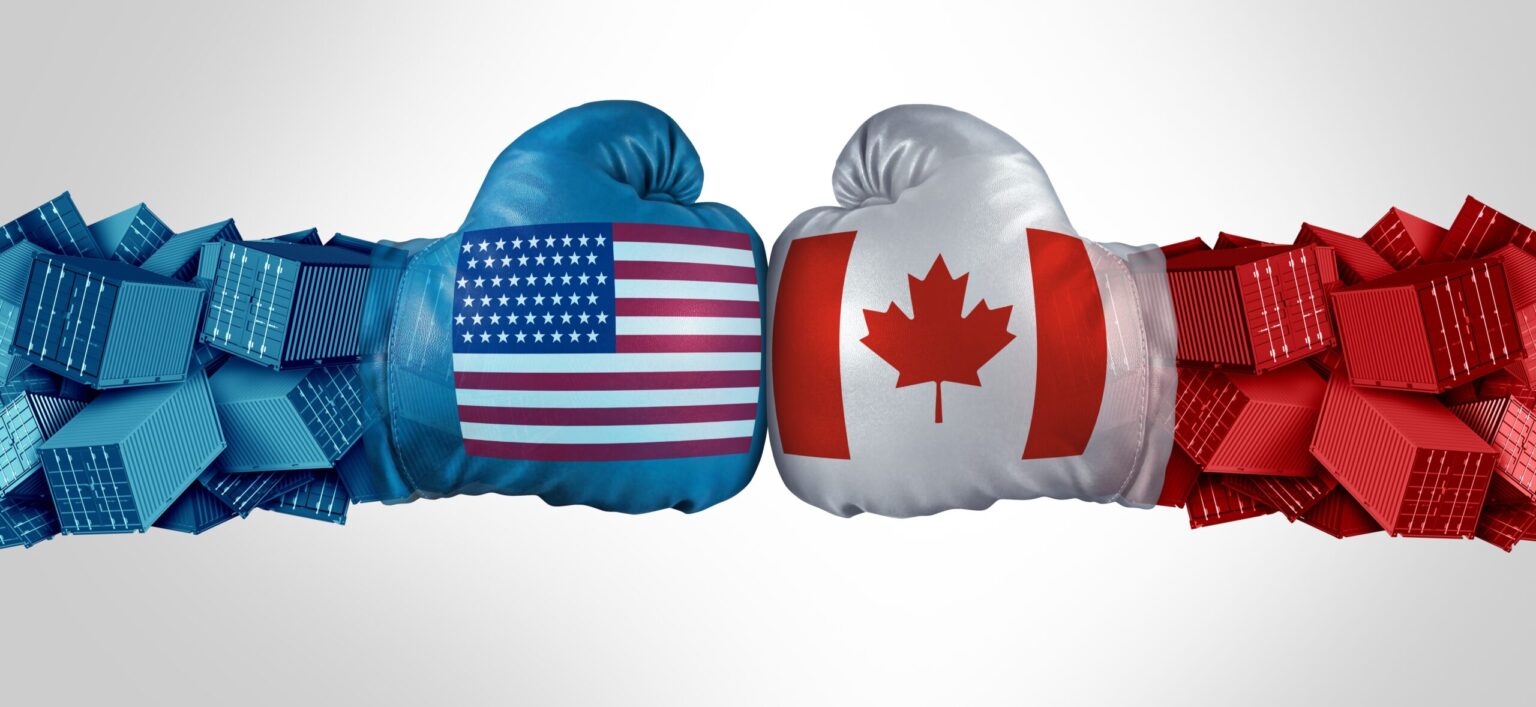
Beyond national economic concerns, many Canadians report that Trump’s tariffs have affected their personal finances and daily habits.
More than half of respondents (56%) say U.S. tariffs have had a significant impact on their household, whether through higher costs, changes in spending behaviour, or other adjustments, underscoring how trade tensions have moved beyond macroeconomic concerns. Another 37% say the impact has not been significant.
Trust in Federal Leadership Remains Split
Canadians remain deeply divided on whether they trust Prime Minister Mark Carney to manage Canada’s relationship with the United States and defend the country against political and financial pressure from U.S. President Donald Trump. 41% say they trust Carney to defend Canada against U.S. political and financial pressure, compared with 40% who do not.
Trust levels vary sharply by political affiliation. Support is particularly strong among Liberal voters (86%), while skepticism dominates among Conservative voters, reflecting broader partisan divisions over trade and economic policy.
Mixed Views on Ottawa’s Response to Tariffs
Public opinion is similarly split on the federal government’s handling of the issue: 45% say they are satisfied, while 43% are dissatisfied with Ottawa’s response to U.S. tariffs.
Satisfaction is notably higher among older Canadians, Liberal voters, and those who already perceive the tariffs as having had a significant economic or personal impact.
Pessimism Grows Over Canada–U.S. Trade Relations in 2026
Looking ahead, Canadians are more pessimistic than optimistic about Canada–U.S. trade relations in 2026. Four in ten (41%) expect relations to worsen, compared with 20% who believe they will improve.
Methodology
This online survey was conducted among 1,519 Canadian residents aged 18 or older, between December 12 and 14, 2025. Respondents were randomly recruited through LEO’s online panel. Results were weighted by age, gender, region, language, education, and household composition.
A margin of error cannot be associated with a non-probability sample in a panel survey. For comparison, a probability sample of this size would have a margin of error of ±2.51%, 19 times out of 20.