
Bulgaria’s Armed Forces in 2025: Pay Increases, F-16 Deliveries, and Legislative Updates
F-16 Fighter Jets
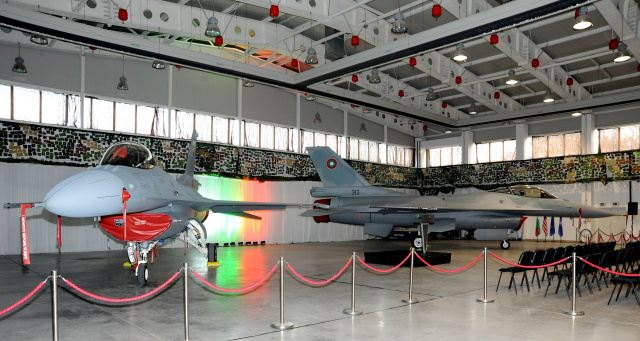
In 2025, Bulgaria saw the first deliveries of the F-16 fighter jets under the initial contract with the United States signed in 2019. By December 18, all eight aircraft had been formally presented in a ceremonial event. The Bulgarian Air Force aims to establish a squadron of F-16 Block 70 jets by the end of 2027, when an additional eight aircraft are expected under the second contract.
Despite this progress, outgoing Defence Minister Atanas Zapryanov noted in late November that operational readiness for the F-16s is not anticipated until 2028. He stressed that “if the country wants national resources for airspace protection, it will have to maintain the MiG-29 fighters that it currently has,” adding that achieving readiness in 2026 is unrealistic. According to Zapryanov, the Air Force Commander will determine whether the jets can achieve initial operational readiness and be deployed for combat missions.
In October, the Air Force Commander revealed that Bulgaria has six pilots trained to fly the F-16, but only two are currently qualified on the national variant of the aircraft. Trainer-combat jets are required for the remaining four pilots, who previously trained on older F-16 versions in the United States. Major General Rusev explained that these pilots “need to complete several flights on the Bulgarian F-16 Block 70 in Bulgaria, after which they will be able to fly the combat aircraft independently.”
Navy Developments
On December 8, Defence Minister Zapryanov described the launch of the new multifunctional modular patrol vessel Hrabri as a historic moment for Bulgaria’s Navy: “Today is a historic day for Bulgaria’s Navy, because for the first time in more than 100 years a new combat ship is being built in Bulgaria by the national defence industry.”
Negotiations are ongoing with Belgium and the Netherlands to acquire seven second-hand minehunters, with both governments reportedly having approved the plans. Bulgaria’s Navy is also expected to receive another multifunctional modular patrol vessel, Smeli, in 2027.
Legislative Changes
Toward the end of 2025, the National Assembly approved amendments to the Defence and Armed Forces Act. The changes extended the maximum service age by two years for personnel who have not exercised their pension rights under the Social Security Code. Defence Minister Zapryanov clarified that “the two-year extension applies to all categories of military personnel, from soldier to Chief of Defence,” enabling the Armed Forces to retain approximately 847 service members over the next two years. Of these, 159 are officers, 510 are soldiers, 24 officer cadets, and 154 sergeants.
Additional amendments authorize the Armed Forces to use weapons or technical means against unmanned autonomous systems to protect military facilities, permanent deployment sites, units, equipment, and ships outside permanent bases. The legislation also establishes a clear framework for the Supreme High Command’s activities and defines the term “deterrence” in the context of military threats.
Personnel and Salaries
In early 2025, a revised base monthly salary system came into effect, calculated annually based on the previous year’s second-quarter average national wage. The base salary is multiplied by a factor of at least 1.2 for officers, and no less than 1 for officer cadets, sergeants, and soldiers. Defence Minister Zapryanov announced that the base monthly salary for the lowest rank was set at BGN 2,296 (around €1,173).
Addressing the ongoing personnel shortage, Zapryanov stated in October, “The Armed Forces will address the personnel shortage, but it will not happen all at once. This year we have funding to recruit only 1,000 service members.” The Report on the State of Defence and the Armed Forces for 2024 highlighted that the shortfall at the beginning of the year stood at 21.8%.
Land Forces and Stryker Vehicles
The acquisition of Stryker combat vehicles remains a key modernization project. Parliament ratified the contract on December 1, 2023, for 198 vehicles, including combat, reconnaissance, command-and-staff, and specialized vehicles for nuclear, chemical, and biological reconnaissance, medical evacuation, engineering support, transport, and recovery. Of these, 183 are combat vehicles from the Stryker family, with the remaining 15 serving auxiliary roles.
Deliveries were initially scheduled to begin in the third quarter of 2025, with completion by the first quarter of 2028. The bulk of the vehicles is expected in 2026 and 2027 at a rate of ten per month, though the Ministry of Defence has not yet confirmed that deliveries have commenced.
Source: BTA