
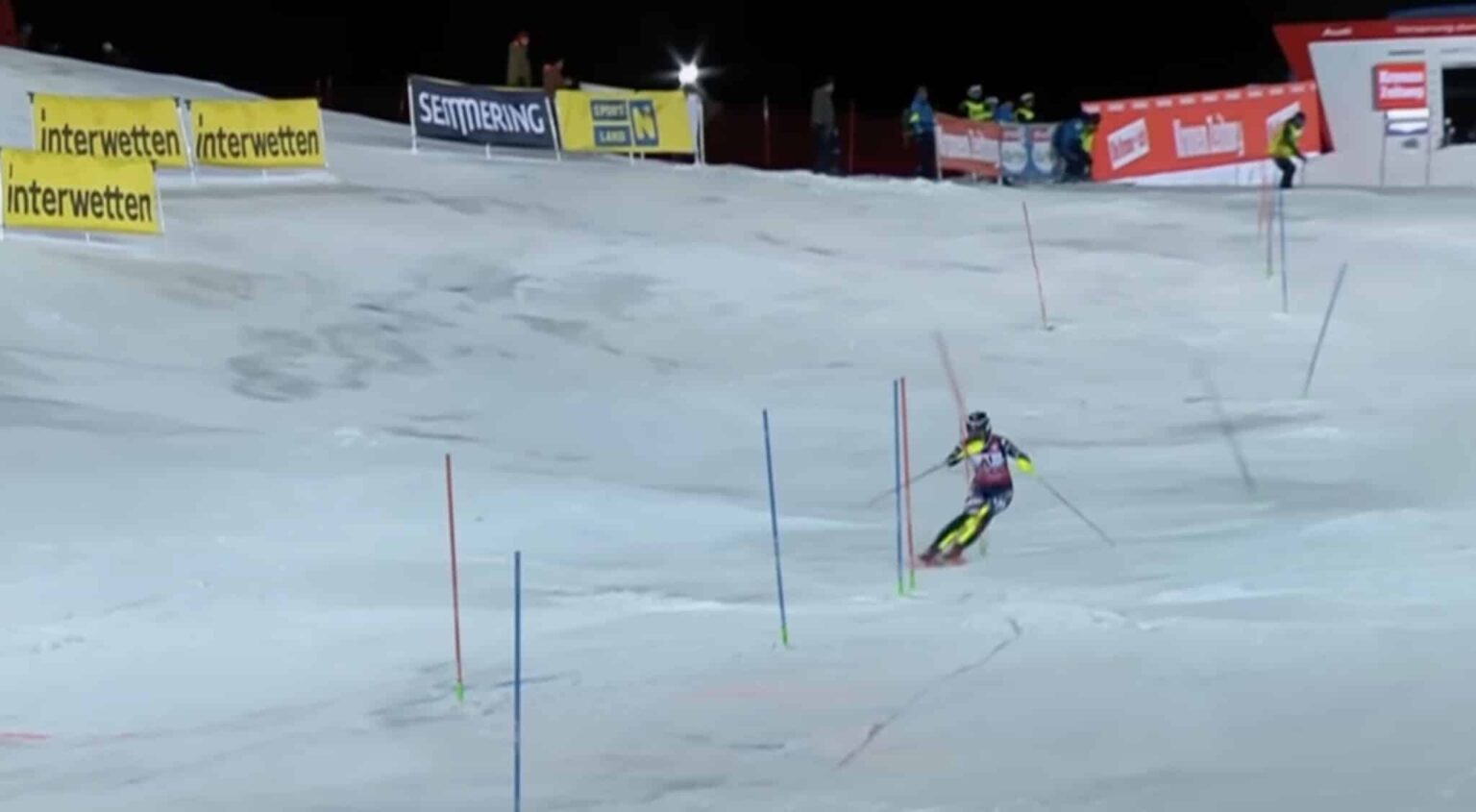
Mikaela Shiffrin managed to lock down her 6th World Cup Slalom win in a row (5th slalom win of the season) at the Semmering Audi FIS Ski World Cup race on Sunday, December 28th. While that’s certainly worth celebrating, Shiffrin’s attention after the win was mostly focused on the dangerous conditions of the course.
According to the AP, mild weather forced organizers to attempt to harden the course surface by injecting water and salt before the race, but the surface broke in several spots during the afternoon run that started at 2:15pm. Conditions slightly improved and the course hardened up by the evening session, but damage had already been done.
Just 40 of the 77 starters completed the first run. The race saw a DNF rate around 50%, one of the highest seen, and there was a near six-second qualification gap to the second run.
Shiffrin discussed the dangerous conditions with the media following the race. Then, on Monday, December 29th, the American ski star released a full statement to social media calling out the dangerous conditions of the course. Read her full statement below.
Mikaela Shiffrin Statement Following The Semmering World Cup:
“First of all—a big congratulations to Camille and Lara for their amazing skiing. Both of their runs were so impressive and stable, and it was really cool to watch that level of skiing on both runs.
This sport is beautiful—and my hope is that everyone watching gets to experience the side of ski racing that we all know and love. Unfortunately, yesterday’s race was not a good representation of our sport.
A combination of decisions and surface preparation over the week led to a very unstable course. The first run held up reasonably well for the early bibs, but after bib 15-20-30, the deterioration became extreme. It was very challenging to complete the course at all—and, for many athletes starting later, it felt borderline unsafe.
I spoke with several athletes in the finish who were frustrated, shaken, and even scared standing in the start gate based on what they were about to ski into. Safety was a major concern. The DNF rate was nearly 50%—I’m told that’s the highest since ‘99—with 39 of 79 athletes not finishing the first run, and a six-second qualification gap to second run. That doesn’t reflect the beauty of ski racing, or why so many of us love and work so hard for this sport.
Thankfully, there were no major injuries. But in a sport with so many uncontrollable variables, we need to make sure course sets complement the surface conditions so the race is as safe, fair, and meaningful as possible. Forty-four DNFs over two runs isn’t entertaining—it’s brutal, and honestly hard to watch.
I believe we—FIS, NGBs, coaches, and athletes—can work together to do better going forward.
The second-run course adjustment was another example of a situation that became reactive rather than proactive. The change that was made by FIS was necessary for safety. But this should have been addressed before opening inspection—not while athletes were already inspecting—which led to confusion, inspection delay, and questions about fairness. None of this was about gaining an advantage; it should simply have been caught earlier so everyone could inspect the same, correct course.
One thing is certain: I’ll continue to speak up in situations where safety is at risk, and I hope the conversations that follow lead to constructive improvements.
Thank you all for the support—as always, I’m taking this season one race at a time. There’s a lot happening, and I’m grateful every day to be able to experience the beauty of this sport.“
Related