
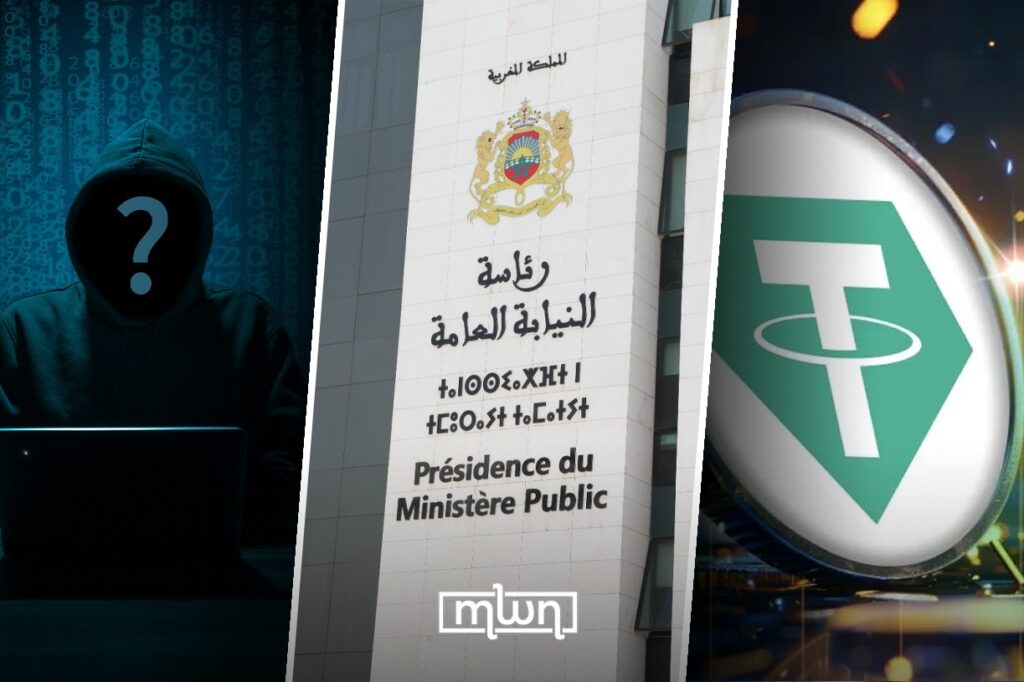
Rabat – Cybercrime and technology-enabled financial offenses continued to occupy a growing share of Morocco’s judicial activity last year, according to the 2024 Report of the Presidency of the Public Prosecution, reflecting the increasing role of digital tools in both organized crime and terrorism-related cases.
Authorities recorded thousands of investigations linked to the misuse of information systems, while security services also flagged a shift toward advanced financial mechanisms, including digital currencies, in the financing of extremist networks.
The report documents more than 500 cases of offenses committed through electronic and information systems in 2024, based on categories explicitly detailed in official tables.
These offenses covered a wide range of activities, including online fraud, sexual harassment carried out through electronic or written messages or recordings, incitement to commit crimes via electronic platforms, crimes related to harmful digital content, including the facilitation of child exploitation and the production or distribution of obscene material using information systems, and more.
Judicial authorities noted that many of these offenses were no longer isolated acts but increasingly involved organized structures capable of exploiting digital infrastructure at scale.
The growing reliance on online services and electronic transactions has widened the exposure of individuals and institutions, contributing to the sustained volume of cyber-related cases handled throughout the year.
Terrorism financing and the use of digital channels
Alongside cybercrime, the report highlights the evolving methods used to finance terrorism, with a clear move away from traditional channels.
In 2024, 116 terrorism-related cases were registered, involving 134 suspects. Judicial proceedings were initiated in 96 cases, while others were dismissed or remained ongoing.
Authorities reported that terrorist groups are increasingly relying on digital tools and advanced financial mechanisms, including digital currencies, to fund their activities.
These tools are used to support logistics, maintain operational networks, and facilitate discreet financial transfers.
The report links this shift to efforts by such groups to bypass conventional banking oversight and financial monitoring systems.
It documents a concrete case involving the use of cryptocurrency to finance terrorism. During the monitoring of terrorism-related cases, authorities identified an operation linked to the collection of donations in digital currency for the benefit of the terrorist organization Daesh.
In late 2024, the suspect purchased the digital currency USDT through the Binance trading platform after depositing funds via a bank card, before transferring the amount to a digital wallet associated with the organization.
The case involved the transfer of 50 units of digital currency, underscoring the growing reliance of terrorist groups on electronic wallets and cryptocurrency transactions to fund their activities without immediately triggering official monitoring mechanisms.
Financial crime figures further illustrate the overlap between digital offenses and illicit funding. A total of 801 money laundering cases were recorded in 2024.
These cases were frequently connected to predicate crimes such as cyber fraud and other technology-enabled financial offenses.
While the report does not provide a breakdown by currency type, it confirms that digital financial instruments are increasingly exploited within broader laundering schemes.
Read also: Morocco Advances Quadripartite Cooperation to Counter Terrorism