
The impact of emerging technologies on the character of war and operational art must be understood with conceptual distinction. Carl Von Clausewitz has defined the nature of war as “an act of [violent] force to compel our enemy to do our [political] will.” The nature of war remains the same: it’s a political instrument rooted in violence and showcases reciprocity characteristics. In contrast, the character of war is dynamic, and as advocated by Collin S. Gray, “the nature, unlike the character, of war cannot be transformed. If the nature of war is transformed, then war ceases to be war…and instead becomes something entirely different.” Antulio J. Echevarria II has explicitly warned about confusing technological change with changes in war’s nature by arguing that “the nature of war refers to its essence and inherent features; the character of war refers to the particular forms war takes at any given time.” Therefore, what we are witnessing in contemporary times is not an alteration of war’s nature but a significant transformation in the character of war. Emerging technologies are accelerating this change at such a pace that it is challenging the traditional military thought process and the subsequent operational adaptability.
Recent conflicts provide empirical evidence of how emerging technologies are reshaping both the character of warfare and the practice of operational art. The Azerbaijan-Armenia conflict for the first time demonstrated how aerial drones can undermine traditional warfighting practices. The Russia-Ukraine war has set new benchmarks in the employment of drones and AI-enabled systems in the air, on land, at sea, and subsurface, which can increase battlefield awareness, provide distributed lethality, and blur tactical-strategic boundaries. The Pakistan-India conflict illustrated how long-range vectors, unmanned systems, and multi-domain operations impact deterrence and escalation control in a nuclear environment. The Israel-Iran war not only highlighted the remarkable kinetic and psychological efficiency of stealth platforms and precision munitions but also demonstrated how long-range missiles and drones can be used for saturating and eventually breaching an enemy’s multi-layer defenses. Collectively, this indicates that a potent military power adapts integrated operational designs across various domains rather than relying purely on technological superiority.
One of the most visible effects of emerging technologies is the compression of time in warfare. Advances in artificial intelligence (AI), sensor fusion, and automation have dramatically shortened the observe–orient–decide–act loop (OODA loop). Modern battlefields generate enormous volumes of data collected through ISR systems operated on land, in the air, at sea, subsurface, in space, and in cyber domains. This ISR data can now be processed almost instantaneously to craft a comprehensive picture of battlegrounds.
AI in particular is reshaping the conduct of war beyond the battlefield. AI is not merely enabling autonomous weapon systems; it is altering the logic of operational planning, intelligence, targeting, and logistics. Predictive algorithms, augmented by deep learning, can anticipate and analyze an adversary’s behavior patterns and recommend responsive courses of action while keeping the available resources in focus. Despite the aforementioned advantage, AI systems are only as reliable as the input data. Over-reliance or unchecked dependence on AI outputs can yield defective perceptions and false confidence, leading to strategic surprise. Operational art in the AI era therefore requires a careful balance between exploiting machine speed and preserving human responsibility, control, and ethical accountability.
Similarly, the proliferation of unmanned systems with high-grade autonomy is another character-defining feature of modern warfare. Unmanned aerial, surface, and underwater platforms are increasingly employed for ISR, strike, and logistics operations. Their relatively low cost and expendability allow militaries to accept levels of risk that would be unacceptable with manned platforms. This is changing force design, particularly in naval and air domains, where distributed and networked forces can impose complex dilemmas on technologically superior adversaries.
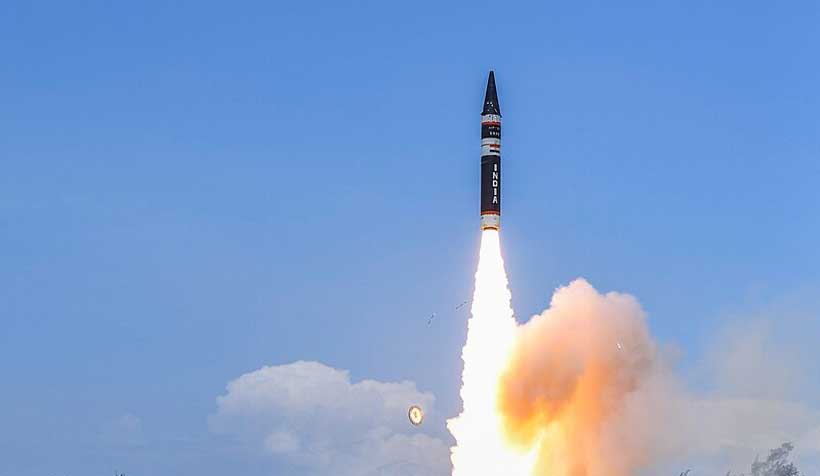
In the kinetic domain, the rapid development of hypersonic vectors is imparting a major impact on the character of modern warfare. Hypersonic missiles travel at speeds more than Mach 5, follow unpredictable flight paths, undertake evasive maneuvers, and significantly reduce early warning times for employment of defensive countermeasures. Their deployment blurs the distinction between conventional and strategic weapons and complicates escalation management. Similarly, High-Energy Laser (HEL) technologies are also being developed to engage a wide spectrum of aerial threats at light speed with precision. This has shifted the competitive advantage from sheer mass or firepower toward situational awareness, decision superiority, and precision. However, this acceleration has also introduced new challenges. Critical decisions are now required to be taken under extreme time-sensitive situations, often with AI assistance, thus raising the risk of miscalculation and subsequent escalation of a crisis.
Cyber and electromagnetic warfare have further expanded the battlespace into non-kinetic domains that are persistent, borderless, and often ambiguous. Cyber attacks can disrupt command and control, degrade crucial military and civilian infrastructure, and undermine military efficiency without firing a single weapon. Electronic warfare can jam communications and sabotage sensors and thus degrade the functionality of military platforms. Information warfare is targeting morale and political will, often shaping the outcome of conflicts using psychological impact. These domains operate continuously in peace, crisis, and war, eliminating the traditional boundaries between competition and conflict. As a result, operational art must now integrate non-kinetic effects as central components of campaign design rather than supporting activities.
Outer space has also emerged as a critical enabler in modern warfare. Military operations today are heavily dependent on space-based assets for navigation, communication, intelligence, and missile warning. The increasing weaponization and space arms race, as is evident in the recently announced Trump’s Golden Dome project, is a byproduct of growing security dilemmas, which can eventually destabilize strategic stability. Similarly, the loss or degradation of space capabilities can rapidly cascade across all domains, undermining operational coherence.
Collectively, these technological developments are reshaping operational art from a largely linear and cross-domain construct into a dynamic, multi-domain, and system-focused pattern. Modern military missions are less about defeating enemy forces in well-defined battlefields and more about dislocating the adversary’s decision-making, disrupting cohesion, and imposing cumulative effects across military, economic, informational, and psychological dimensions. Operational success increasingly depends on the ability to synchronize actions across domains and to adapt continuously in response to rapid changes in the operational environment.
In a nutshell, emerging technologies are profoundly altering the character of war and the practice of operational art, but they do not nullify the fundamental human factor. War remains a contest of wills, shaped by uncertainty and force. Advancing technology can catalyze military capacity, but it cannot replace strategic judgment and moral responsibility. The true challenge for armed forces is not merely the acquisition of niche technologies, but their effective integration in operational concepts while retaining human safeguards.