
Words have power, even very little ones. I believe this idea very strongly, and I think there’s a verse at the beginning of this week’s Torah reading which powerfully proves the point. Ya’akov Avinu is on his death bed. He calls for his beloved son Yosef. The reader’s expectation is for a passionate exchange, but that is not yet what happens. Ya’akov has a request. Really?!
Eventually, Ya’akov shares his heartfelt emotions, feelings that have been hidden for decades. He recounts his eternal love for Rachel, who died so very young-too young. But before that; it’s down to business: Don’t bury me in Egypt!
Why not? Afterall, Yosef will be buried in Egypt. The Midrash offers a number of suggestions: the Egyptians may worship him as a deity or his body would suffer during the plagues. But I like the Zionist/nationalist approach. Our Patriarch must be buried in the Tomb of the Patriarchs in Chevron, next to Leah who birthed half the nation. Patriarchs are people, with loves and drama, but they are also symbols of our nationhood and destiny. Ya’akov must be in Ma’arat HaMachpela, and immediately.
This is a difficult request. How do I know? Because Ya’akov says the little word NA, ‘please’, three times in the verse: And when the time approached for Yisrael to die, he summoned Yosef and said to him: If I, please (NA), find favor in your eyes, then, please, (NA), place your hand beneath my thigh, and perform for me an act of kindness and truth, please (NA) don’t bury me in Egypt! (Breishit 47:29)
Those three little words paint a picture of need and urgency. We see the significance of that potent, mini word back in chapter 18 of Breishit. Avraham uses it to beg the wayfarers, who are really angels, to interrupt their journey so that he can host them. But its true power becomes evident later in that remarkable chapter: Please (NA), I have already dared to speak before God, and I am but dust and ashes! (verse 27)
Avraham doesn’t use the word in his initial pitch to God for clemency for Sodom, because he believed that asking for pardon for five towns with five groups of ten (a minyan?) is a legitimate petition. But asking for indulgence for fewer good guys is a bit of a CHUTZPAH. He must beg! NA is the biggest little word for begging.
The Jews use the word when they ask the Egyptians for gold and silver before leaving Egypt (Shmot 11:2), because the suffering Egyptians don’t think they deserve anything. Moshe puts the word to heavy-duty use when asking God to forgive the Jews for the sin of the Golden Calf (Shmot 32:31).
It’s there that Moshe introduces another version of our big little word: ANA. This seems to be the form of the word when it introduces the supplication. We see that most clearly in Hallel: ANA Hashem, save us NA! ANA Hashem, make us prosper NA! (Tehillim 118:25)
ANA becomes very significant in the Beit HaMikdash. It is how the Cohen Gadol addresses his confession to the Merciful One on Yom Kippur: ANA Hashem (in the Temple the Cohen Gadol pronounced the true WORD), I have sinned, I have transgressed, I have erred before You; I and my household! ANA Hashem! Atone NA for the sins, transgressions and errors that I have sinned, transgressed and erred before You; I and my household! (TB Yoma 35b)
Rabbeinu Bechaye suggests that ANA, this slightly longer version of our powerful little word, is really in place of God’s name. Moshe introduced it because it reminds us of the 13 Attributes of God (Shmot 34:6) which begin with a double recitation of the Tetragrammaton. Since the Gematria of this Name is 26, its repetition equals 52, which is, indeed, the Gematria of ANA. Moshe used it in place of the double declaration, and its use became popular in our liturgy.
This term ANA is very powerful, and Rav Soloveitchik insisted that: The word ANA should be inserted at the beginning of the VIDUY (the alphabetical confession), after ELKEINU V’ELOKEI AVOTEINU, as in the Mishne in the Yoma which indicates that the Cohen Gadol recited the word in introducing his VIDUY.
The Rav very eloquently explains the necessity of this inclusion (which doesn’t appear in many Ashkenazic versions): The introductory words to the Kohen Gadol’s VIDUY seem to be out of place. He says, ‘I beg of You’–for what? What is he petitioning here? He is declaring that he has sinned; where does begging fit into this formula? In fact, however, this phrase gives expression to the very possibility of repentance. If we listen attentively, we can discern in these words a heartbreaking cry: Please, God, do not slam the door in my face, do not close the gates, allow me to speak!’ He is begging to be allowed in to repent; it is thus a most appropriate introduction!
Remember our confession isn’t just a declaration, an admission of guilt. It is a plaintive plea for God’s mercy.
The simple word NA or ‘please’ transforms your need into a respectful request of the other person, and, actually, empowers them to respond or not to your request. Studies show that requests are more likely to receive a positive response if they are accompanied by a ‘please’.
A study on Twitter (now X) showed that people re-Tweeted a message 20.9 times more often if the request for re-tweeting included the word ‘please’. I would like to think this works in face to face requests, too. A recent post on Linked-In actually claimed that: Believe it or not, polite prompts can lead to fewer errors in complex AI calculations. It seems AI just gets what we’re asking better when we’re polite about it. Mainly because when we’re polite, we’re more descriptive and explain things more. (William K., March 3, 2025)
Cool! There are measurable advantages to saying ‘Please!’ and being polite. That’s wonderful. I say ‘Please!’ a lot, and it’s not to get what I wanted (life isn’t a game of ‘Go Fish!’). I say ‘Please!’ because it makes me feel good about myself. I say NA, because it makes me feel more like Avraham, Ya’akov and Moshe, and that’s pleasing and magical.
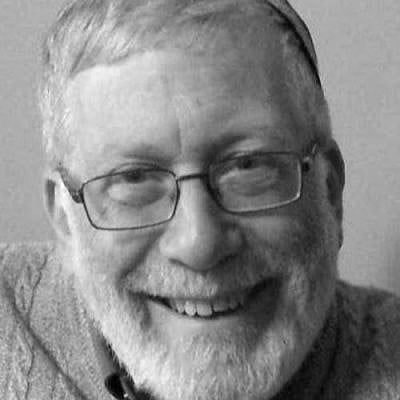
Born in Malden, MA, 1950. Graduate of YU, taught for Rabbi Riskin in Riverdale, NY, and then for 18 years in Efrat with R. Riskin and R. Brovender at Yeshivat Hamivtar. Spent 16 years as Educational Director, Cong. Agudath Sholom, Stamford, CT. Now teach at OU Center and Yeshivat Orayta.