
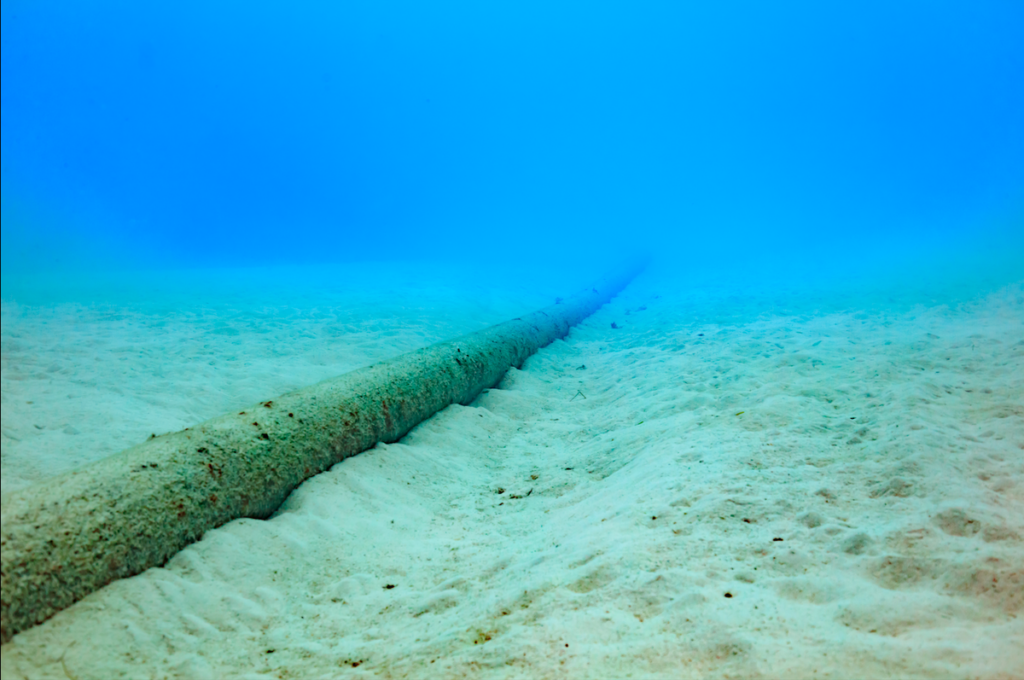
The submarine cable incident has drawn attention to the strategic and economic significance of undersea infrastructure in the Baltic region. Photo credit: Norimoto/Shutterstock
Finnish authorities have confirmed that a submarine communications cable connecting Finland and Estonia suffered significant damage on December 31. The disruption affected one of the main fibre-optic cables operated by Finnish telecom provider Elisa. Initial investigations suggest the damage may have been deliberate, though the exact cause has not yet been confirmed.
Elisa detected the issue at around 05:00 am local time and immediately informed the Finnish Border Guard and police. Both agencies have launched a coordinated investigation, citing potential risks to national security and public communications. Alternative routing ensured most internet traffic continued to flow without major interruptions. Telecom experts have stressed the vulnerability of undersea cables and the potential economic consequences if critical infrastructure is compromised.
Potential causes under investigation
Authorities are considering several scenarios, including accidental damage caused by ships’ anchors and deliberate interference. The investigation includes reviewing satellite tracking data, vessel movements, and surveillance footage. Officials have also contacted neighbouring countries to determine whether the incident could have wider regional implications.
Most Read on Euro Weekly News
Ship detained near damaged cable
Authorities investigate vessel
Following the discovery of the cable damage, Finnish authorities detained a ship anchored near the affected area in Finland’s exclusive economic zone. The vessel, identified as the Fitburg, is registered in Saint Vincent and the Grenadines and was reportedly travelling from St. Petersburg, Russia, to Haifa, Israel.
The 14-member crew remains in custody as authorities investigate whether the vessel was linked to the cable damage. Finnish officials have described the case as a serious maritime incident and are examining possible criminal responsibility for interference with critical infrastructure. Investigators are collecting evidence from the ship and surrounding waters, including anchors, ropes, and any potential foreign objects.
International maritime cooperation
The Finnish Border Guard has liaised with Estonia and the European Union’s maritime authorities to ensure coordinated monitoring of the area. Officials highlighted that submarine cables are critical for the region’s communications network, carrying internet traffic, banking transactions, and public services. International law protects these installations, and any interference can be treated as a criminal offence with serious consequences.
Estonia confirms impact on cables
Cooperation with Finnish authorities
Estonian authorities confirmed that two submarine cables between Estonia and Finland were affected: the Elisa-operated cable and another managed by Arelion. Both are critical for internet and telecommunications traffic in the region. Officials stressed that the Gulf of Finland is strategically important for communications infrastructure and have pledged full cooperation with Finnish authorities.
Repairs are ongoing, and telecom operators in both countries are monitoring the situation to minimise disruption to digital services. Alternative routes have largely prevented wider service outages, although minor delays in data transmission have been reported. Engineers are working around the clock to restore full functionality.
Security measures strengthened
The incident has prompted both countries to review security protocols for submarine cables. Finnish authorities have deployed additional maritime patrols, and Estonia has strengthened monitoring at key cable landing sites. Officials noted that ensuring the safety of undersea cables is increasingly important as digital infrastructure becomes more central to daily life.
Legal and security implications
Potential criminal offences
Finnish authorities are investigating the incident under suspicion of aggravated criminal damage and interference with telecommunications, which carry severe penalties. Damage to submarine cables is treated seriously due to the potential impact on national security, public communications, and international connectivity.
The case has also raised broader concerns about the security of undersea cables, which carry large volumes of global internet traffic and remain vulnerable to both accidental and deliberate disruption. Legal experts warn that even minor interference can have cascading effects on multiple sectors.
Response from telecom operators
Ensuring continuity of service
Elisa reported that its network remained largely operational despite the damage, thanks to built-in redundancy. Arelion confirmed that alternative routing prevented widespread service interruptions. Both companies are working closely with authorities to ensure repairs are completed as quickly as possible. Engineers are deploying specialised vessels and equipment to repair the cable, a process expected to take several days.
Key points
- A submarine cable connecting Finland and Estonia was damaged on December 31, causing partial telecommunications disruption.
- Finnish authorities detained a vessel, the Fitburg, near the damaged site; its 14-member crew is under investigation.
- Estonian authorities confirmed two cables were affected, underscoring the Gulf of Finland’s strategic importance.
- The case is being investigated for aggravated criminal damage and interference with telecommunications.
- Telecom operators report that services remain largely functional while repairs continue.
Maritime and international context
Importance of submarine cables
The Gulf of Finland is a busy maritime corridor linking the Baltic Sea with Russia, Finland, and Estonia. Submarine cables in the area carry vital internet traffic, making them critical to communications infrastructure. Incidents such as this highlight the vulnerability of undersea networks to both accidents and deliberate interference.
Authorities in Finland and Estonia have reviewed maritime monitoring procedures to prevent similar incidents, stressing the importance of vigilance around cable routes, which are closely mapped and monitored for security. Experts also emphasise the growing importance of international cooperation to protect critical undersea infrastructure from both human error and malicious acts.
Conclusion
The submarine cable incident has drawn attention to the strategic and economic significance of undersea infrastructure in the Baltic region. Finnish and Estonian authorities continue their investigations, with the detained vessel and its crew under scrutiny. Telecom operators remain committed to maintaining services while repairs proceed, and the case is likely to influence future measures to safeguard critical communications networks.