
AUGUSTA, Maine — It’s easy to find 10 Maine politicians to watch in this year of transition, but it’s hard to game out who will stand out — or be left standing — at the end of 2026.
This phenomenon led to a strange version of our regular year-end exercise. It runs from the rather obvious candidates in huge races to people who best sum up this moment in time and local figures dealing with a pertinent set of unique issues.
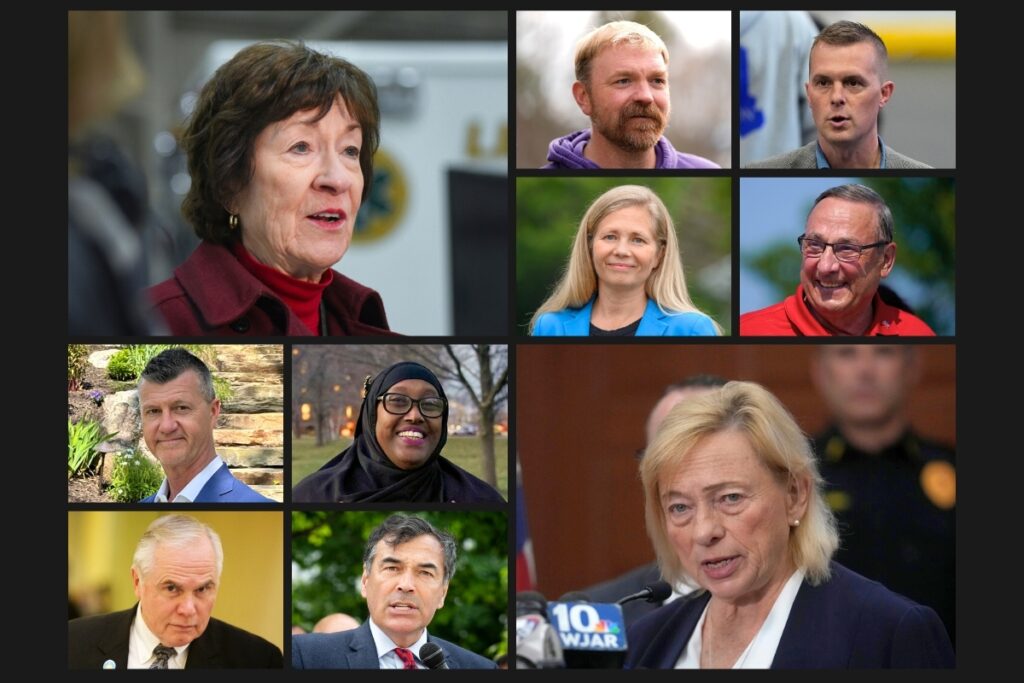
From a sitting senator and two governors to some lesser-known figures, here are the 10 Maine politicians to watch next year.
U.S. Sen. Susan Collins
Only 36% of Mainers approved of Collins in a Morning Consult poll released in October. After she won the gavel of the Senate Appropriations Committee, the work of the Republican-led Congress she serves in has been dominated by President Donald Trump. Those are bad conditions for the typical Republican in a Democratic state.
Collins is not typical. She turned a difficult 2020 race that began as a referendum on Trump into a local one centered on her seniority and unique attributes. She triangulates issues and obsessively manages risk. The state is slipping away from Collins a bit, but she can never be counted out as Maine’s best pound-for-pound electoral performer.
Gov. Janet Mills
It is hard to be Maine’s governor for eight years. Everything that happens can be blamed on you, and the opposite party typically takes control when you go. Mills is trying to exit the Blaine House and oust Collins, arguing Democrats need a tested candidate to finally do so.
She may be right. She’s also taking a risk. If you’re a median voter, what’s the case for replacing a five-term senator with a freshman who would take office at age 79? That question is also related to the generational divide among Democrats that Mills’ primary is putting on display.
Graham Platner
Maine has never seen a candidate like Platner. The progressive’s rise from nowhere was not fully organic, given the consultants who spotted him and unions’ desire for a Mills alternative. But he has drawn crowds behind a preternatural ability to sell a populist message.
Hits came quickly in the form of a vast trail of offensive Reddit posts and a tattoo of a Nazi symbol. He is betting that voters will see these as foibles and crave a raw candidate. Those close to Mills argue that controversies that have been boxed up together in the news thus far will mortally wound Platner’s campaign when amplified individually in Republican ads.
U.S. Rep. Jared Golden
Golden made the shocking November decision to drop out of the 2026 election, citing political toxicity and threats to his family. He later said that he doesn’t expect to run for office again. His last year in office could show that it’s easier for a battleground lawmaker to actually legislate when they’re no political threat.
The centrist Democrat convinced enough Republicans to buck their leaders and nudge a pro-union bill through the House. The chamber also passed a bipartisan energy and infrastructure permitting overhaul that he is leading despite opposition from many in his party. Neither are on track to pass, but this is what success looks like in a gridlocked Congress.
Former Gov. Paul LePage
He won his first term as governor in part by riding the tea party movement of 2010. His 2014 reelection came in Republicans’ last Maine wave year. Timing has always been an underappreciated part of the LePage story. Golden’s exit now makes him the overwhelming favorite to take back the 2nd Congressional District for Republicans.
LePage still has to go out and win the seat. It’s worth noting that he often looked unfocused — especially around abortion — during his failed run against Mills in 2022. However, that was on the Democratic-tilted statewide playing field. This race will be waged in pro-Trump territory, where he is literally and figuratively more comfortable.
Hannah Pingree
She has not been elected since 2008. She has never been elected outside of island communities around her hometown of North Haven. Yet the former House speaker who most recently led Mills’ policy office is favored by many in the Democratic establishment to eventually lock down the party’s gubernatorial nomination.
Pingree has a huge raft of endorsements. She led the money race at last glance. But there are four other major candidates to contend with, including Secretary of State Shenna Bellows and Nirav Shah, the state’s former top health official. They may be better known than Pingree right now, but they need to build up their campaigns quickly to match her long game.
Ben Midgley
Picking someone to watch in the large (and largely anonymous) Republican gubernatorial field requires projection. The Trump-copying Bobby Charles is the loudest. Entrepreneur Jonathan Bush is probably the richest. Both 2018 nominee Shawn Moody and well-connected lobbyist and former legislative leader Garrett Mason could join, but they aren’t in yet.
Midgley, a former fitness executive, is so unknown that he wasn’t even included in a recent poll. But he has the wealth to build up his campaign in the new year. He also is employing key LePage strategists, including the governor’s daughter, Lauren LePage, who have been a part of winning primaries before.
This candidate is far different than LePage given his mild manners and a long history as a Democrat. But all of that could help him if he gets through to the November election. That’s far from a given in this fractured field, but Midgley is one of the few contenders with real upside.
State Sen. Rick Bennett
Maine gets independent governors when the parties screw up. It has always been hard to subsume large parts of at least one party’s electorate. It may be even harder now. Bennett, a former Maine Republican Party chair who cast an Electoral College vote for Trump in 2016, is on the one hand an unlikely choice to try to thread the needle.
Yet he has been a free agent since returning to the Maine Senate. He has criticized Central Maine Power Co., pushed campaign finance reform and voted this spring with Democrats on high-profile bills on immigration and transgender athletes. He clearly sees some space on the left, but there are Republicans who see him as a weapon for their side in the general election.
Washington County Commissioner David Burns
This low-key Republican probably never expected to be on a list like this almost a decade after leaving the Legislature. Burns is now in the unenviable position of steering his county through an inherited and yearslong fiscal crisis that is necessitating both a tax increase and budget cuts.
The retired state trooper who championed naming parts of highways for fallen officers while in Augusta is certainly no “defund the police” politician. But he faced criticism from Sheriff Barry Curtis for floating a plan that cut law enforcement more deeply than a competing blueprint.
Down East Maine is now the canary in the coal mine for growing issues in county governments across the state, and Burns’ work will show how voters ultimately respond to painful if necessary contingency plans.
State Rep. Deqa Dhalac
Dhalac, one of Maine’s first two Somali-American lawmakers, once worked for an immigrant health care provider that the state stopped paying last week over possible interpreter fraud. She said she had no involvement in billing, but Republicans have focused on Dhalac, calling for the South Portland Democrat to lose her seat on the budget committee.
The fraud allegations in Maine come on the heels of a federal welfare fraud prosecution that was allegedly orchestrated by people in the Somali community in Minnesota. After that, Trump called those immigrants “garbage” that he does not want in the country. It echoed a 2016 speech he made in Maine that painted a dark picture of the state’s Somali community.
The alleged fraud issues and Dhalac’s unique place in Maine politics may be separate, but they are both examples of the growing political power of Somali-Americans in parts of the country.