
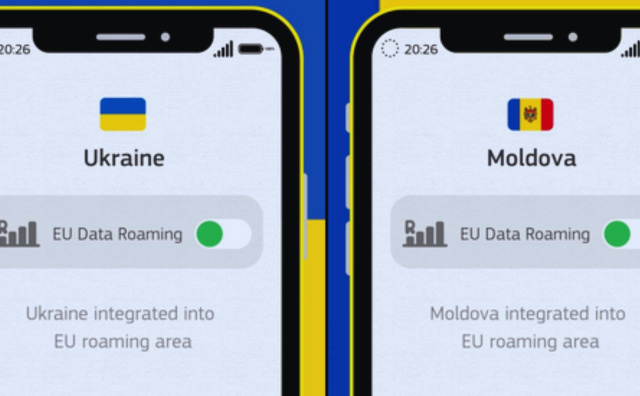
On January 1, 2026, Ukraine and Moldova officially became part of the European Union’s roaming area, marking a symbolic milestone in their integration with the EU. The Directorate-General for Enlargement and Eastern Neighbourhood confirmed the move, highlighting that citizens of both countries can now use mobile phones across the 27 EU states without paying extra fees under the “Roam Like at Home” policy. The announcement was accompanied by a symbolic image of a smartphone screen showing “EU Data Roaming” activated for Ukraine.
Today, Ukraine and Moldova officially join the EU Roaming area.
What does this mean?
People from ???????? & ???????? can now call, text and use their mobile data from their local phone numbers for communication to the 27 EU countries at no extra cost and vice versa. pic.twitter.com/Jerhrs4la4
— EU Enlargement & Eastern Neighbourhood ???????? (@eu_enlargement_) January 1, 2026
The integration follows a European Commission proposal from June 2025, which aimed to extend EU single market benefits to Ukraine for the first time. For Ukrainians, especially those affected by the ongoing conflict, the removal of roaming charges offers practical relief, easing communications for travellers, refugees, and cross-border calls. Moldova similarly benefits, strengthening economic and social ties with the EU and deepening its European engagement.
Beyond practical benefits, the step carries broader significance for EU enlargement. It signals Brussels’ support for candidate countries’ reforms and integration, even ahead of full membership. The measure is the first instance in which Ukraine receives treatment equivalent to that of EU internal market participants, boosting morale and aligning digital market standards. EU officials described the move as a “strategic choice” in a complex geopolitical environment, reinforcing solidarity with Eastern partners amid hybrid threats.
The step also fits into the EU’s accelerated enlargement agenda. Recent assessments have highlighted Montenegro, Albania, Moldova, and Ukraine as frontrunners for full membership by the end of the decade, though several candidates are still in earlier stages of integration. Albania, Bosnia and Herzegovina, Montenegro, North Macedonia, Serbia, and Kosovo are expected to join the roaming area by mid-2026, while Georgia’s timeline remains uncertain. Turkey, long a candidate country, has no immediate plans for roaming integration due to frozen accession talks.
The new EU roaming integration also brings benefits for the Bessarabian Bulgarian communities living in Ukraine and Moldova, who number around 250,000. Many maintain strong family, business, and cultural connections with Bulgaria and other EU countries. With roaming fees removed, communication with relatives across Europe becomes easier and more affordable. It also facilitates their engagement in education, trade, and cultural exchange, helping to strengthen their ties with Bulgaria and the wider European Union.