
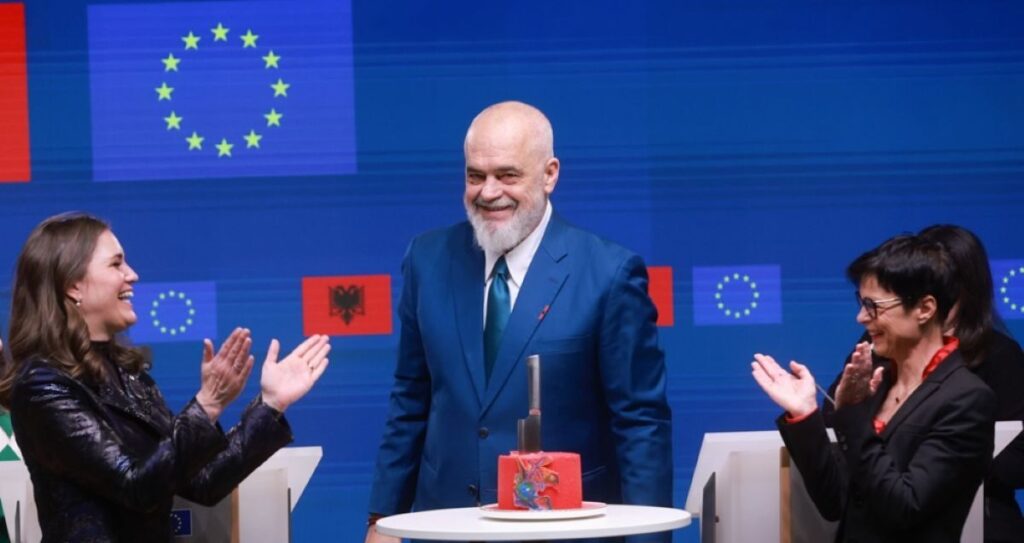
In 2025, Albania moved through the EU accession process at a pace rarely seen among candidate countries. Negotiation clusters opened in rapid succession, intergovernmental conferences about accession followed closely one after the other, and reform delivery periods became shorter and shorter.
This acceleration is politically significant, but speed, on its own, is not a democratic achievement. As a new year begins, the central question raised is not how fast Albania advanced but whether accelerated accession is being matched by democratic deepening at home – or whether it risks producing a pattern of acceleration without democratisation: reforms that move quickly on paper while transparency, accountability, civic oversight and media freedom struggle to keep pace.
This tension was visible throughout 2025, from media freedom and elections to digital rights and civic oversight. These are not separate problems but different expressions of the same acceleration logic. EU accession and accelerated negotiations remain Albania’s strongest leverage for reform.
Precisely because of that, acceleration must be matched by democratisation. While Albanian institutions bear primary responsibility for how reforms are implemented in practice, the accession framework also carries a responsibility to ensure that speed reinforces transparency, accountability and public oversight.