
Anna Khakee, associate professor in international relations, University of Malta
Malta has a world-class professional diplomatic corps – witness the way it has navigated the recent term on the UN Security Council and the presidency of the OSCE, and Ambassador Vanessa Frasier’s appointment as Special Representative of the UN Secretary-General for Children and Armed Conflict. Quite a feat!
At the same time, the current global situation is particularly tricky.
 Anna Khakee
The Maltese government has close links to and seeming dependencies on the US government – witness Foreign Minister Borg’s nomination of President Donald Trump for the Nobel Peace Prize and the prime minister’s delays in recognising Palestine, backtracking on doing so with Ireland and Norway and instead waiting for “coverage” by the major powers of France and the UK. Increased tensions between Europe and the US will therefore be very uncomfortable for the Maltese government.
It will also have to take tough decisions on European human rights. Will it go along more with the position of a socialist such as Prime Minister Pedro Sánchez in Spain or with Italy’s Giorgia Meloni? Or can it find a middle ground?
In Ukraine, the losses in human life are staggering but, again, getting to a lasting peace is tricky. Russia is a declining power, fighting its decline tooth and nail. The risk of a larger war makes European states walk a kind of tightrope – providing weapons so Ukraine can continue defending its independence while not provoking President Vladimir Putin to escalate.
It is not clear that either Israel or Hamas is ready for the kind of compromises that a lasting peace would require. Israeli public opinion is massively against a two-state solution; Hamas does not want to disarm. Forcing either side will be very difficult, even if key international players would want to – which is far from certain.
And we have not even started talking about Sudan or Yemen or Myanmar. So, while hope must not die, there are few low-hanging fruits for major conflict resolution in 2026.
Democracy and human rights are facing headwinds that will probably continue in 2026. This is true at the global level, where few of the large players today are convinced of the importance of these values – from Trump and Narendra Modi to Putin and Xi Jinping – and also at the levels of our societies where we don’t want to listen to people who think differently than us and where we don’t see democracy as delivering.
AI: What can we expect this year from the technology billed to change the world?
Gege Gatt, digital entrepreneur and lecturer
Last year marked a clear shift for the AI industry from experimentation to execution. In 2025, AI moved decisively out of pilots and into core operations, driven by a demand for measurable outcomes rather than promises. At [AI solutions company] EBO, we saw this first-hand.
More importantly, buyers stopped asking what AI could do and started asking where it creates resilience, reduces structural cost and improves human experience.
Looking ahead, the biggest change in how AI affects our lives this year will be its invisibility. AI will stop feeling like a tool and start behaving like infrastructure.
 Gege Gatt
It will quietly sit behind appointments, education, banking, travel and public services, shaping decisions and experiences without demanding attention. This will raise expectations.
When AI fails, people will not see it as a novelty breaking but as a service failure, much like electricity.
Education will remain one of the most contested and consequential AI ‘battlegrounds’ in 2026. Attempts to control or prohibit student use of AI will continue but they will increasingly be recognised as insufficient on their own.
The real shift will be from enforcement to redesign. Education systems will begin to accept that AI is now part of the cognitive environment and will adapt assessment, curricula and teaching models accordingly.
In terms of public sentiment, we will see both greater reliance and greater discernment.
People will rely more on AI for everyday tasks but they will also become more selective about which systems they trust.
The winners this year will be organisations that embed AI responsibly into real workflows, align it with human oversight and deliver tangible value.
The losers will be those chasing attention without substance, deploying AI where it does not belong or treating trust and governance as an afterthought.
The next phase of AI will reward depth, not noise.
Politics: Is the public further moving away from the main parties?
Lou Bondi, strategic communications consultant
Malta’s real challenges are not primarily political in the classical sense. The left-right divide is no longer a reliable compass. It will continue to fail even more royally to identify what the current problems are, let alone to shine a light on their solution. Two main reasons seem to be at play.First, the to-do list of any party in government has become increasingly technical and administrative, rather than political.
Today, devising solutions requires experts, scientists, technocrats and grounded public entity CEOs, not a political system hemmed in by electoral cycles. Clearly, the political responsibility buck still stops at the minister’s desk. That’s liberal democracy. But the right choices about that buck will – and should – come from outside the political arena.
Secondly, the current political flux also has its roots in our weak sense of state, resulting in a murky, sticky separation between it and government. Tens of thousands still say that they “love” their party, meaning that they love it more than their state. For them, what’s politically expedient for “their” party should automatically become the state’s hymn book. Meanwhile, sadly, the national administrative and technical challenges are drowned out by the din.
 Lou Bondi
Now if you juxtapose these two points, the source of the debilitating fatigue citizens feel comes clearly into view, exposing a chronic numbness to what is or is not essential to the state’s integrity. Politically paralysed, people are becoming averse to caring, thinking and acting as citizens of a European liberal democracy.
At one end, most politicians continue to ramble on, delivering sermons that no one will hear. On the other hand, the burning issues which directly impact people’s lives keep getting lost in political translation.
The economy: Budget impacts, opportunities and challenges: who will the winners and losers be this year?
Clint Azzopardi Flores, economist
Targeted tax cuts are expected to increase households’ disposable income, thereby stimulating private consumption, a primary driver of aggregate demand. With other factors remaining unchanged, increased consumption is likely to boost economic activity and support short-term growth. The magnitude of this effect depends on how households utilise the additional income, particularly with respect to their marginal propensity to consume.
Key challenges include sustainability and labour supply. Sustainability involves managing infrastructure and the environmental nexus, including proper spatial planning and broader structural pressures such as rising rents and housing affordability. While current statistics indicate that housing affordability has not yet reached crisis levels, underlying structural issues require further examination.
 Clint Azzopardi Flores
Policymakers must also address labour shortages and the substantial number of unfilled vacancies, particularly in light of the new labour migration policy. Insufficient labour supply constrains GDP growth and halts productivity. It is indeed a political headache!
The green, digital and circular economies offer promising opportunities. Significant investment in renewable energy remains essential. Continued support for knowledge-based services, digital and creative industries and high-value manufacturing is highly recommended as these sectors require minimal land while generating high value, making them well-suited to a small island state. Strengthening the supply side of the economy, particularly through investment in technology and human capital, is also critical.
For Malta, prioritising skills-intensive sectors that enhance output and create sustainable, high-income employment for younger generations represents a sensible strategy.
Those positioned on the upper segment of the ‘K-shaped’ (uneven) economic recovery are expected to benefit most.
Property owners, middle-income families and holders of financial assets are likely to be the primary beneficiaries. In contrast, those without property or financial assets as well as individuals in lower-income brackets may encounter greater challenges unless the government expedites the implementation of affordable and social housing initiatives.
Real estate and construction: planning reform and industry trends: could 2026 be the year the market grinds to a halt?
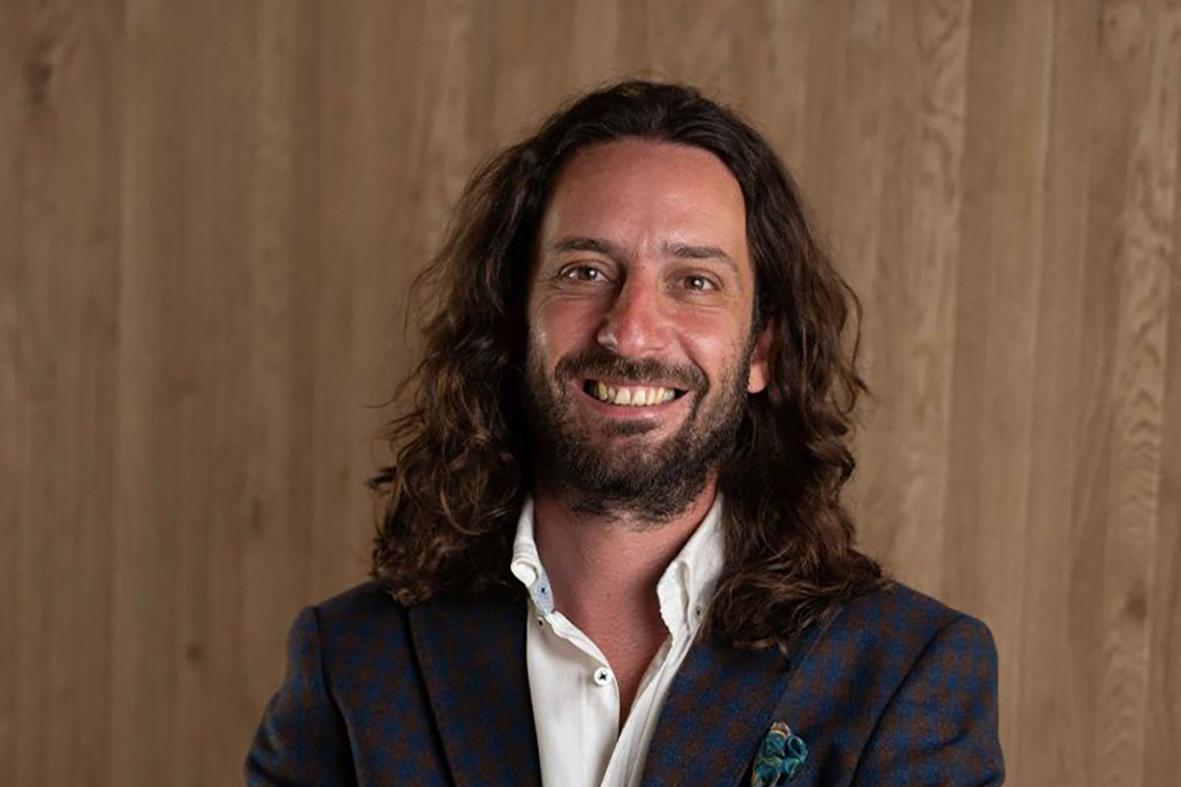
Steve Mercieca, co-founder and CEO, QLZH Group
The main benefit of planning reform that is currently being debated should be a faster and more efficient appeal process. While some appeals are valid and necessary, many are simply filed to delay projects. Today, the appeal process takes far too long, increasing uncertainty and costs, which, ultimately, feeds directly into higher property prices.
A housing crash is highly unlikely but affordability has reached its limits, which means prices cannot continue rising at the same pace. What we are more likely to see is a correction in lower-quality properties. Demand still exceeds supply but affordability constraints prevent higher-quality properties from pushing prices much further.
 Steve Mercieca
As a result, lower-quality properties are still selling and renting at similar prices, not because they are better but because supply remains tight.
There is a clear and growing demand for one-bedroom apartments. The increase in flat sharing is not driven by preference but by necessity. We need to move away from the concept of “student zones” and, instead, create independent living zones for people who want privacy and cannot find suitable one-bedroom units.
Those not yet on the property ladder need to act decisively. Even if someone continues renting, owning property as an investment is crucial. Malta is a small island with limited land. Property ownership remains one of the strongest long-term assets. The real winners will be those who own property that can be rented.
Culture: Will 2026 be the year professional empowerment and passion for the arts align?
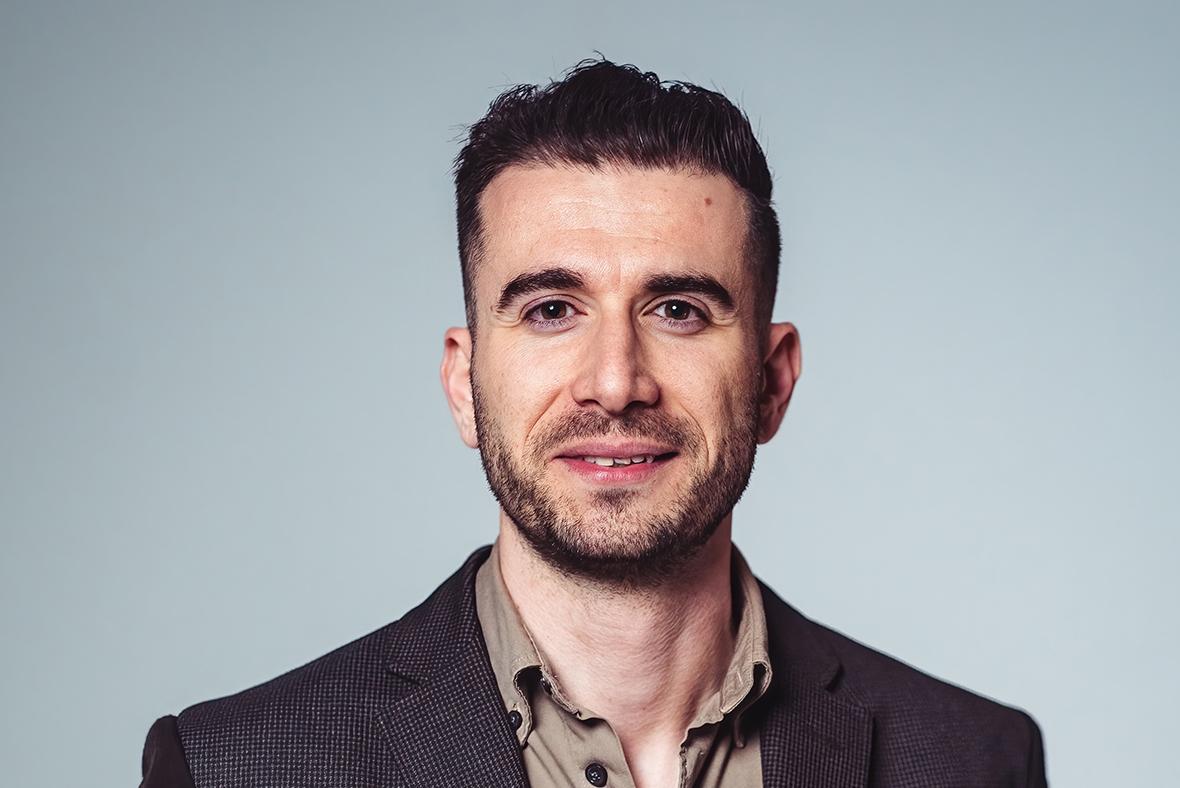
Daniel Azzopardi, director of strategy, Arts Council Malta
In 2025, Malta’s creative sector demonstrated growing confidence, visibility and ambition, even as it continued to face long-standing industry challenges.
Locally, the year saw stronger engagement with sustainable enterprises, improved production quality and rising participation, most notably through this year’s Malta Arts Awards (Premju għall-Arti).
Malta’s international presence was another defining feature. Recognition at the London Design Biennale placed Maltese creativity on the global stage.
 Daniel Azzopardi
This momentum was reinforced by confirmed participation in major platforms such as the Venice and Gwangju Biennales. Meanwhile, Victoria’s bid to become European Capital of Culture in 2031 further stimulated discussion about long-term cultural investment, community participation and the strategic role of culture in regional development.
Despite this progress, challenges remain. Creatives continue to face precarious working conditions, uneven access to funding and limited long-term security. Rising costs, shifting audience behaviours and rapid digital transformation are reshaping the sector while artificial intelligence adds both opportunity and uncertainty. New tools for creation and engagement sit alongside unresolved questions of authorship, copyright, fair remuneration and professional capacity.
Looking ahead, 2026 represents a pivotal moment. Arts Council Malta’s forthcoming Strategy 2030 offers an opportunity to build on recent progress while addressing enduring concerns. The strategy is expected to prioritise professional growth, sustainability, capacity-building, clearer educational pathways and stronger equity and access, while continuing to value the passion and experimentation that drive artistic activity.
This transition coincides with the launch of the EU Culture Compass, emphasising cultural rights, artist support, competitiveness and international cooperation. Within this framework, Malta has a timely opportunity to align local ambition with international best practices.