
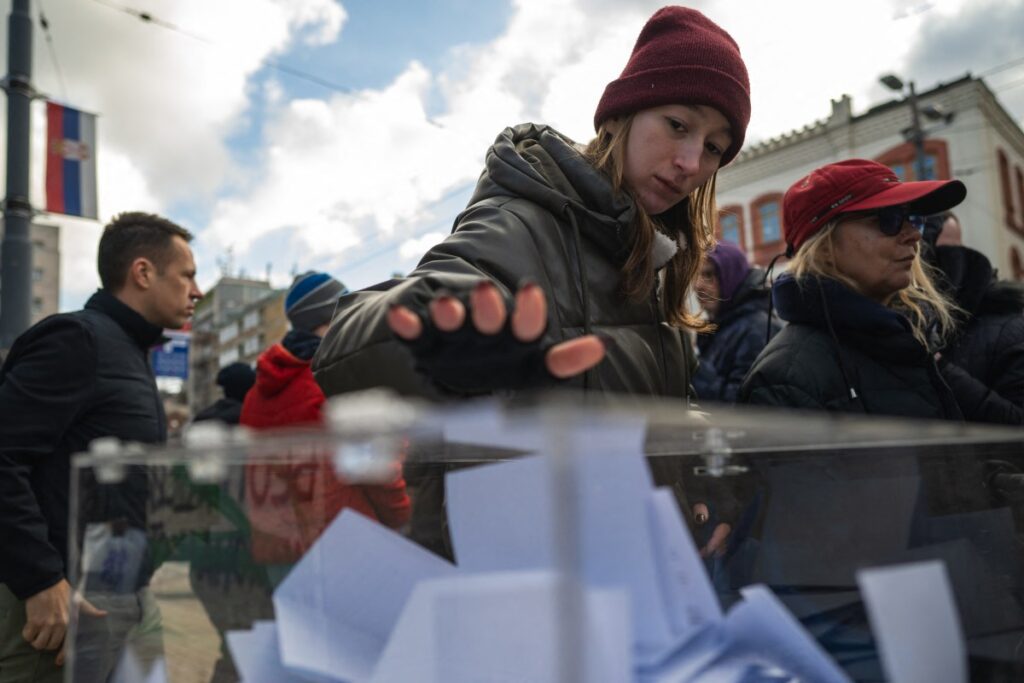
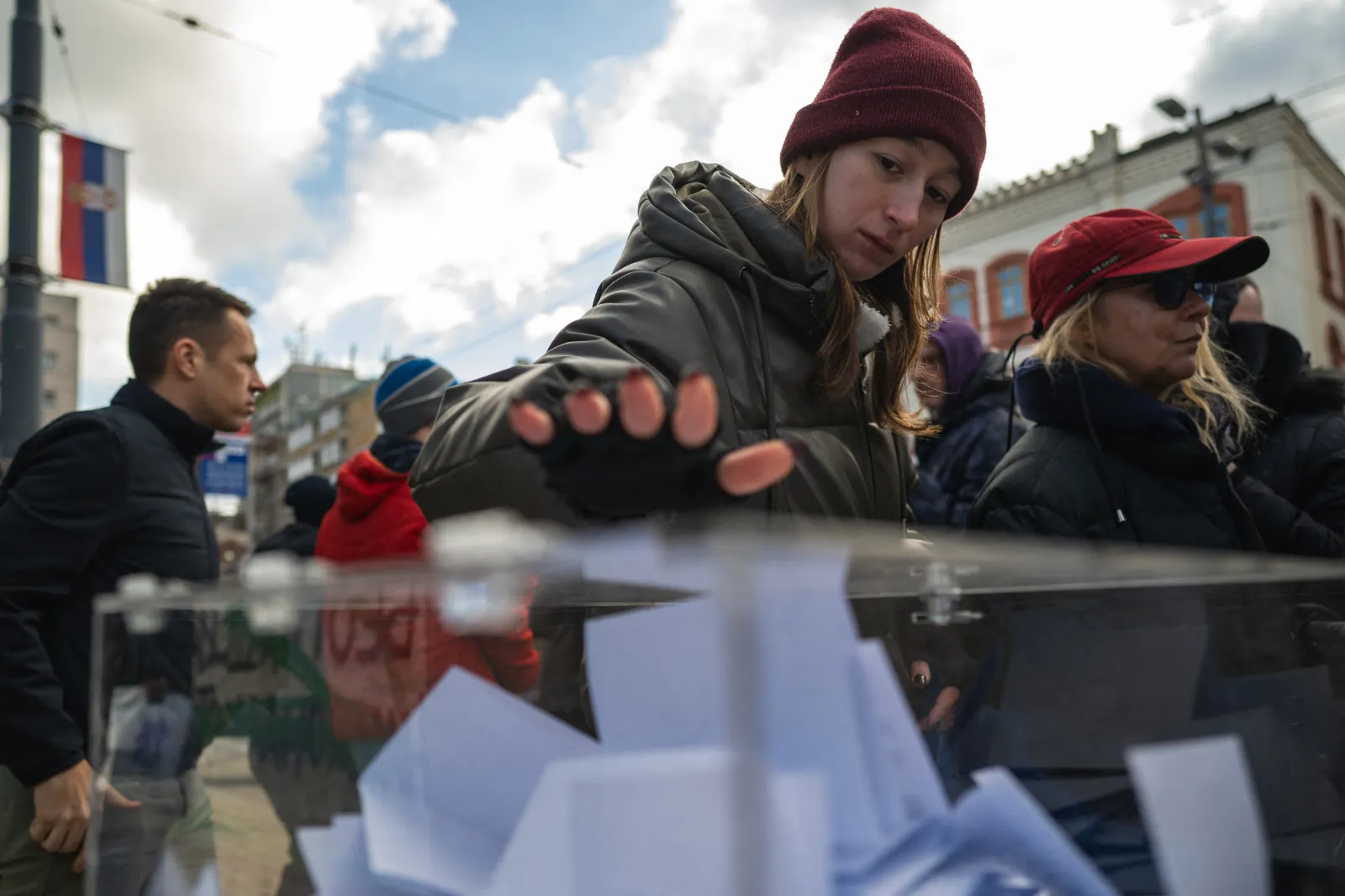
Student protesters have been out again in Serbia’s chilly winter winds to gather signatures demanding an early election to try to oust President Aleksandar Vučić.
Pressure is growing on Vučić after more than a year of anti-corruption protests that were first triggered by the deadly collapse of a railway station canopy and have continued despite their suppression by security forces and arrests by a government that has accused demonstrators of seeking a Western-orchestrated “color revolution.”
Another blow to Vučić near the end of 2025 was the withdrawal of an investment firm linked to U.S. President Donald Trump’s son-in-law Jared Kushner from a plan to build a Trump Tower on a controversial site in Belgrade—in part because of the growing protests.
Then a key oil refinery had to stop processing crude because of U.S. sanctions on its Russian majority-owners. Meanwhile, Serbia’s hopes of joining the European Union have stalled and it did not attend a summit of other Balkan candidate countries last month, complaining that its reforms to join the bloc had not been recognized.
Vučić’s office did not respond to Newsweek’s request for comment on the protests and the other challenges to his rule.
“People are not afraid anymore. They don’t fear these authorities, and all state institutions, government institutions, are actually not completely destroyed, but they are extremely weak,” independent national assembly member Siniša Ljepojevic told Newsweek. “The man at the top is now relying on [paramilitary] police units that are many of them thugs.”
One of Europe’s poorest states, Serbia has nonetheless been pivotal to the continent’s crises: from its part in the outbreak of World War I to the Balkan wars of the 1990s and the NATO bombing in 1999 to split away Kosovo. NATO’s unilateral approach there in the name of protecting Kosovo Albanians was later used by Serbia’s historic Orthodox ally Russia as a reason to justify its invasion of Ukraine.
Vučić has tried to juggle Serbia’s geopolitical relationships: on the one hand seeking membership of the European Union but on the other keeping close to President Vladimir Putin’s Russia—and calling for even closer cooperation during a visit to Moscow in May last year. He has also courted China as what Beijing calls a “staunch supporter” of its Belt and Road infrastructure investment program.
“We may not have the loudest voice, but we often have the clearest vision because we see both East and West at once,” Vučić told the United Nations General Assembly in September. “Our engagement with all partners does not mean blind agreement.”
Widespread Protests
It is the building threat at home that poses the greatest challenge to the six-foot-six Vučić, who served as a minister under nationalist leader Slobodan Milošević until he was overthrown in Serbia’s last wave of mass protests in 2000. After that, Vučić reinvented himself as a pro-EU reformer and populist.
This round of demonstrations started after the collapse of a concrete canopy killed 16 people at the train station in Novi Sad, Serbia’s second biggest city, on November 1.
Protesters accused authorities of corruption and of allowing shoddy construction for which nobody has been called to account. Serbia’s score on Transparency International’s Corruption Perceptions Index has fallen from 41 to 35—on a par with Ukraine—during Vučić’s rule. He has dominated Serbian politics since becoming prime minister in 2014 and was elected president in 2017.
“There is a lot of corruption, and we need to fight it much stronger,” Vučić told Euronews in August. “I am very much dedicated, very much devoted, to lead that fight, to lead the struggle.”
From the initial anger over the deaths, protests swiftly morphed into calls for elections ahead of schedule in 2027.
“Without protests, there is no pressure on the regime to make elections,” one student protester told Newsweek in Belgrade. He spoke on condition of anonymity because he was among those arrested and now facing charges for alleged acts against the state. “We tried our best for everything not to be violent, to be calm,” he said.
Novak Djokovic Voiced Support for Protesters
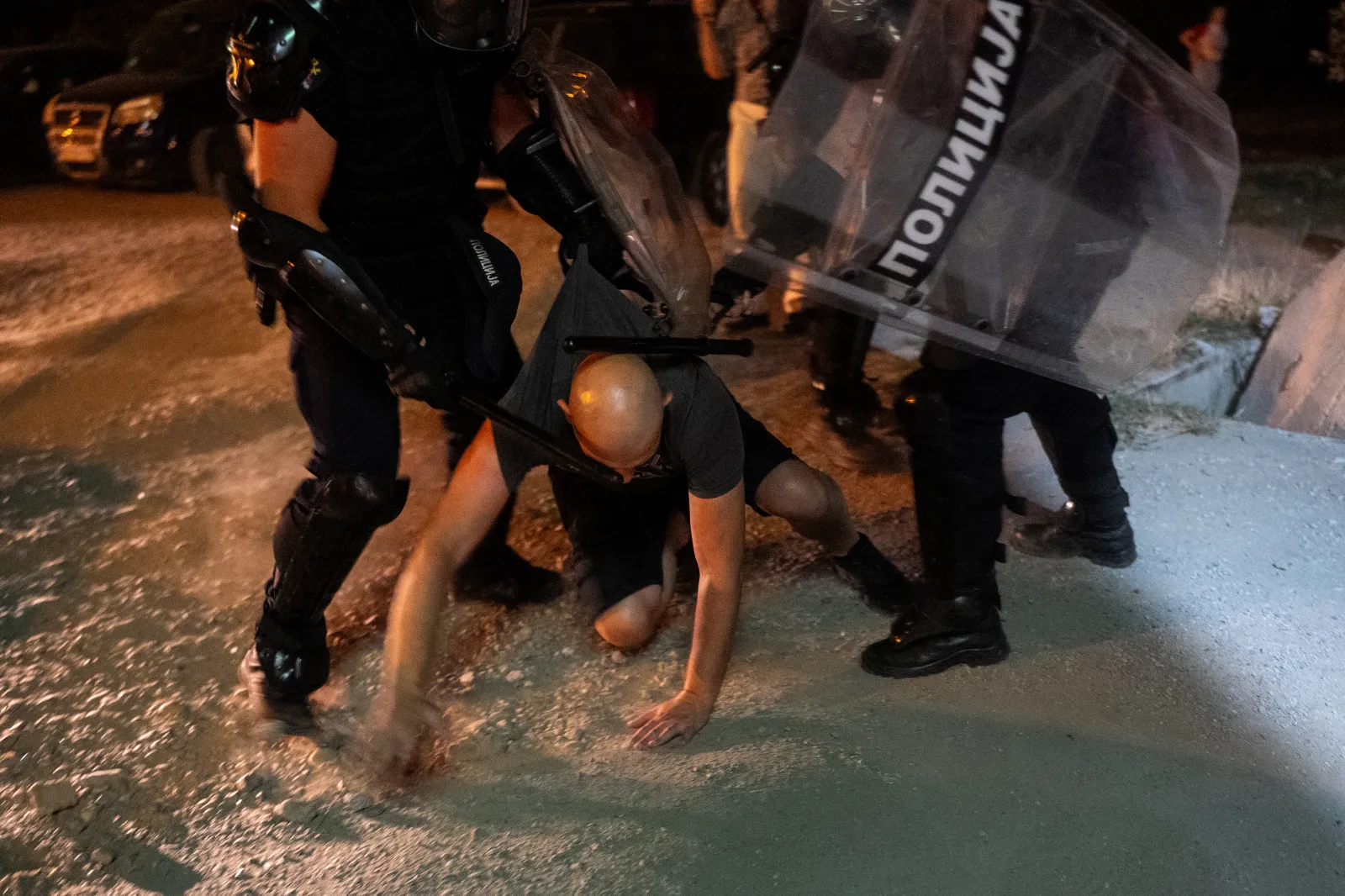
Serbian security forces repeatedly used force to put down protests and carried out widespread arrests in what Amnesty International described as a “violent crackdown.” But the protests spread beyond the students to gather hundreds of thousands of people across Serbia at their height. Support for the protesters from tennis star Novak Djokovic earned him Vučić’s ire.
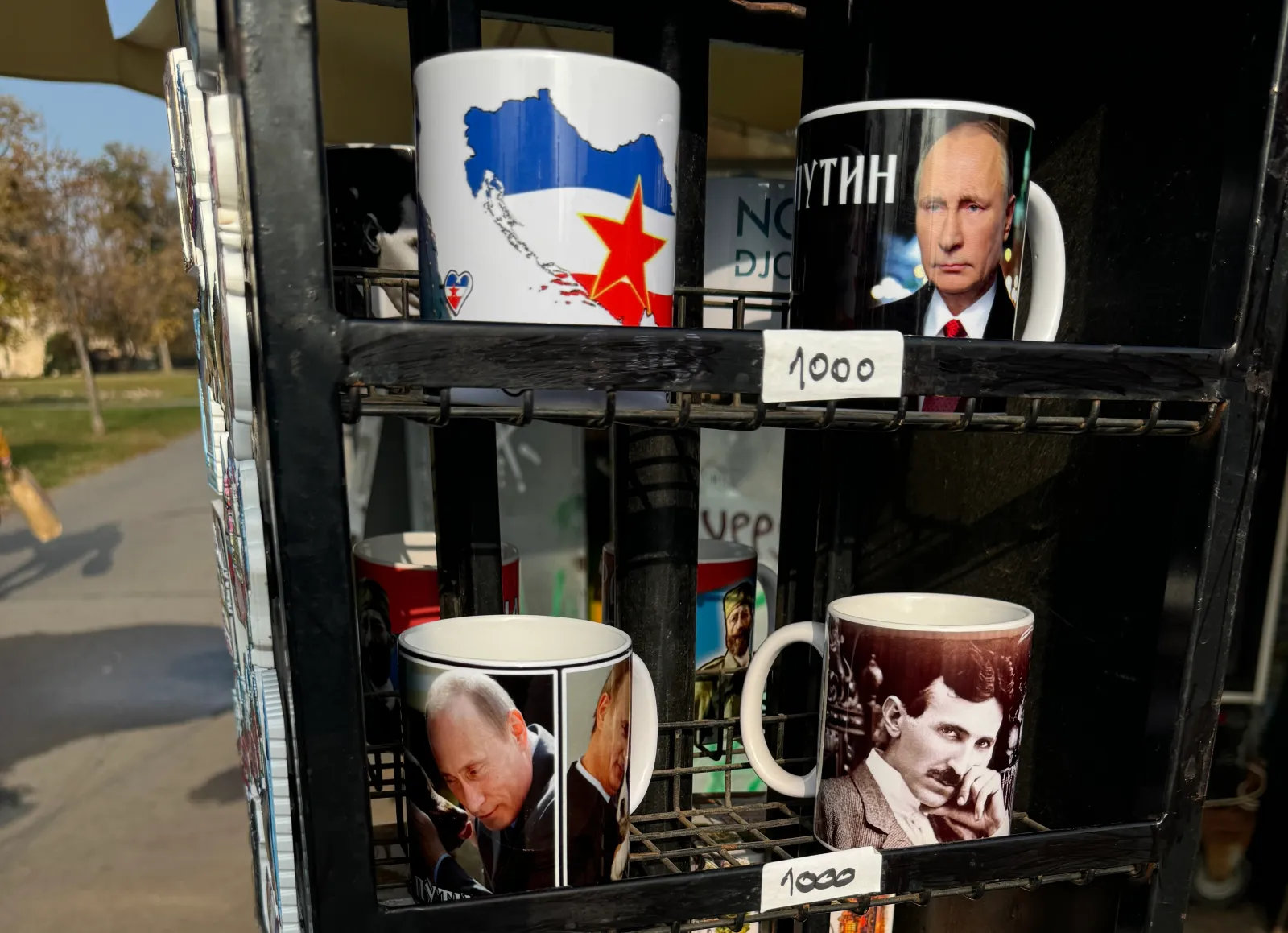
Despite accusations in official media of being pro-Western stooges, protesters have largely tried to avoid foreign associations in a country where possible entry to the EU is supported but Putin is also hugely popular.
“Some people who are supposed to be brought to justice are not being arrested, but students are being arrested on the street,” Milivoje Mihajlovic, a journalist and former state official who sympathizes with the protesters, told Newsweek.
“Their basic platform is the fight against corruption…. They want the justice system to work. They want state institutions to operate normally. They want free elections without the votes being stolen.”
Authorities have denied using excessive force and Vučić has said elections will be held before December 2027, but not when exactly. The timing could be sensitive given that Serbia is also due to hold Expo 2027, for which work on massive construction projects is very much evident at a site outside Belgrade.
Construction has helped to power economic growth since the end of the COVID-19 pandemic—the World Bank gave an estimate of 3.9 percent for 2024—but many Serbs say they all feel the impact of rising prices while only a few benefit from the growth.
Trump Tower Pullout
Vučić’s hopes of securing another construction project were dashed when Kushner’s investment company Affinity Partners pulled out of a $500 million plan to develop a Trump Tower Belgrade in December after protests, and with Serbian prosecutors filing an indictment over an alleged illegal removal of the heritage status of the building to be redeveloped: the General Staff buildings bombed by NATO in 1999.
“Meaningful projects should unite rather than divide,” Affinity Partners told the Wall Street Journal, explaining the pullout. It did not respond to Newsweek’s request for comment.
Vučić denied that there had ever been corruption over the project and accused his critics of sabotaging it. “As a state and as a nation, we are major losers,” he said.
Serbia is also in a tangle with the United States over oil company NIS, whose majority owners are subsidiaries of Russian state energy firm Gazprom and therefore under sanctions imposed to bring pressure on Moscow over the Ukraine war. With crude supplies stopped to the Pancevo refinery, the only one Serbia has, it is trying to lobby for a sanctions exemption as it seeks a buyer for the Russian stake in the company.
Then there is the challenge of the European Union. Serbia has long sought membership of the bloc along with its neighbors, but has failed to meet the necessary conditions, while it’s friendship with Russia sits uneasily with EU leaders during the Ukraine war.
Russia Sticking Point With EU
“We need to see progress on the rule of law, the electoral framework and media freedom,” European Commission President Ursula von der Leyen said in October after meeting Vučić. “Second, we need to see greater alignment with our foreign policy, including on sanctions against Russia.”
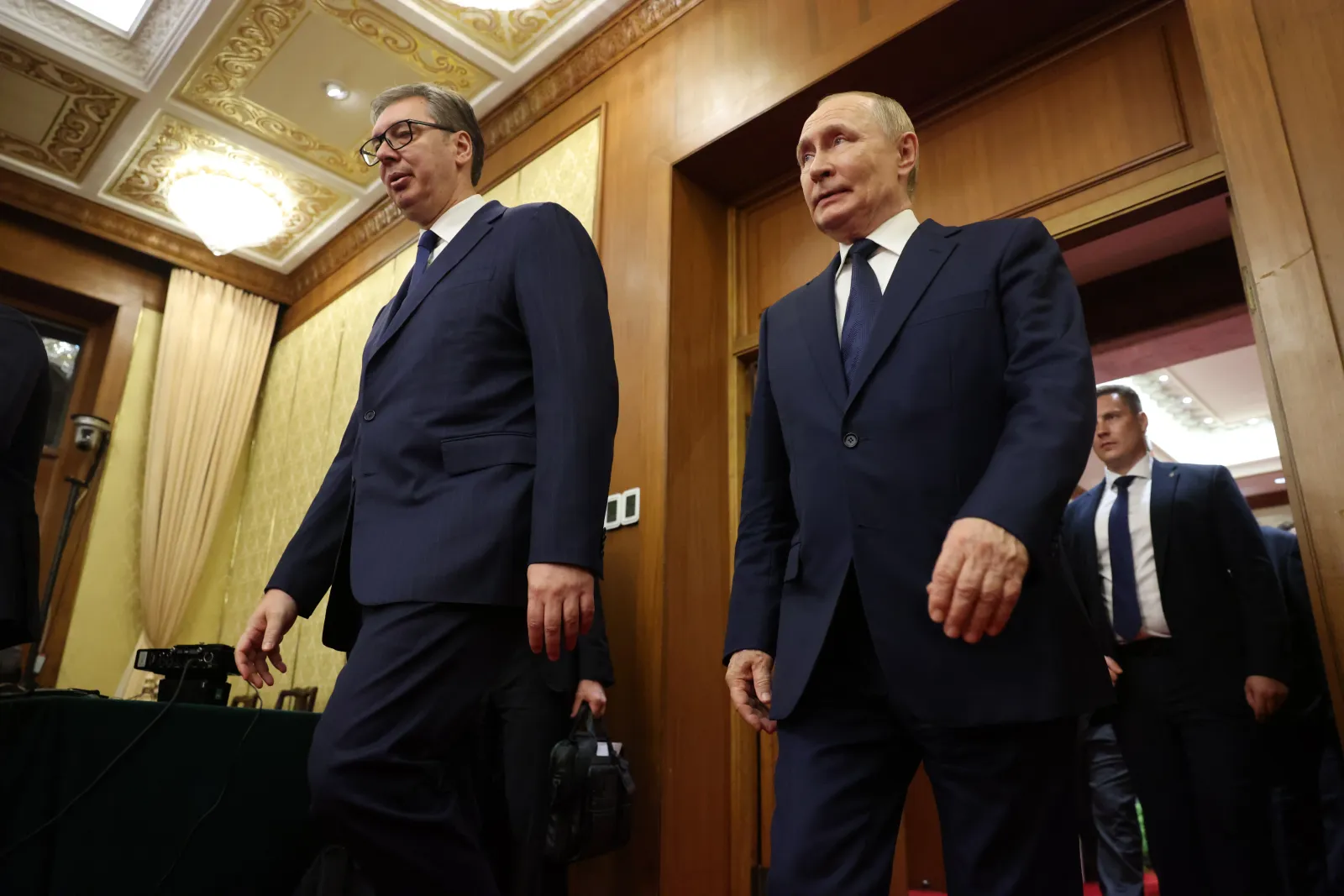
It was following that visit that Vučić pulled out of the EU-Western Balkans Summit in December to discuss enlargement as Serbia’s neighbors sped past it to discuss progress on their own next steps.
Against that backdrop, the students and their allies are planning more protests in 2026. They have intentionally not named any figurehead themselves as they seek to keep the protest movement decentralized to make it harder to target.
“The protesters want to join the European Union. They want EU rules here. They are not pro-Russian or pro-China but they are not anti-either,” said Mihajlovic.
Vučić could genuinely still count on support from about a third of Serbians at elections, Ljepojevic said. That includes many older Serbs who tend to rely on official sources for their information as well as public servants who will be encouraged to vote in support of government parties even if not particularly willing to.
“It will be a pretty difficult time. The ruling party at the moment will fight until the end because for them it is a question of life and death because corruption is so deep,” said Ljepojevic. “The government and authorities simply don’t have any idea how to get out of this.”