
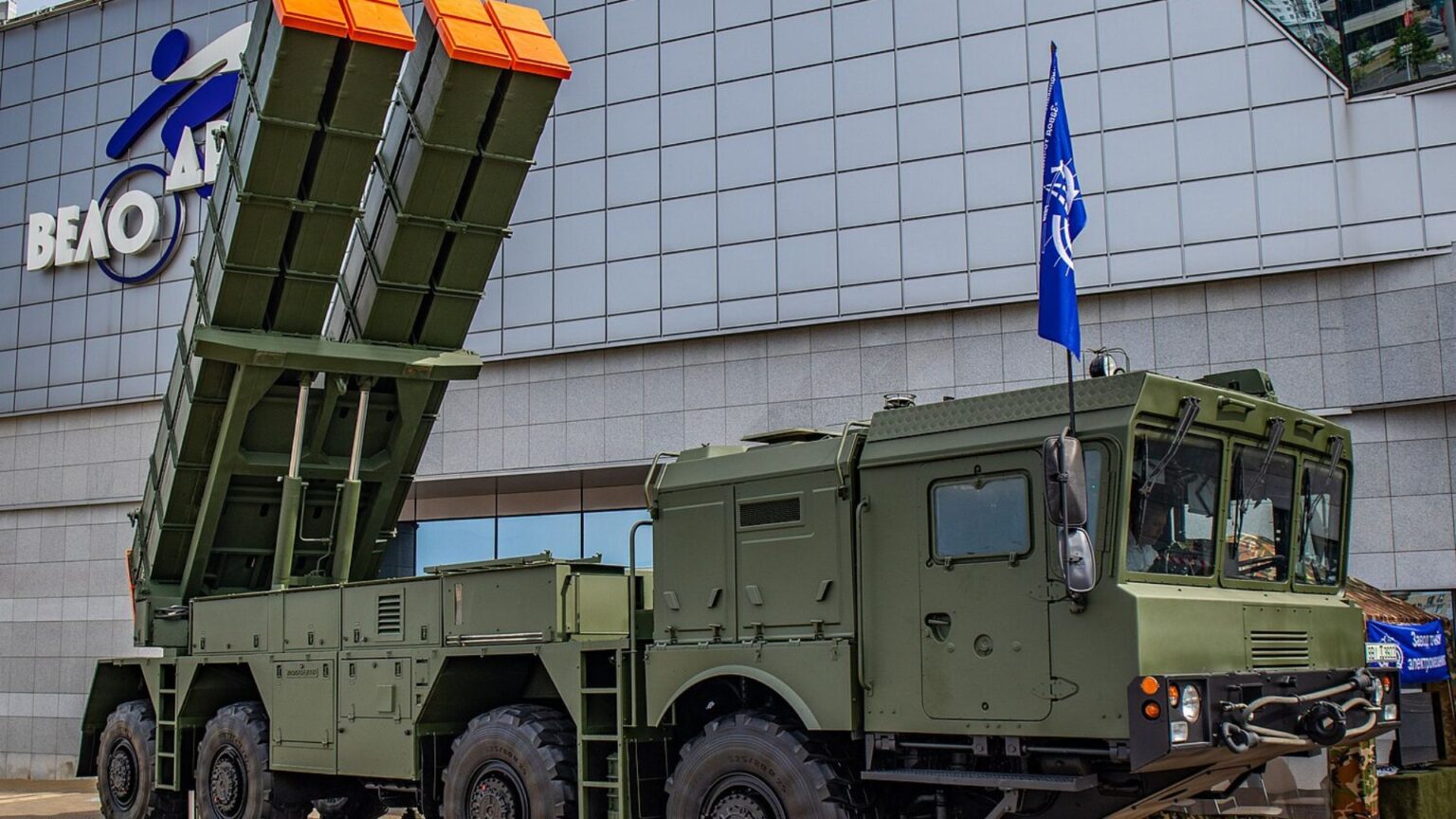
Belarusian officials have suggested that the country’s Polonez operational-tactical missile system could eventually be equipped with a nuclear warhead, with development work involving Russian specialists, raising fresh questions about the expanding role of nuclear-capable weapons in Belarus’ military posture.
The claim was made by Gennady Lepeshko, head of the National Security Commission of the lower house of Belarus’ parliament, in an interview with the state-aligned outlet Sputnik Belarus.
Lepeshko said Russian and Belarusian experts were working on enabling nuclear use for certain missile and aviation systems, including the domestically fielded Polonez launcher.
Rocket-launcher-fired nuclear missile
“I have heard that Russia and Belarus are conducting joint developments to enable the use of nuclear weapons, including from Polonez missiles,” Lepeshko said.
He added that during the recent Zapad joint military exercises, Belarus and Russia practiced what he described as an “algorithm” for the use of nuclear weapons, without providing technical details.
Belarusian authorities did not release independent confirmation or timelines for any such modification, and there was no immediate comment from Russia’s Defense Ministry.
The remarks nonetheless underscore Minsk’s deepening military integration with Moscow as Russia continues its war in neighboring Ukraine.
The Polonez system is a multiple-launch rocket and missile platform developed by Belarus with significant Chinese technical roots.
It is based on China’s GATSS multifunctional missile system and mounted on the Belarusian-made MZKT-7930 Astrolog wheeled chassis.
The system was first publicly shown during a military parade in Minsk in 2015 and adopted into service in Belarus in 2016 after completing state trials.
According to officially released specifications, the Polonez fires 301-millimeter missiles with ranges of up to 124 miles (200 kilometers) for the A200 variant and about 180 miles (290 kilometers) for the A300.
The missiles use inertial guidance with satellite navigation updates and are reported to have an accuracy of roughly 50 to 100 feet (15 to 30 meters), depending on the source.
The system is operated by Belarus’ 336th Rocket Artillery Brigade, based in Osipovichi. Azerbaijan is the only known foreign operator to have acquired Polonez launchers in 2018.
Europe’s new nightmare
Belarusian President Alexander Lukashenko has previously issued explicit threats referencing the Polonez.
In 2022, amid heightened tensions with Ukraine and NATO, Lukashenko warned that Belarus could target “decision-making centers” in foreign capitals, saying they were within range of the missile system.
Belarus has continued to expand its missile forces in recent years.
In 2021, Dmitry Pantus, head of the State Military Industry Committee, announced the development of an extended-range missile for Polonez with a reach of up to 186 miles (300 kilometers).
That version, later designated Polonez-M, was adopted for service in November 2023 after additional testing.
Lukashenko has also said Belarus shifted from Chinese to Russian technology to develop what he described as a “serious” domestically produced missile, signaling a closer alignment with Moscow’s defense industry.
Beyond Polonez, Belarus has already taken delivery of Russian Iskander-M operational-tactical missile systems, which have a range of up to 310 miles (500 kilometers) and are widely believed to be capable of carrying nuclear warheads.
Belarusian forces began operating the Iskander systems in early 2023 after training in Russia.
Russian officials have previously said nuclear warheads with yields of up to 50 kilotons have been developed for Iskander missiles.
Analysts say Lepeshko’s comments about nuclear “algorithms” practiced during Zapad exercises may refer to these systems rather than an imminent nuclear version of Polonez.
Western governments have expressed concern that the deployment of nuclear-capable systems in Belarus blurs longstanding boundaries between conventional and nuclear forces in Eastern Europe, increasing risks of escalation in a region already strained by the war in Ukraine.