
The warehouse smelled of frying oil and freshly baked challah. It was a bitterly cold Friday morning, and I was standing shoulder-to-shoulder with strangers, forming a human assembly line to pack schnitzel sandwiches for soldiers in Gaza.
I had come to Israel to volunteer. I arrived with the arrogance of the helper; I thought I was bringing my hands, my energy, and my empathy to a nation in grief. I thought I was there to fix. But as any traveller knows, the things you bring are rarely as heavy as the things you carry home.
My education began the moment I tried to engage the woman standing next to me. She was older, the daughter of Holocaust survivors. Her hands moved with a rhythmic, mechanical efficiency, slapping bread against meat, wrapping, stacking, repeating. I asked her about resilience, that buzzword we love to plastaster across LinkedIn and corporate seminars. I asked how she managed to function, how she remained so fearless in a world that felt so precipitous.
She didn’t stop working. She didn’t look up. She simply said, “And what will happen if I am afraid?”
It wasn’t a rhetorical question. It was an equation. In her calculus, fear was a biological input with zero utility. Terror creates paralysis; she was making sandwiches. She had discarded the emotion not because she was numb, but because it was inefficient. Her parents had walked out of hell to teach her a single lesson: Terror is a weapon used against you; refusal to stop moving is the weapon you use back.
I realized then that I wasn’t watching resilience. I was watching the mechanics of defiance.
The Diagnosis
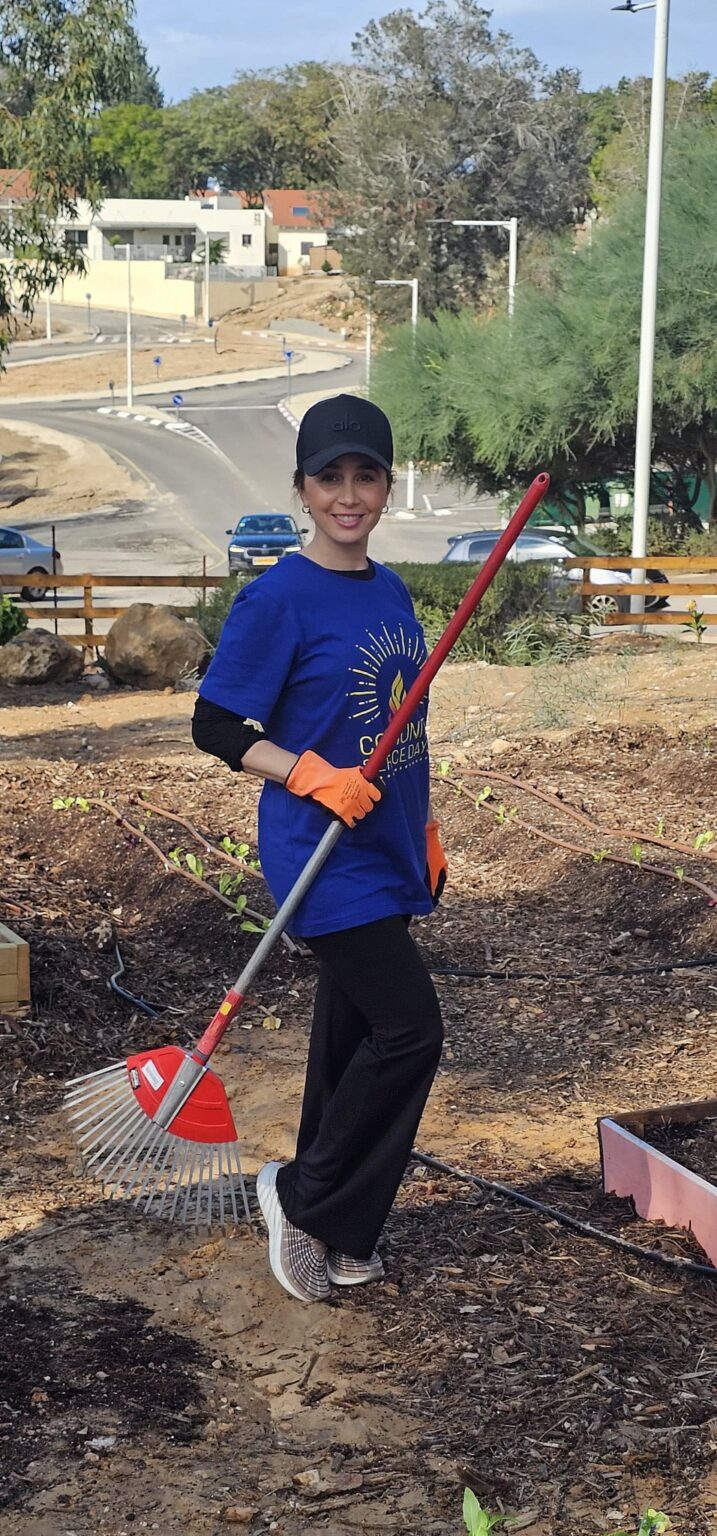
Days later, we traveled south to Kibbutz Ruchama to build a garden. I stepped into a local school expecting the hush of education — the ordered rows and raised hands I was used to. Instead, I walked into a riot of noise.
Small children were ricocheting off the walls. The atmosphere was wild, untethered, and frantic. My brain, trained to categorize and assess, immediately jumped to a clinical conclusion. I found an administrator and lowered my voice.
“Is this a school for special-needs kids?” I asked.
He gave me a half-smile, a look of patience reserved for the tourist who thinks they understand the landscape. “Depends what you mean by ‘special needs,’” he said. “These children are the direct victims of October 7th. They lost parents. They lost homes. They are acting out because they are too small to hold emotions this big.”
Shame flushed through me. I had seen a diagnosis; he saw a wound. I was judging behavior; he was rehabilitating souls. These administrators were devoting their lives to the slow, grueling labor required to stitch a childhood back together. It humbled me. It reminded me that trauma doesn’t always look like weeping; sometimes it looks like wildness, and it requires a patience I am still learning to cultivate.
The Dance
My final lesson came in Jerusalem, at the Machane Yehuda market. It was Hanukkah, but the Festival of Lights felt dimmed by the gray, wet winter sky. The news cycle was a torrent of global antisemitism and grim statistics. The mood was heavy.
We huddled inside a shop, shaking off the rain, when a small store began blasting an Israeli pop song. It was just noise. Until it wasn’t.
Within seconds, the market transformed. A group of passersby (grandmothers clutching shopping bags, soldiers with rifles slung over their shoulders, tourists, locals) broke into dance. It wasn’t a performance. It was a reflex.
I watched them dancing in the damp gray of the afternoon, and the logic of the trip finally clicked into place. The woman in the warehouse refusing to pause; the administrator tolerating the chaos of grieving children; the soldiers dancing in the rain.
This wasn’t happiness. It was a strategy.
If they can dance while the world condemns them, and while the rain falls, then despair loses its foothold. Joy, in this context, is not an emotion; it is an act of insurrection. It is the physical insistence on life.
I returned to Los Angeles to start a new chapter, thinking I needed a plan. I realized what I actually needed was what I found in that market: The refusal to be paralyzed by the odds, the patience to sit with the “wildness” of the wounded, and the audacity to dance before the storm actually clears.
I went to Israel thinking I was bringing the light. I was wrong. I went there to learn how to keep it burning when the wind picks up.
Beeta Benjy is a communications specialist and dispute resolution professional based in Los Angeles. Formerly the Director of Communications for the Consulate General of Israel in LA, she is now the founder of The Personal Diplomat, a consultancy dedicated to high-stakes communication and conflict navigation.