
The Federation of Bosnia and Herzegovina has launched usporedicijene.ba, an application that enables consumers to track real-time price comparisons across various food retail stores.
Rolled out as a beta version on 31 December 2025, this free app is modelled on a previously-launched fuel price comparison platform. A full version is expected to be launched by the end of February.
The primary goal of usporedicijene.ba is to equip consumers with the ability to quickly identify the best prices for individual products or an entire shopping basket.
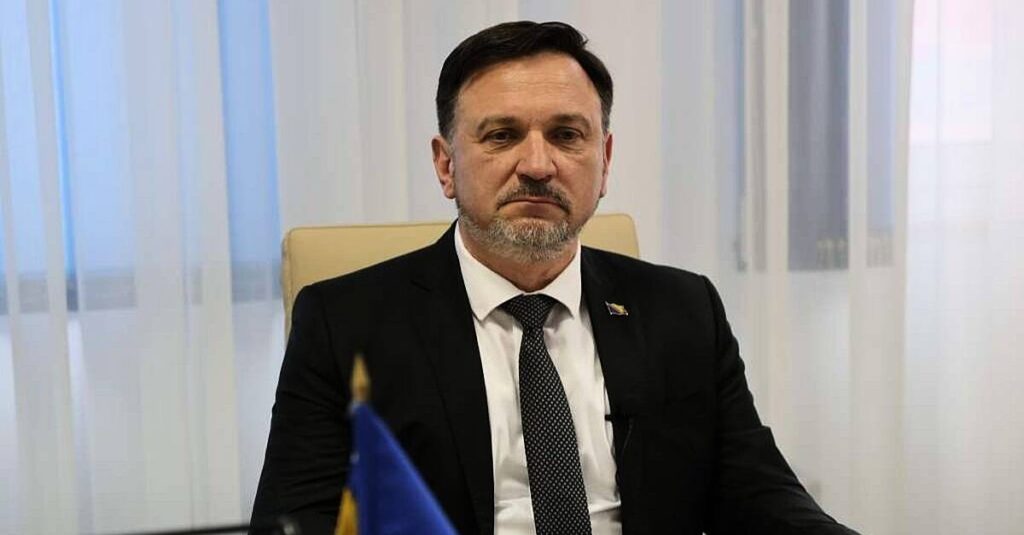
Bosnia and Herzegovina’s federal minister of trade, Amir Hasičević (pictured), told broadcaster Federalna that the application forms a cornerstone of the transparency measures outlined in the country’s new Consumer Protection Law.
In time, the app will enable users to scan a code and instantly access product ingredients, allergens, and other crucial information, ensuring they have accurate product details.
Minister Hasičević also revealed that all supermarkets in the Federation of Bosnia and Herzegovina exceeding 400 square metres will be mandated to submit their price data to the tax administration. This will enable users to compare individual items or a personalised basket of up to 70 items.
Meanwhile, the region of Republika Srpska is also preparing to launch a similar application by the end of January 2026.
Price Caps and New Laws
Last year, the Federal Ministry of Trade introduced several initiatives to improve trade, consumer protection, market stability, and alignment with European standards.
These include price freezes on 65 basic foodstuffs and hygiene products, with positive compliance reported by inspectors. The Ministry plans to potentially extend and revise these measures in the future.
Alongside price controls, the Ministry also introduced new legislation regarding internal trade, consumer protection, price controls and e-commerce.
These laws are intended to overhaul trade practices and ensure “consumers in the Federation of BiH have the same rights as consumers in the European Union,” according to Minister Hasičević.
These regulations are harmonised with European directives.
The updated consumer protection legislation introduces new transparency tools, such as mandatory ‘price checkers’ in larger stores and electronic product declarations via QR codes.