
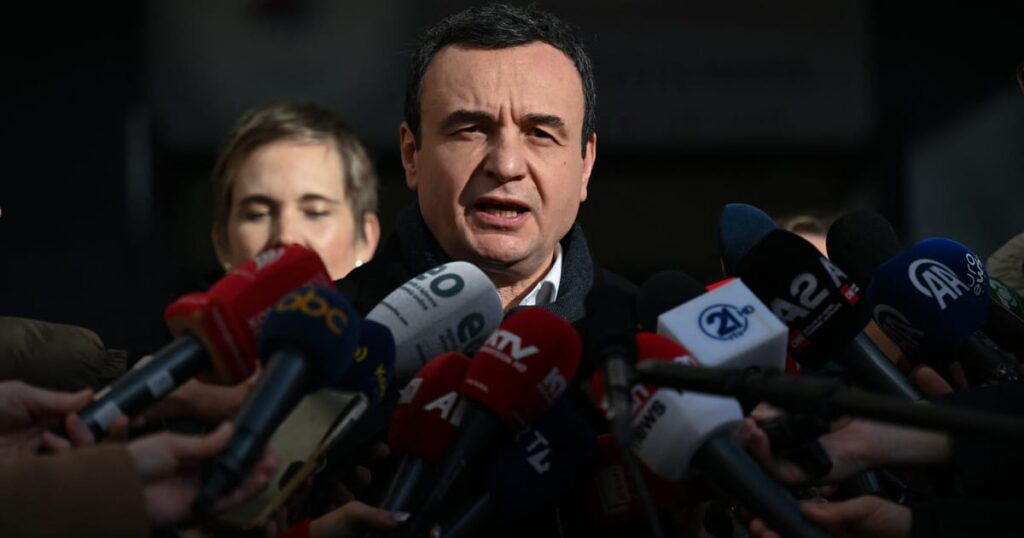
“In 2021, the people of Kosova made a decisive choice against long-standing corruption and in favor of a European future, a future of security and prosperity that reaches every citizen, not just a few, and one that makes the country both a strong European democracy and a prosperous economy,” Kurti told POLITICO, referring to the 2021 parliamentary election in which he triumphed.
“Yesterday they made that same choice again, once more granting us an overwhelming mandate. We have worked tirelessly to honor the trust placed in us, and we will do so again. We look forward to the work ahead,” said Kurti.
Kurti’s party won the most votes in a parliamentary election in February but fell short of securing an absolute majority. After months of talks failed to produce a coalition government, President Vjosa Osmani called a snap election in November — the country’s seventh parliamentary ballot since it declared independence from Serbia in 2008.
Better this time around
Self-Determination performed better in Sunday’s election than in February, when it secured 42 percent of the vote. Still, Kurti could need the backing of non-Serb minority parties to form a majority, since Kurti “will likely reject” working with Serb-minority party Serb List, according to Kosovar political analyst Agon Maliqi.
“It is not fully clear why such a better result, but it is probably related to several factors: much higher diaspora turnout due to the holiday season; a series of social benefit increases in past weeks; but also the public repositioning of President Osmani as pro-Kurti, which seems to have swayed back some LDK voters. Opposition parties, particularly LDK, failed to make a strong case,” Maliqi told POLITICO.
LDK’s leader, Lumir Abdixhiku, is now considering resigning from his position as chairman of the party, calling the result “unexpected for LDK.” Abdixhiku, a former minister for infrastructure and environment, said “I have not brought LDK to where it should be.”