
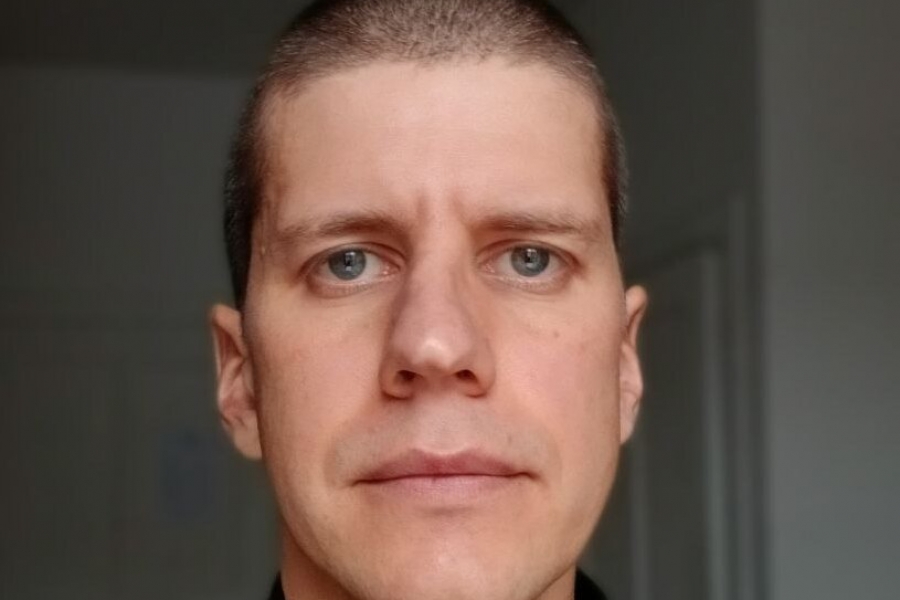
Siarhei Paŭlavicki after his release. Photo: interlocutor’s archive
He translated for Lukashenka and almost became an interpreter for the “Normandy Four” talks in Minsk
Minsk resident Siarhei Paŭlavicki is one of the top Belarusian translators from German. For many years he worked as a lecturer at the Linguistic University, and from the mid-2000s he worked part-time as a translator.
In 2014, Paŭlavicki recalls, there was more translation work — influenced by the peace talks on Donbas held in Minsk. He felt that working at the university prevented him from developing in translation, as it took up valuable time. Paŭlavicki then decided to go freelance, and he did not regret it.
He worked with both oral and written translation, mastering simultaneous interpretation:
“I was acquainted with the German Embassy, and when they had projects where it wasn’t necessary to involve an official embassy translator, they gave them to me. I worked for the Goethe Institute, the representation of the German economy in Minsk, the German-Belarusian Economic Club, and other organizations. These were projects on ecology, sustainable development, social projects, and even religious matters.”
He also had to translate for politicians, including Alexander Lukashenka. In 2018, the presidents of Germany and Austria came to Traścianiec, and Lukashenka was also there. The politicians attended the reburial of the remains of victims found during the construction of the second phase of the memorial at the former concentration camp site.
Siarhei was invited to work there, and he translated Lukashenka’s speech.
Павялічыць
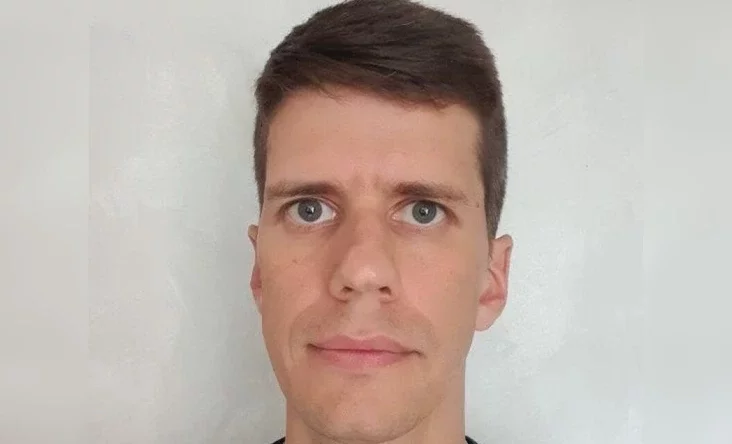
Siarhei before his arrest. Photo: spring96.org
“Such a speech is based on a prepared text, and my role was to voice everything that was written there. Of course, I had to listen to make sure he didn’t deviate from the text,” Paŭlavicki recalls.
Once, the then-future political prisoner had the opportunity to shake Lukashenka’s hand. When Siarhei worked at the university, he was sent to work at a meeting with investors who were supposed to build the “Kempinski” hotel in Minsk. The meeting took place in the Minsk City Hall, where a new general plan for the city center was demonstrated, and Lukashenka was also present.
“He was led around, shown that general plan, surrounded by officials and that Swiss uncle-investor. When Lukashenka entered, he shook everyone’s hand, so I got one too,” Siarhei recounts.
Paŭlavicki almost became an interpreter for the “Normandy Four” talks in Minsk. It was unknown how many interpreters foreign guests would bring to those talks, so the Belarusian Ministry of Foreign Affairs organized a reserve team from the Linguistic University’s translators, who were on duty at the negotiation site.
“So, Paŭlavicki works as an emissary for foreign intelligence agencies”
After 2020, Siarhei initially remained in Belarus, only traveling abroad for business trips. He had an administrative penalty for protests, so he was subject to increased control at the border, but otherwise he experienced no problems.
In May 2023, Paŭlavicki went to Switzerland:
“I received a scholarship to translate a novel from German into Belarusian. It was a Swiss foundation that invites people for cultural projects — artists, writers, translators — to the country. I ended up there for three months. I got ready somewhat quickly, as someone else had declined participation and the trip was offered to me.
When I was already in Switzerland reading the news, I realized — if I return to Belarus, they will most likely come for me. By then, the wave of persecution for donations had already begun.”
Three months passed, during which Siarhei could stay in the EU on his visa. He left for Serbia and hoped to get a new passport there, as his old one was expiring. But he didn’t make it, as Belarusian embassies stopped issuing passports.
There were few options:
“I realized I either had to apply for asylum in the EU as a refugee, or return to Belarus. I tried to contact various countries to accept me as a refugee, because I’m such a good, democratic person and did so many useful things. When my attempts led to nothing, I realized that I either had to cross the border between Serbia and Hungary and become a refugee in Hungary (laughs), or go back home.
I thought, maybe I’ll be lucky and slip under the radar.”
Павялічыць
Siarhei traveled to Belarus via Moscow, stopped in one of the Belarusian district centers, and began processing his documents. He was arrested on the second day after his arrival — he ended up in one of the cells.
The man was prosecuted for donations made to various initiatives: “Bysol”, “ByHelp”, “Honest People”, Belarusian Council for Culture. Siarhei recalls that he started donating even before the 2020 elections. He aimed to donate for the needs of the repressed and compensation for fines, rather than to initiatives organizing protests.
According to the criminal case materials, Paŭlavicki donated a total of more than $600. He was not offered to buy his way out, as sometimes happens in such cases:
“The KGB looked at the sum of money and decided that no one in their right mind could spend so much of their own money. And if Paŭlavicki is in his right mind, then it’s not his money. This means that as a translator, he uses his bag to transport money and work as an emissary for foreign intelligence agencies.
We discussed this with them for seven months while I was in the KGB pre-trial detention center. It turned out that I am not an emissary, and they lost interest in me, but it was already too late to roll back this story to a fine.”
Павялічыць
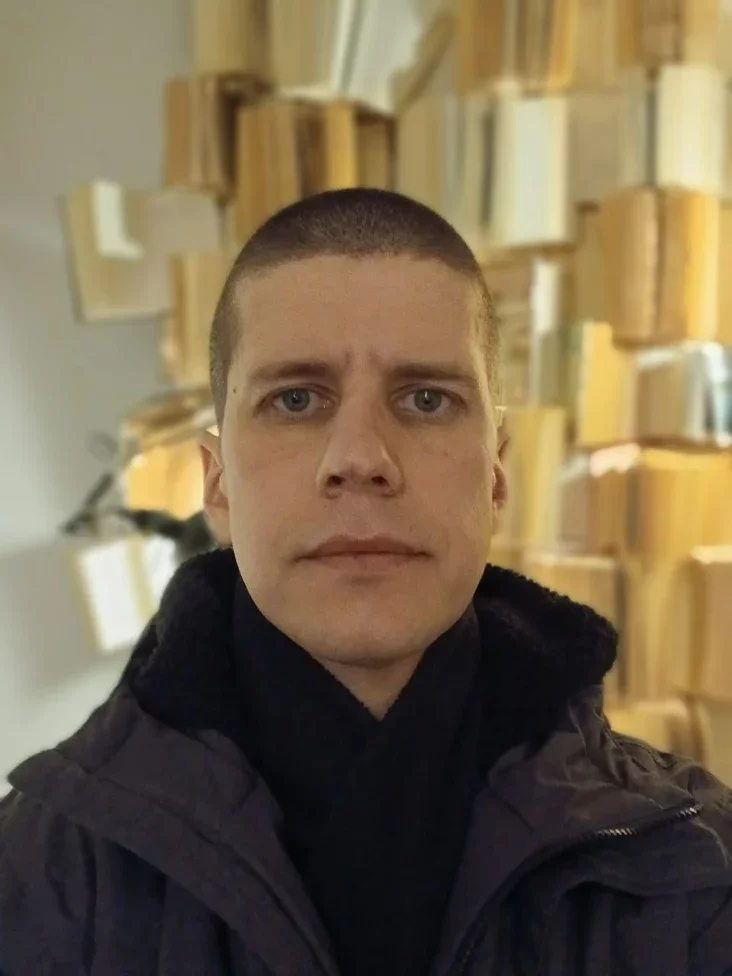
Siarhei Paŭlavicki after his release. Photo: interlocutor’s archive
Siarhei recalls that he was “offered” various criminal articles; he could have even been charged with treason. But in the end, the man was convicted under Article 361-2 of the Criminal Code (financing extremist activities) and sent to a penal colony for three years.
“Shvets lived in anticipation of his own people coming for him”
Behind bars, Siarhei met the defendants in the case of the sabotage of the Russian A-50 aircraft at the Machulishchy airfield. He recounts how he met Ukrainian Mikalai Shvets in the KGB pre-trial detention center — official bodies referred to him as the perpetrator of that sabotage:
“A guy was brought in, he introduced himself — said, Mykola. Word by word, and he said why he was there — like, I blew up their plane. Mykola did not consider himself a terrorist; he called himself a saboteur. He said he was an agent of the Security Service of Ukraine and that he had been trained to carry out this act against enemy equipment. I don’t remember him expressing any particular hostility against Belarus, but he considered his actions absolutely legal.”
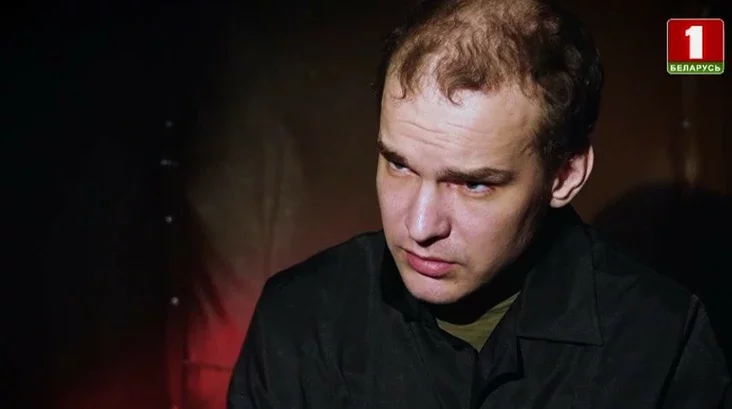
Павялічыць
Mikalai Shvets — the main defendant in the case of the sabotage of the Russian A-50 aircraft at the Machulishchy airfield. Screenshot Belsat
Paŭlavicki notes that Shvets never mentioned other people in his stories about the sabotage. He spoke of everything in the singular — saying, I came to Belarus, got a job, acquired a drone, and launched it. When the Ukrainian was transferred from the KGB pre-trial detention center in the summer of 2024, he didn’t know yet that he would be released, but he hoped for it:
“For the last few months, he lived in anticipation of his own people coming for him. When he left, it could have been anything — a transfer to another cell, another institution. We properly packed a bag for him, put in some bacon and sausages, so he didn’t leave hungry, shouldn’t be angry with us.”
Shvets had no parcels — he simply didn’t have anyone who could send them. Mikalai asked to pass a letter to the Ukrainian ambassador, but instead, he was offered an interview with propagandists: saying, you’ll speak directly into the camera for Mr. Zelensky or Budanov. Shvets himself refused this.
In another cell, Siarhei met another defendant in that case, Andrei Stsiapurka:
“At the moment of introduction, Andrei immediately said — like, sorry, but I won’t tell anything about myself. When he was taken somewhere from the cell, I was told that the guy had a complicated situation, he was involved in some terrorist activities, but no one really knew which ones. There were assumptions that he might be connected to paintball players.
Then he said that he had a handful of articles piled up against him. He was constantly called for interrogations, and once he returned somewhat satisfied — we understood that something from those articles had been dropped.”
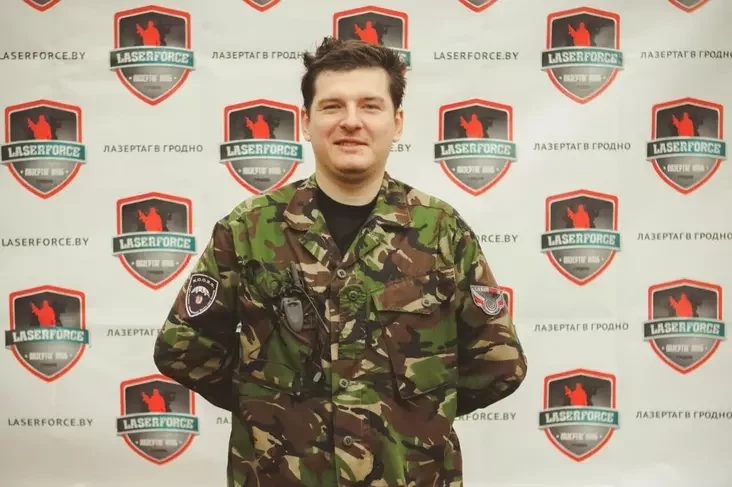
Павялічыць
Andrei Stsiapurka. Photo: social networks
When Shvets was released and sent to Ukraine, Stsiapurka lived in hope that the case would fall apart — like, what kind of terrorism case without the main “terrorist”? But it ended with the defendants in that case being transferred from the KGB pre-trial detention center to pre-trial detention center No. 1, where they remained until the trial. According to human rights defenders, Andrei Stsiapurka is currently serving his sentence in Navapolack colony No. 1.
“Some calculated release dates based on articles in ‘Sovetskaya Belorussiya'”
Siarhei was transferred to serve his sentence in Mahilioŭ colony No. 15. The man arrived there at a time when pardons had already begun, and soon political prisoners also started to be deported abroad.
Naturally, there was much discussion about this in the colony. Paŭlavicki says that political prisoners in the zone are divided into optimists and pessimists: pessimists say they will have to serve the entire sentence “until the bell rings.”
“It seemed to me that maybe not ‘until the bell rings,’ but they wouldn’t release us next month, as some there calculated based on articles in ‘Sovetskaya Belorussiya.’ There are forecasters who calculate release dates.
In mid-November, we had four options — like, releases would be tied to Putin’s negotiations, the arrival of an American delegation, the All-Belarusian People’s Assembly, or December 23. We asked that forecaster: ‘Why December 23?’ He says — because after that, he’s just f***ed,” Siarhei recalls.
He recounts how news of releases supported political prisoners. Although Siarhei himself believed that he had little time left and would serve it out, he didn’t remain indifferent:
“Even I started playing these games — calculating whether this or that event could have an influence. I tried to understand whether this or that word, spoken by someone powerful in this world, could be a sign that something was about to happen. Like, all ‘terrorists’ would be pardoned and taken abroad, and all others would be pardoned under the All-Belarusian People’s Assembly and released into the country.”
Paŭlavicki was released on December 13, 2025. He was among 123 political prisoners released after the visit of an American delegation led by John Coale to Minsk.
After deportation to Ukraine, the man ended up in Vilnius, and then moved to Dortmund, Germany. Finally, his experience of cooperation with German NGOs played a role.
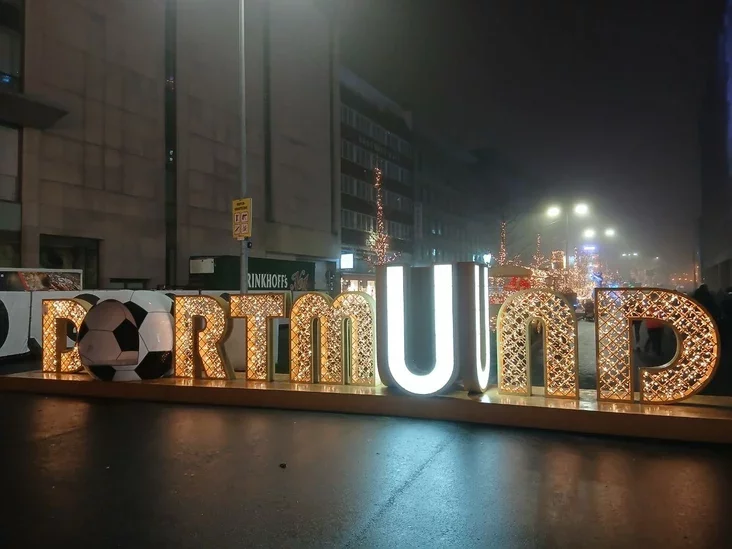
Павялічыць
Photo: interlocutor’s archive
Paŭlavicki’s plans for life are simple — to translate:
“They prepared an apartment and set up a laptop for me in advance. I have an untranslated book left that I was working on during my scholarship in Switzerland. I just need to check if that text is still saved in cloud storage, because my old laptop was confiscated.
I can work with the Belarusian diaspora, with the Russian one — I need to see what the needs are. Ultimately, I can always return to teaching.”
«Nasha Niva» — the bastion of Belarus