
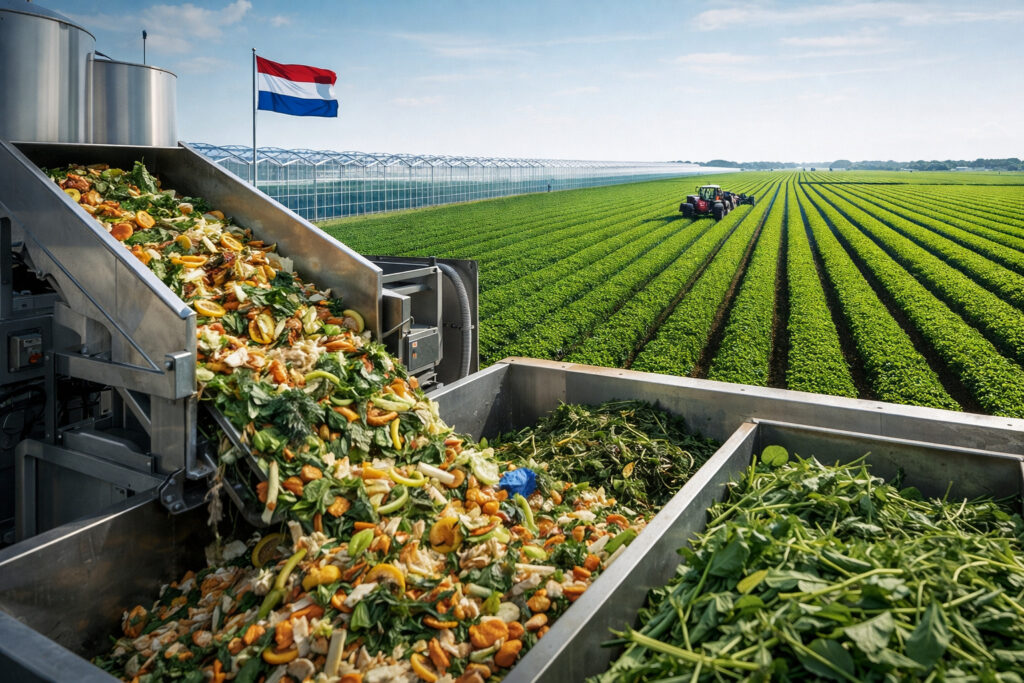
The Netherlands reuses organic waste on a large scale, produces biofertilizers, reduces chemicals, and sustains one of the most productive agricultures in the world within a small territory.
The Netherlands is one of the most extreme examples of how technology, environmental management, and agriculture can work together. Despite occupying an area only slightly larger than the state of Sergipe in Brazil, the country has become one of the world’s largest food exporters by transforming an urban problem—organic waste—into one of the pillars of its agricultural productivity. Food scraps, crop residues, animal manure, and industrial byproducts have ceased to be environmental liabilities and have become strategic inputs capable of fertilizing millions of hectares both within and outside the country.
The Dutch model didn’t emerge by chance. It was built over decades of rigorous public policies, investments in agricultural science, and environmental pressure, especially after the 1990s, when excess livestock waste began to threaten soils, rivers, and underground aquifers. The response was to transform waste into a resource.
How organic waste became the basis of Dutch agriculture.
In the Netherlands, virtually all organic waste has a productive destination. Urban food scraps, supermarket waste, leftovers from the food industry, cow and pig manure, and even treated sludge from sewage treatment plants undergo controlled processes of composting, anaerobic digestion, and nutrient separation.
See also other features
-
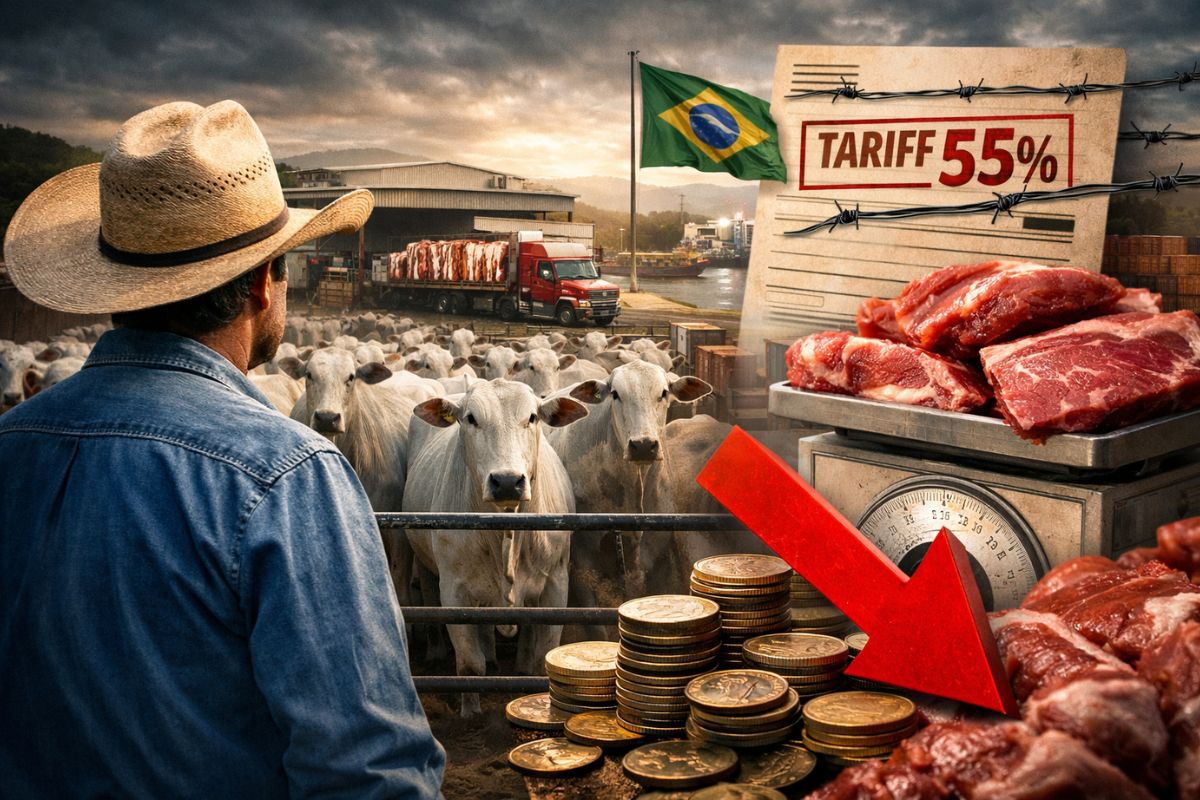
Beef producers in Minas Gerais fear losses due to a quota of 1,106 million tons and a 55% tariff on the surplus, valid since January 1st for three years, which could reduce competitiveness, put pressure on the price of finished cattle, and hinder investments.

-
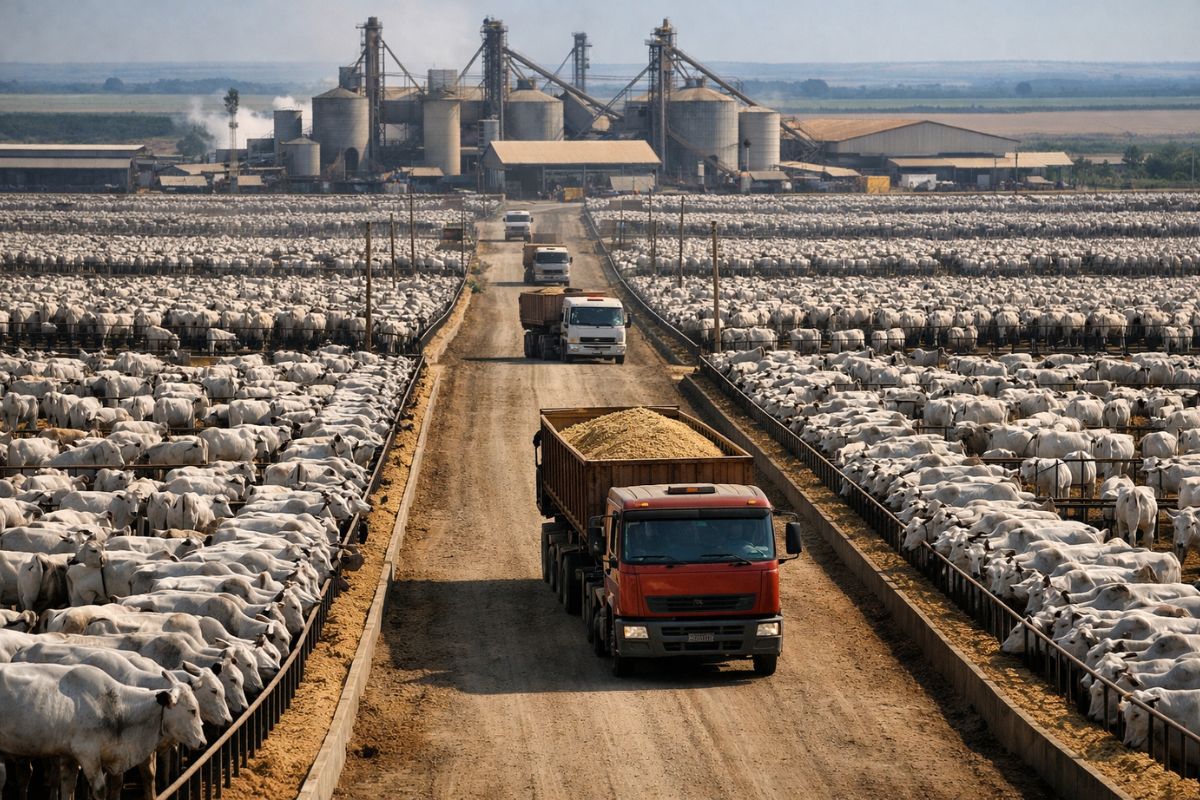
Known as one of the largest cattle feedlots in Latin America, Fazenda Colorado operates a gigantic feedlot that resembles an industrial plant, consuming over 1.000 tons of feed per day and operating 365 days a year with science, technology, and brutal logistics.
-
With over 60 kilometers of canals, an irrigated area larger than many countries, and water diverted from entire rivers, the largest continuous irrigation system on the planet sustains harvests on a continental scale.

-
Where winter paralyzes everything except agriculture: with temperatures below -40°C, a planting window of only 100 days, and annual grain production exceeding 75 million tons, this extreme region has become a global agricultural powerhouse.
These processes generate biofertilizers rich in nitrogen, phosphorus, and potassium, as well as stable organic matter, capable of partially—and in some cases almost completely—replacing traditional chemical fertilizers. The result is a closed cycle, in which the city feeds the countryside and the countryside sustains the city.
Today, the Netherlands reuses more than 90% of its organic waste, one of the highest rates in the world, and a large part of that volume goes directly back into agriculture.
Anaerobic digestion and biofertilizers on an industrial scale
One of the cornerstones of the Dutch system is anaerobic digestion, a technology that uses bacteria to decompose organic waste in the absence of oxygen. The process generates two strategic products: biogas and digestate.
Biogas is used for electricity generation, heating agricultural greenhouses, and supplying local networks. The digestate, after treatment, is transformed into liquid or solid fertilizer, applied to crops, pastures, and intensive farming systems.
This system allows large volumes of urban and agro-industrial waste to be processed continuously, creating enough fertilizer for millions of hectares of agricultural land, including in systems for exporting inputs to other European countries.
High productivity in minimal territory.
The impact of this strategy is evident in the numbers. The Netherlands is among the world’s largest agricultural exporters, behind only territorial giants like the United States and Brazil. The country leads global exports of flowers, seeds, potatoes, tomatoes, and various high-value-added vegetables.
All of this happens in an extremely limited area, where every square meter needs to be productive. The intensive use of biofertilizers allows for maintaining soil fertility, reducing losses due to leaching, and ensuring high yields without the same level of dependence on imported mineral fertilizers.
In high-tech greenhouses, common in the country, nutrients derived from organic waste are applied with millimeter precision, adjusted in real time according to soil and climate sensors.
Fewer chemicals, more environmental control.
Another key aspect of the Dutch model is the strict control over the use of synthetic fertilizers. The country operates under strict environmental limits, especially for nitrates and phosphates, due to the risk of groundwater contamination and river eutrophication.
The solution found was to integrate treated organic waste with precision agriculture. Instead of applying large volumes of chemical fertilizer, producers use precisely dosed biofertilizers, reducing emissions, waste, and environmental impact.
This system also contributes to climate goals, since anaerobic digestion reduces the direct release of methane into the atmosphere and replaces some fossil fuels with renewable biogas.
Science, universities and agricultural innovation
None of this would be possible without a solid scientific foundation. Institutions like Wageningen University, a world leader in agricultural sciences, play a central role in the development of technologies for waste reuse, nutrient management, and circular agriculture.
Ongoing research allows us to optimize biofertilizer formulas, assess long-term impacts on the soil, and create systems that integrate urban waste, energy production, and intensive agriculture into a single productive ecosystem.
The result is a model that goes beyond recycling: it is a complex agricultural engineering project, planned and monitored on a national scale.
A model observed by the world
The Dutch experience has been observed by countries facing two simultaneous challenges: excess urban waste and the need to produce more food with less land. In practice, the Netherlands has shown that organic waste is not a problem—it is a strategic raw material.
By transforming waste into fertilizer, the country not only sustains its own agriculture, but also exports knowledge, technology, and inputs to other regions of the planet.
More than just an environmental solution, the Dutch case is an example of how innovation, science, and management can redefine the future of agriculture in a world pressured by climate, growing population, and increasingly evident territorial boundaries.