
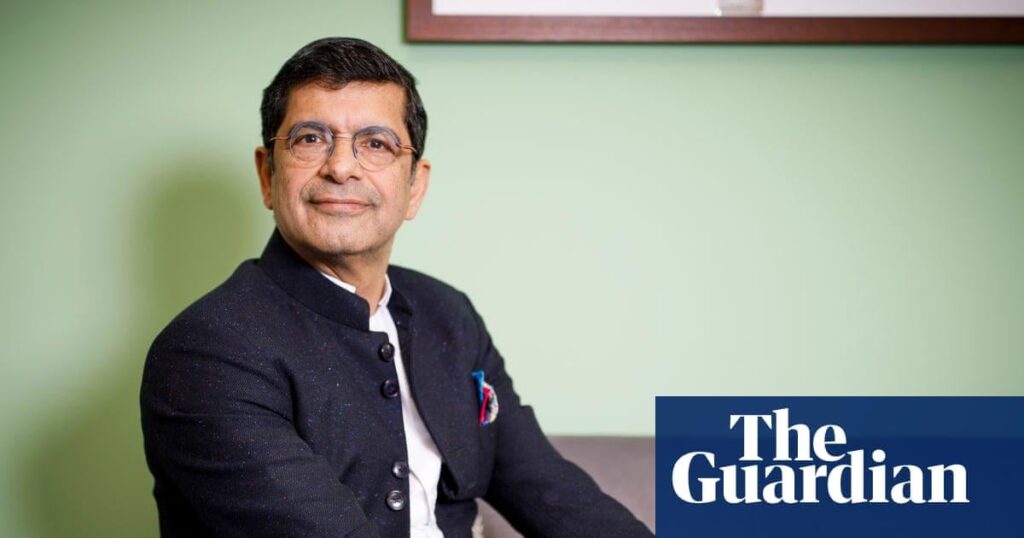

UK university degree no longer ‘passport to social mobility’, says King’s vice-chancellor
https://www.theguardian.com/education/2026/jan/03/uk-university-degree-no-longer-passport-to-social-mobility-says-kings-vice-chancellor
Posted by Low_Map4314
20 Comments
we wanted to send everyone to uni but we didn’t quite like the results of that
Has he just woken up after spending 30 years in a coma?
It had never been. Rich and loving parents are the way to high society. Other ways include competition.
Now and hundreds of years ago, a peasant (like us) with higher education will compete with a lot of such people from multiple countries.
Moreover, universities (again— now and in the past) like pretending to give an education, so a graduate will be weaker than an abstract immigrant keen on this occupation.
However, usually it is better to have university papers than not to have.
A university degree don’t unblock drains or plaster a wall or build houses for that matter. You may get to design a house with a degree but most kids could do it today in their spare time. Degrees need reassessing and exactly what we teach. We don’t need another English degree
depends, are you going to the plebeian university of not-Russell-Group? you don’t deserve happiness you sub-human scum
Cambridge, Oxford, Durham, UCL etc? come for an informal interview, old bean, you’ve already got the job, anyone from my alma mater is a good egg
Most people dont need to go to university and get into significant debt aged 18. For what? Most people are going to end up in some form of office based project/product management or support function, all of which can be taught through professional training and work qualifications like Prince2, Agile, Scrum or domain specific equivalents.
And the fact is most of those roles are probably going to be gone and replaced with just managing AI outputs.
Life long learning, either formally or informally should be encouraged. Degree level learning is a great thing. But unless your going to be something like Lawyer, Surgeon etc you dont need to go to university aged 18.
Because we don’t have the commensurate graduate jobs growth to go with the rates of degrees.
Thus we now have a scenario where jobs that realistically don’t need a degree now being degree paywalled.
It’s all fine to want an educated populace, but we also have to be willing to create an environment that has higher career ceilings.
Right now the tax landscape is in opposition to the education landscape.
We have a very high wage floor but also a very low wage ceiling.
Our relationship with wealth and success is also not conducive to making a degree a passport to social mobility.
The number of people who think £50k is living it large is testament to this
It mostly depends on the degree subject tbh.
Although the tuition fees are ridiculous, it should be free and I say that someone who’s paid off their own loan.
Its a little ridiculous that an A in A level Maths is deemed the same no matter what school you go to, but a maths degree from one of Middlesex university or Oxford University might as well be on different planets.
17 year olds are still being taken advantage and going on degrees that a sober informed adult would never take.
I graduated over 20 years ago with a 2:2 from a middle tier uni.
It’s got me zero professionally. Too low for graduate schemes and was barely worth ever putting it on CVs.
Decent enough job now, bought a house and currently raising a young family in SE England.
No degree might have meant I’d have got there 3 years earlier maybe but had less fun in doing it.
My experience of professional employment is that my employers haven’t really known how to use the knowledge and training that I picked up during my (not particularly stellar) undergraduate degree. I suspect my experience isn’t unusual.
If employers knew how to best use their graduate employees’ skills, I very much doubt that we’d have a ”surfeit” of graduates in our economy.
But here we are.
No morals and ethics… That’s the reason. When people in power have demonstrated no work ethic and morals to preserve their position of power and wealth, who would want to do that? Degrees are mostly useless or merely a sheet of certificate unless your qualification is closely tied to your career such as a surgeon and a solicitor.
I think it’s wider factors. Mummy and daddy by you a house jn Wandsworth, meaning you don’t have the stress hassle of a house share, stupid commute or pain of saving for a deposit. It’s less about the school connections and more about the simple advantages that wealth brings.
If you want to leave the UK, one of the basic requirements for getting a job abroad is a BA.
This applies in a lot of cases but you will struggle in my industry (specifically in med affairs pharma) without a degree in science or medicine.
I got a shit degree from a mid uni but still managed to climb the ladder to a 6 fig salary in less than 10 years, people with no degrees stay at admin level for 10+ years mostly, it’s just a prerequisite.
Rewarding jobs but very insular, they care more about where you worked before than the degree; it’s the getting a foot in that’s the hard part.
I don’t think it’s unique to pharma either, access is the real barrier, not degree. Degree doesn’t automatically give you the access but I’m not sure it ever has, hasn’t it always been connections/alma meter/who you know?
He’s not wrong. I left college in the early 2000s and decided against going to uni, not because I didn’t want to, but because no one in my circle was going. I have had a handful of jobs but ended up doing pretty well, a senior position and probably earning in the top five percent. I hire a lot now, and my journey would not be possible today.
I remember when getting a job was relatively easy. One interview, and if they liked you, you got the job. It really is the toughest time to be young in the last fifty to sixty years.
If entry doesn’t require an interview, it’s probably better to do something else.
Congrats you are 15 year late to the blatantly obvious party
This is inevitable, there is only a certain proportion of roles that need to be done by clever highly qualified people, and if you turn out more graduates than that, the companies with those roles will go back to the older ways of deciding who to pick. A degree becomes a minimum requirement rather than something that gets you an advantage.
That’s why the New Labour idea of making everyone go to university – making it unaffordable, so they had to introduce tuition fees – was such a bad one.
Everyone should have the *opportunity* to study academically, but it isn’t for everyone, it isn’t the best preparation for a lot of roles in society (including important ones that we’re now short of, like medical and trade positions), and it’s very expensive.
The degree currency has been massively devalued and grade inflation is rampant. In 1970, less than 10% of the adult population had a university degree or similar level qualification. After the 2021 census, The Office for National Statistics reported that nearly half (46.7%) of people in London holding a degree or similar qualification. In the North East area (the lowest level) the figure was still 28.6%. The figure was 35.8% for the south-east. Grade inflation has also devalued the classification of degrees. In the 1970s first class degrees were very rare and a 2:1 was rare and highly-valued. A 2:2 degree was a good result. These days, anything less than a 2:1 is regarded as a poor result.
In my opinion, the UK made a major error in promoting degrees. Traditionally, most degrees courses have been based on learning ABOUT a topic rather than learning how to DO things. There is nothing wrong with this per se. as long as graduates understand that it will make little difference to their employability. However, knowing about a topic is not a good preparation for work where the topic needs to be applied. Also, some popular degree courses have little direct relevance to the job market. There is no obvious reason why a degree in, say, Sociology, will make a graduate particularly attractive to prospective employers.